Dream About sinking house collapsing on me – Meaning
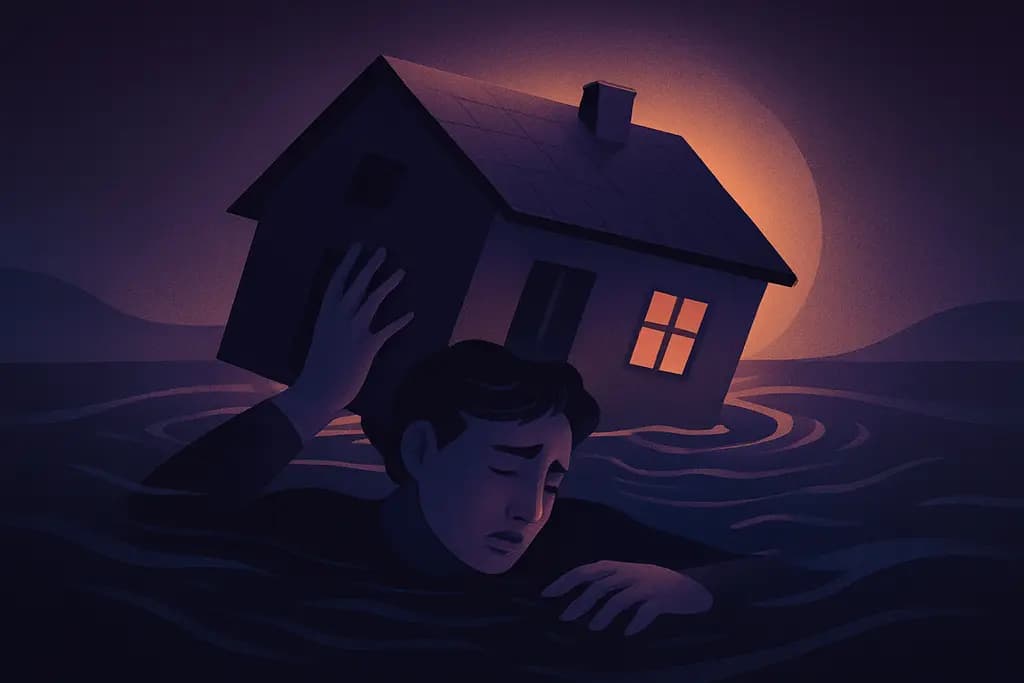
Category: Fears & Nightmares
A typical dream scenario
You’re inside your childhood kitchen, barefoot on soggy floorboards as the house tilts. Water presses at the thresholds, a ceiling beam snaps, and plaster flakes into your lap. You call for someone — a partner, parent, boss — but your voice comes out thin. Panic knots your stomach and you scramble toward a door that keeps sliding downward; the sensation is immediate, claustrophobic, like the ground of your life has become liquid beneath your feet.
Specific details people often mention
People frequently report specific images: soggy carpets, a stuck front door, a grandfather clock stopping, rain pounding the roof, neighbors standing at the curb watching, clothes soaked and clinging, the sound of timber snapping, and a racing heartbeat or breathlessness as the floor gives way.
Quick interpretation
This dream most directly signals a sense that the basic supports in your life are failing. It often reflects fears about security — financial, emotional, or role-based — and the looming sense that responsibilities, expectations, or changes will overwhelm you. Rather than predicting a physical collapse, it tends to point to pressure points: unpaid bills, a shaky relationship, a new job, or identity stress. The practical takeaway is to identify which ‘foundation’ feels weakest and take small stabilizing steps.
How this dream can be interpreted
Identity and self-image. The house often represents you; when it sinks, your sense of who you are may be undercut. This interpretation fits when you’ve started a new role, lost a title, or feel judged — for example, returning to school after years away or recovering from a public mistake. The collapsing parts can map to specific self-concepts that feel fragile, urging work on self-esteem and clearer personal boundaries.
Work, money, and responsibility. A sinking home frequently points to financial strain or job insecurity. If you’ve taken on extra projects, delayed bills, or fear unemployment, the dream mirrors the pressure of keeping everything afloat. Concrete signs include rising anxiety at paydays, avoidance of bank statements, or feeling unsupported by colleagues. Practical steps—budget review, talking to a manager, or small contingency plans—can reduce the intensity of these dreams.
Relationship collapse or abandonment fear. When close relationships feel fragile, your inner house can feel like it’s collapsing around you. This fits if you’ve noticed distance with a partner, parent, or friend, or if a recent argument left you unsure. The dream captures fear of being left without emotional shelter; it may prompt honest conversations, clearer expectations, or rebuilding trust in small, consistent ways.
Major life transition and loss of control. Moving, becoming a parent, a health scare, or any major transition can trigger scenes of structural failure. The sinking house symbolizes the disorientation that comes when routines dissolve and you must navigate unknown ground. If you’re in the midst of change, the dream is a reminder to seek supports, set manageable goals, and accept that rebuilding takes time.
What it can reflect emotionally
From a modern, neutral viewpoint, this dream reflects the brain’s way of simulating threat and rehearsing response to loss of stability. It commonly appears when ongoing stress taxes coping resources; the vivid physical sensations (trembling, breathlessness) are the nervous system translating anxiety into a spatial, collapsing scene. In real life, these dreams often follow nights of poor sleep, big decisions, or days spent ruminating on problems. The dream asks you to notice which waking worries need addressing rather than diagnosing a disorder.
What this dream is rarely about
This dream is rarely a literal prediction that your house will fall down. It does not usually work as a warning about immediate physical danger to a building. Instead, the collapsing house is symbolic — a stand-in for structures in your life that feel compromised. Emotional nuance: you can feel helpless in the dream even while the waking solution may be practical and within reach.
Why recurring versions matter
Recurring versions matter because repetition signals unresolved tension. If the same sinking-house dream returns, especially with increasing intensity or frequency, it suggests chronic stress, an unprocessed loss, or a life transition you haven’t integrated. Pay attention when you wake with lingering fear, physical symptoms, or avoidance behaviors during the day. That pattern indicates it’s time for deliberate action: map the triggers, make practical plans, get support from friends or a counselor, and track whether small stabilizing changes reduce the dream’s recurrence.
FAQ
Is this about relationships?
Yes, it can be about relationships. If you feel unsupported, fear abandonment, or notice growing distance, the house’s collapse often mirrors a relationship that feels like it’s losing its foundations. Look for behavior patterns and consider a calm conversation or boundary-setting.
Is it related to stress?
Very often. This dream commonly appears during periods of acute or chronic stress—job strain, money worries, caregiving overload, or major deadlines. Stress narrows focus to survival themes, so the dream dramatizes that pressure.
Why do I feel fear in this dream?
Fear in the dream arises because your brain is signaling threat to what keeps you safe—security, identity, routine. The body’s fight-or-flight reactions (racing heart, breathlessness) show up as collapsing rooms; the fear feels intense because the dream simulates real loss.
Can this dream be positive?
Yes. While frightening, it can signal opportunity: clearing away what no longer fits and rebuilding on firmer ground. If you notice constructive action and reduced anxiety afterward, the dream may be prompting healthy change rather than only signaling danger.
Related dream meanings
Dreams about sinking house collapsing on me are often connected to sinking house chasing me, red sinking house, and black sinking house. Looking at those nearby themes can help you compare control, fear, pressure, or change across similar dream scenes. You may also want to compare it with High Places if the same mood or conflict keeps showing up.