Dream About High Places – Meaning
Category: Fears & Nightmares
What this dream often looks like
You wake with your heart racing because you were standing on a narrow observation deck above a city at dusk, wind tugging at your coat. The pressure at work or a pending decision hangs heavy in your chest as you peer down at tiny cars and bright windows; your knees feel weak, and you catch yourself gripping the railing to stop trembling. That immediate mixture of exhilaration and vertigo mirrors a real-life push to rise or make a public move.
Main interpretation
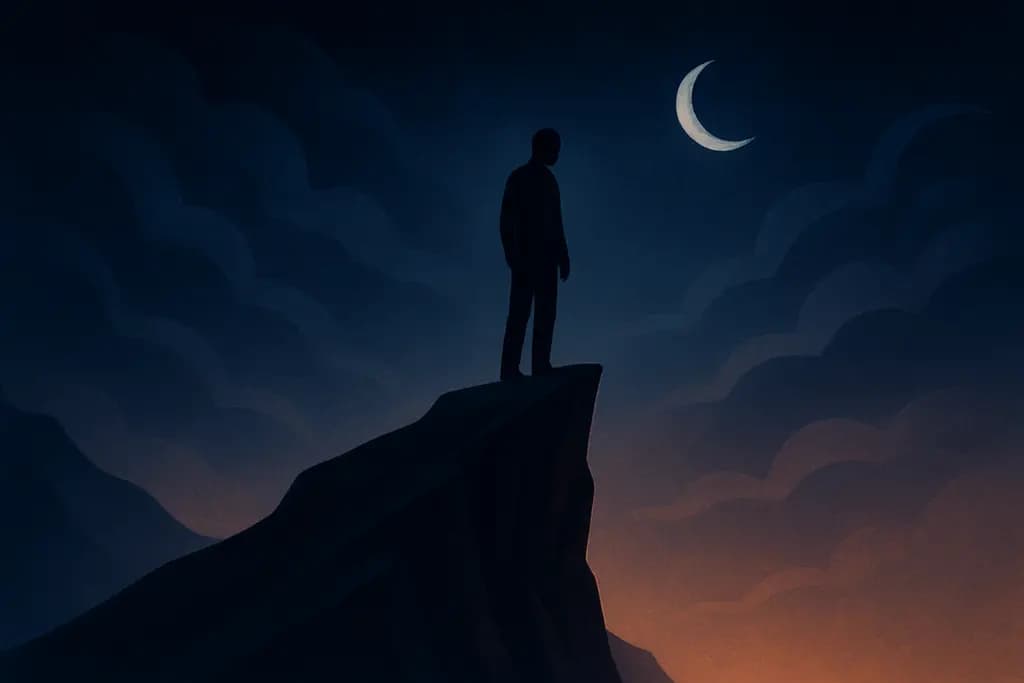
This dream most directly reflects tensions between aspiration and vulnerability: aiming higher—promotion, visibility, a significant choice—while fearing exposure or a fall. The height amplifies how visible and consequential the situation feels, and the physical sensations (swaying, wind, narrow railings) often map to real stressors like deadlines, public scrutiny, or relationship risks. In short: it often signals you standing at a threshold where success and risk feel equally immediate.
What this dream can point to in real life
- Ambition and Social Ascent. The height stands for striving: promotion, public recognition, or entering a higher-status circle. If you felt exhilarated yet anxious in the dream, it may mean you’re ready to step up but worried about scrutiny or whether you truly belong. Concrete signs in waking life include recent offers, applications, a public presentation, or comparisons with peers; the dream can be steering attention toward the social and reputational consequences of moving upward.
- Fear of Losing Control or Exposure. When the dream emphasizes wobbling, narrow ledges, or exposed edges, it often highlights fear of a misstep—making a visible mistake or having private struggles revealed. This angle points to situations where stakes feel high (financial choices, relationship honesty, or managerial decisions) and you’re afraid of the aftermath. The dream surfaces the emotional cost of exposure more than the literal mechanics of a fall.
What this dream is not literally saying
This dream is rarely a literal omen that you will physically fall or that an exact event will occur. It does not usually function as a prediction; instead, it translates emotional stakes into spatial terms. Saying it forecasts a specific accident or immediate promotion is misleading. The imagery more commonly dramatizes feelings about risk, visibility, or decision-making than describing future facts.
Unusual details people report
People commonly report specific images: a locked door at the top of a spiral stair, rain slicking a rooftop, a distant train whistle sounding tiny, crowds far below becoming blurred, or the odd detail of shoes slipping on gravel. Some remember a sudden sound—glass clinking, a bell—followed by a sharp intake of breath.
Questions to reflect on
- What specific achievement or public situation have I been preparing for that feels like being ‘high up’?
- Where in my life do I feel exposed or under scrutiny, and what practical support could reduce that exposure?
- If I step forward toward this goal, what small safety steps or boundaries can I put in place?
Spiritual meaning
Symbolically, many spiritual traditions interpret elevation as aspiration toward a higher self, insight, or purpose. In that framing, a high place can represent a moment of clarity or a call to take moral responsibility. At the same time, spiritual readings often stress humility: the view from above invites both perspective and the reminder of fragility. This is a non-dogmatic suggestion—use such imagery to reflect on inner values and the ethical shape of the choices ahead.
Common questions
Is this about money?
Is this about money? — Sometimes. If the dream’s context involves financial buildings, paychecks, or negotiations, it may point to financial risk or reward; otherwise it more often concerns status, visibility, or decision pressure than cash alone.
What should I do after this dream?
What should I do after this dream? — Take one concrete action: write down the decision or situation that felt like the height, list risks and supports, and choose one small step (e.g., a conversation, checklist, or safety plan) to reduce uncertainty.
Why do I feel fear in this dream?
Why do I feel fear in this dream? — Fear usually signals perceived risk: potential loss of reputation, control, or safety. The brain translates those social and emotional stakes into physical precariousness, which produces the visceral sensation of vertigo or trembling.
Related dream meanings
People who dream about high places often end up exploring Abandonment, Aging, and Being Chased next, because the same pressure can show up through different symbols. Comparing them usually makes the emotional pattern clearer. You may also want to compare it with Being Followed if the same mood or conflict keeps showing up.