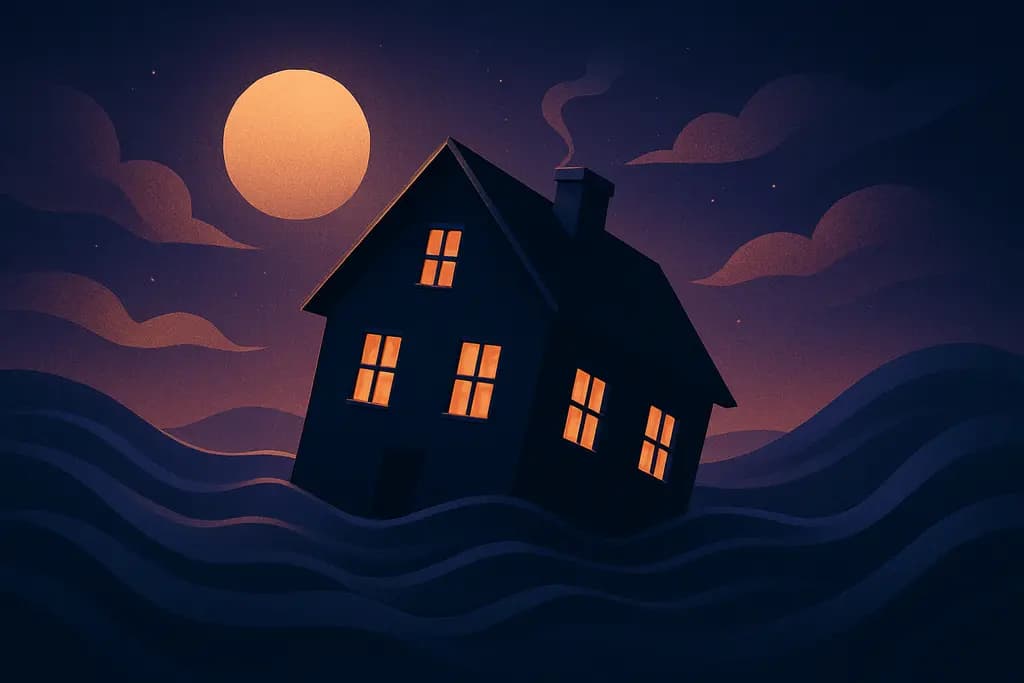
Dream About black sinking house – Meaning
Category: Fears & Nightmares
What this dream usually means
This dream most commonly signals a sense of sinking security: the black color and the act of submersion suggest shadowed fears about identity, home, or long-held responsibilities collapsing. It can reflect anxiety about losing a stable role—parent, partner, homeowner—or a job. The imagery points to overwhelm and the urgent feeling that something that used to support you is giving way. It can be terrifying in the moment and, paradoxically, open the way to deciding what you must let go of or rebuild.
Psychological perspective
From a modern, non-medical viewpoint, a black sinking house is a symbolic expression of perceived threat to safety and identity. Psychologists would note the dream compresses specific life events—like a breakup, job loss, or move—into a single dramatic scene so your emotions can be experienced and processed. The house as container represents boundaries between private life and public demands; water represents emotion and the unconscious. When the container fails, your mind is signaling that emotional arousal or chronic stress needs attention through concrete changes or support.
What this dream is rarely about
This dream is rarely or does not usually work as a literal prediction of immediate physical disaster or precise financial ruin. It does not mean your house will actually sink or that you will lose everything tomorrow. Instead, it tends to dramatize emotional collapse or boundary failure. That said, the intensity of fear in the dream often mirrors how urgent the underlying problem feels to you right now.
Three common meanings
- Identity and self-image. The house often stands for your sense of self. A black, sinking house may indicate that long-held roles or self-concepts—career identity, parental identity, social status—are eroding. The sinking motion suggests these parts of you feel unstable; the color black can point to shame, repressed feelings, or doubts you haven’t faced. This reading asks: which role do you feel you can no longer sustain?
- Overwhelm and responsibility. If the house contains many people, objects, or paperwork, the dream can be about too many obligations—caregiving, bills, projects—that are flooding your capacity. The sinking implies a build-up of stress beyond what you can manage. Practically, this meaning invites you to inventory responsibilities, delegate where possible, and set clearer limits before things feel irretrievable.
- Emotional loss and unresolved grief. Sinking often mirrors grief or a slow emotional letting-go: a relationship, a dream, or a stage of life is going under. The blackness can mark mourning or suppressed sorrow. This angle focuses less on practical loss and more on inner processing—acknowledging what you’re grieving, sitting with pain, and allowing space to mourn rather than immediately ‘fixing’ it.
- Transition and forced change. Sometimes the dream signals a forced transition—eviction, relocation, job change, or a health shift—that’s out of your control. The scene dramatizes the rupture: thresholds (doors, stairs) disappear as the structure submerges. This interpretation suggests preparing for change: practical steps, contingency plans, and emotional attention to the uncertainty ahead.
Concrete details that tend to stand out
Dreamers often notice small, specific details: a child’s toy floating in the water, a single light bulb swinging in a flooded attic, the smell of wet wallpaper, a key slipping from a trembling hand, or the sound of distant sirens. Physical reactions like shivering, a lump in the throat, or shallow breathing are common and memorable.
Why recurring versions matter
Recurring or particularly vivid sinking-house dreams deserve attention: they often mark unresolved fear, prolonged stress, or a transition you haven’t fully processed. If the dream repeats during a job search, after a breakup, or while caregiving, it signals that surface coping isn’t enough and action or deeper reflection is needed. Keeping a log of triggers, discussing the dream with someone you trust, and making one practical change (reduce a task, seek advice, secure paperwork) can reduce the dream’s urgency and help you regain a sense of control.
How different traditions interpret it
Meanings vary across traditions. In some Western folk and Jungian readings the house equals the self and sinking signals inner collapse; in feng shui and certain Eastern approaches, water relates to money and flow, so a submerged house may be tied to financial or energetic imbalance. Other cultures might read a house as ancestral shelter, linking the dream to family lineage or obligations. These are different lenses—meanings vary across traditions—and none should be taken as the single, definitive explanation.
Frequently asked questions
Why do I feel fear in this dream?
Your fear is the brain’s alarm: watching a stable structure fail triggers primal threat responses (panic, racing heart) tied to losing safety or social standing. The dream compresses those fears into vivid sensory detail so you feel and notice them.
Is this about money?
Not necessarily. Financial anxiety can appear as a sinking house, because water and home both relate to security. But the dream more often points to broader insecurity—identity, role, or emotional safety—than only bank balances.
What should I do after this dream?
Write down the scene and the strongest feelings, note any real-life stressors, and make one concrete plan (call someone, sort paperwork, set a boundary). If it recurs and disrupts sleep or functioning, consider talking it over with a trusted friend or counselor.
Is this about relationships?
Yes, it can be about relationships. If the house contains a partner or family members, the dream may reflect worry about losing that relationship’s structure, unresolved conflicts, or shifting roles within the household.
Related dream meanings
If this dream keeps returning, pages about High Places, Abandoning Someone, and Falling from Heights can reveal the related patterns underneath it. They often overlap around insecurity, transition, or stress in everyday life. You may also want to compare it with Quicksand if the same mood or conflict keeps showing up.