Dream About Child Self – Meaning
Category: People
A common version of this dream
This dream usually starts with an immediate recognition: you spot your younger self standing by a familiar place — a school hallway, a backyard swing, or a bedroom with posters — and you feel a wave of protectiveness or shame. Maybe the child is laughing and running toward you, or maybe they clutch a torn backpack and stare at a closed door. The setting feels lived-in and specific, and your body reacts: your throat tightens, your hands want to reach out, or you step back.
Quick interpretation
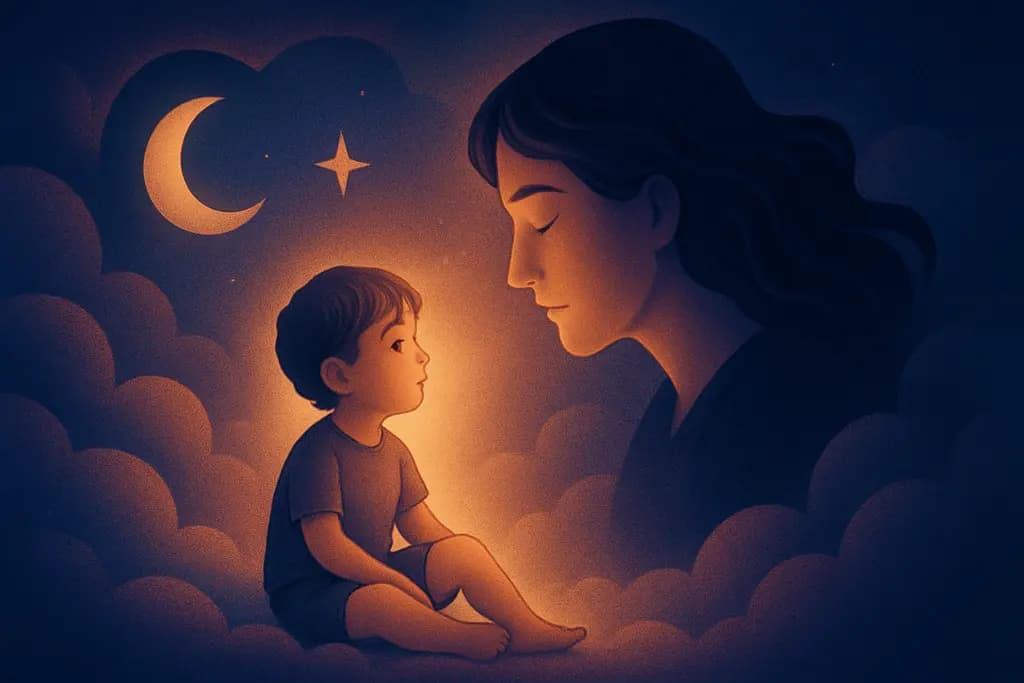
Quick interpretation: the child self typically represents an earlier part of you asking for attention. If the child is joyful, the dream often highlights creative longing or permission to play; if fearful or hurt, it usually signals unmet needs or safety concerns from your past seeking repair. Look at what the child needs in the scene — comfort, discipline, freedom — and you’ll get the clearest clue about what to give yourself now.
How this dream can be interpreted
Unmet Childhood Needs. If the child in your dream looks hungry, neglected, or abandoned — waiting by a locked gate or calling for a caregiver — the image often reflects needs that were sidelined in childhood. This can suggest you still carry expectations of caretaking or unresolved grief. The practical takeaway is noticing what emotional support you still crave and where you can offer yourself consistent care now.
Creative Longing and Play. A playful, curious younger self — building forts, drawing, or running barefoot — commonly signals a creative impulse asking for space. It often reflects a part of your personality that was praised or dismissed as a child and now wants expression. Responding might mean scheduling low-stakes time for art, improvisation, or simple fun that recharges you.
Vulnerability and Safety Reassessment. When the child appears frightened, hiding behind furniture, or refusing to cross a doorway, the dream can indicate current situations where you feel exposed or unsure. This image often urges a reassessment of boundaries: who you trust, what environments feel safe, and where to set firmer limits so that your adult self can protect that vulnerable part.
Pattern Recognition and Inner Critic. Seeing an exact younger self repeating a familiar mistake or arguing with an adult in the dream often points to a pattern that persists — perfectionism, people-pleasing, or avoidance learned early on. The child may carry your inner critic's voice. Noticing the argument's content gives clues about beliefs you can reframe or habits you can interrupt in daily life.
What this dream is rarely about
This dream is rarely a literal prediction about a current child or an exact event that will happen. It does not usually function as a forecast of external circumstances. Instead, it points inward: memories, unmet needs, or patterns repeating in adult life. Treat the scene as symbolic guidance, not a literal timeline for action.
Specific details people often mention
People often report precise imagery: a childhood bedroom with a poster of a band, a red bicycle half-buried in grass, the sound of a school bell, a frozen swing in winter, or the scent of crayons. Physical reactions — a sudden lump in the throat, tingling hands, or breath that catches — are common.
What it can reflect emotionally
From a modern, neutral viewpoint, the child-self functions as a symbolic representation of earlier development: stored memories, coping strategies, and emotional habits. It can reflect attachment patterns, unmet needs, or internalized rules learned from caregivers. Observing the child's emotions and bodily sensations in the dream — fear, joy, freeze response — gives practical information about which parts of your emotional life are activated and may benefit from conscious attention or new behaviors.
When this dream deserves attention
This dream deserves attention when it recurs, leaves you emotionally unsettled for days, or appears during major life transitions such as becoming a parent, changing careers, or ending relationships. Repetition often indicates an unresolved pattern or a need that won’t dissipate without change. Take it seriously if your waking behavior mirrors the child’s fear or longing — that alignment signals an actionable issue rather than a passing image.
Frequently asked questions
What should I do after this dream?
Do something concrete: note the child’s emotion and one small step you can take (call a friend, schedule play, set a boundary). Try journaling about the scene within 24 hours while details are fresh.
Is this about relationships?
Sometimes. If the child is interacting with parents or partners, the dream can highlight relational patterns—neediness, caretaking, or trust issues—but it can also point to internal dynamics rather than one specific relationship.
Is this about money?
Usually not directly. Dreams about your child self seldom predict financial events; they more often highlight emotional resources, creative needs, or safety issues that may indirectly affect decisions about money.
Related dreams to explore
Dreams about child self are often connected to Childhood Self, Finding a lost child, and Receiving a voicemail from your younger self. Looking at those nearby themes can help you compare control, fear, pressure, or change across similar dream scenes. You may also want to compare it with Seeing your younger self if the same mood or conflict keeps showing up.