Dream About Childhood Self – Meaning
Category: People
A common version of this dream
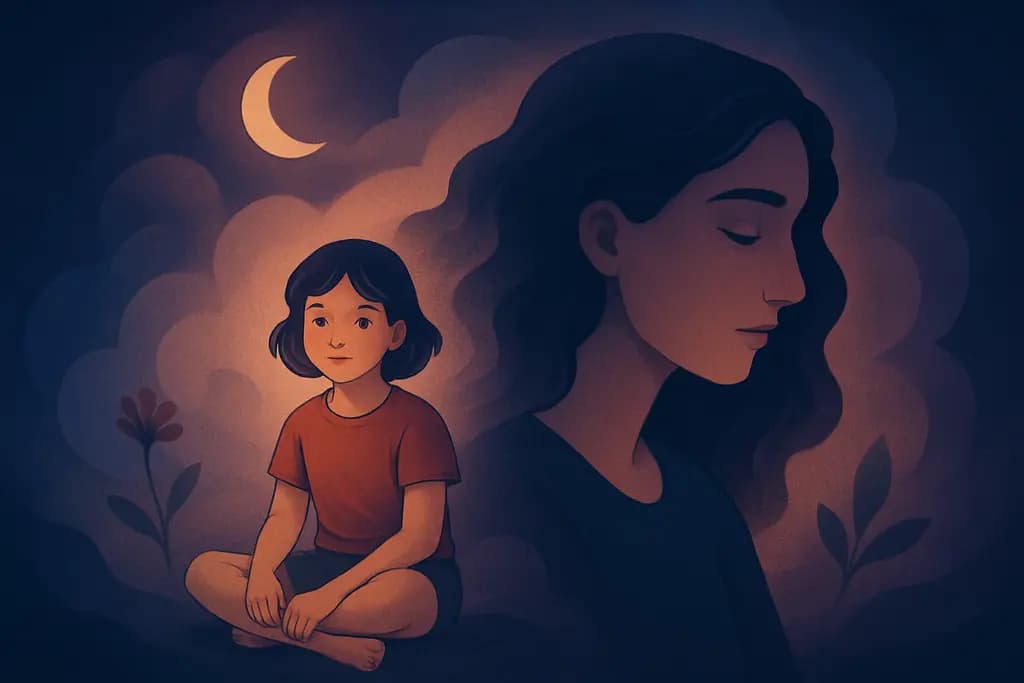
You find yourself back in your small, postered bedroom: the same chipped dresser, the faint smell of crayons, a single toy truck under the bed. The child in the dream—your face at eight or ten—sits on the floor with a scraped knee, looking up at you with a mixture of hope and accusation. Outside, a school bell rings; inside, your chest tightens with remembered embarrassment or sudden warmth when someone calls your name.
What this dream usually means
This dream commonly points to parts of your past that still shape how you respond now: unmet needs, early coping habits, or a talent you abandoned. If the child feels anxious you may be revisiting old fears; if they are laughing you could be reconnecting with playfulness or creativity. The setting often highlights where those patterns began—a classroom, home hallway, or playground—and the emotion you wake with is the clearest clue.
Three common meanings
- Unresolved needs or wounds. If the child looks hurt, neglected, or pleading, the dream often reflects unmet needs still active in your life—safety, validation, or attention. The setting (a quiet kitchen, a locked classroom) can point to where you learned those needs. This angle suggests caring for that younger part—through boundaries, self-compassion, or a conversation with someone who offers the support you lacked.
- Reclaimed playfulness and creativity. When the child is joyful, imaginative, or inventing a game, the dream commonly signals a return of spontaneity or creative energy you set aside. Objects like crayons, toy instruments, or a treehouse indicate expressive outlets. This meaning encourages small experiments—an afternoon of unstructured play, a creative project, or saying yes to curiosity—to reintroduce forgotten strengths into daily life.
- Old rules and limiting beliefs. If the child is cautious, repeating instructions, or trapped behind a classroom door, the dream often highlights internalized rules—'don’t be seen,' 'don’t ask,' or 'play is frivolous'—formed in childhood. Identifying the rule and testing it in one modest situation (a different opinion at work, a new hobby) can reveal whether it still serves you or simply protects an old fear.
What this dream usually does not mean
This dream is rarely a literal prediction about the past or future. It does not usually mean you literally return to childhood or that an event from your youth will repeat exactly. Instead, it more often speaks in symbolic language about feelings, needs, and habitual responses rather than forecasting concrete outcomes.
Unusual details people report
People report vivid specifics: a closet door that won’t close, a rainstorm that drowns out a parent’s voice, a red lunchbox slipping from small hands, the exact texture of a blanket, or a loud school bell that makes the chest ache. Some feel pins-and-needles in their limbs or hear distant playground laughter.
Psychological perspective
From a modern, non-medical viewpoint, this imagery is a way the mind organizes memory and emotion: a younger self represents patterns rehearsed when you were small. The dream often surfaces specific triggers—a critique that echoes a teacher, a deadline that mimics parental pressure—so the feeling on waking (shame, relief, nostalgia) points to what needs attention. It can be productive to name the feeling, note the setting, and consider one concrete step that would comfort that younger part.
When to take this dream seriously
Take this dream seriously when it recurs, intensifies during life transitions, or leaves a strong emotional residue the next day. Recurrence often signals unresolved material; a dream that wakes you with panic or persistent longing during a major decision (career change, new relationship, parenthood) points to old templates influencing new choices. If the child’s needs map onto current stress—an unmet need for recognition at work, fear of abandonment in a partnership—addressing one small, actionable change can reduce the dream’s urgency.
FAQ
Why do I feel fear in this dream?
Fear often appears because the dream reactivates an emotional memory—embarrassment, abandonment, or helplessness—from your past. The body remembers as much as the story, so a small trigger in current life can replay the old feeling.
Is this dream a warning?
Not usually. These dreams rarely serve as literal warnings. They more often highlight internal patterns or unresolved feelings that may influence decisions, so treat them as symbolic prompts to examine, not as direct predictions.
Can this dream be positive?
Yes. If the child is content, playful, or curious, the dream commonly signals positive renewal—reclaiming creativity, resilience, or a sense of safety. It can point to strengths you can deliberately bring back into your adult life.
Dream meanings connected to this one
If this dream keeps returning, pages about Child Self, Crossing paths with a childhood bully, and Receiving a voicemail from your younger self can reveal the related patterns underneath it. They often overlap around insecurity, transition, or stress in everyday life. You may also want to compare it with Seeing your younger self if the same mood or conflict keeps showing up.