Dream About Abandoning Someone – Meaning
Category: Fears & Nightmares
Quick interpretation
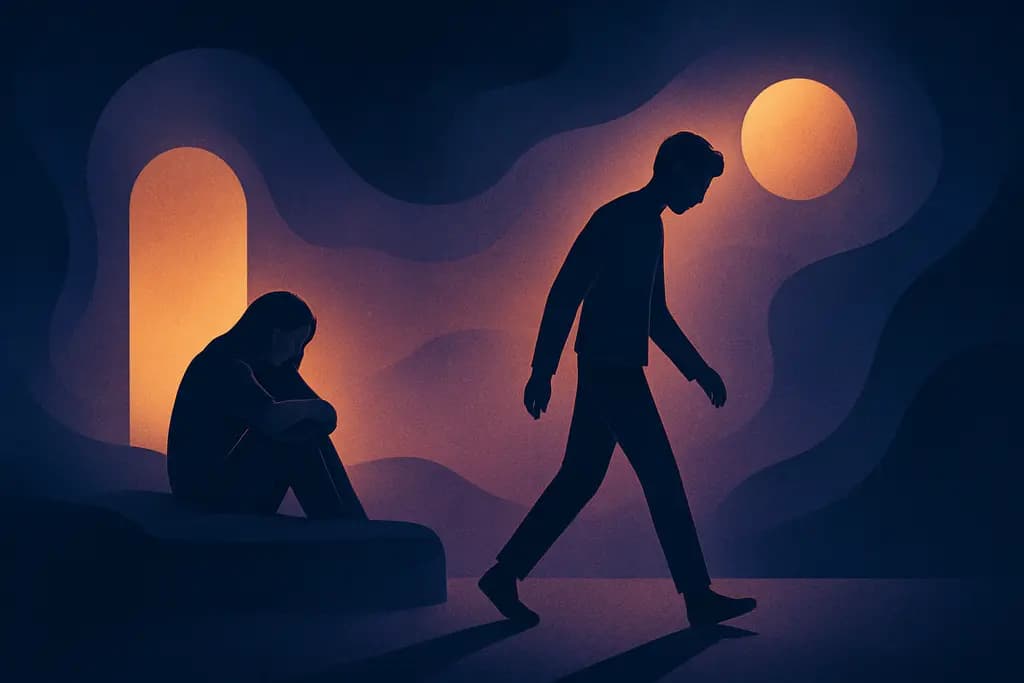
Direct answer: this dream commonly reflects inner conflict about responsibility and the need to step away from a relationship, role, or expectation. It often signals a tense choice—wanting distance while feeling loyalty or guilt. The image of leaving someone behind usually maps onto real-life decisions (ending caregiving, quitting a role, choosing independence) and the emotional fallout: shame, relief, confusion, or a protective urge to return.
A common version of this dream
You are standing in a dim train station with a small suitcase while someone you love calls your name; their voice is muffled by the announcement board as the train begins to pull away. Your hands tremble, your shoes are wet from rain, and you tell yourself you must get on. In the moment you walk down the platform your chest tightens: part of you wants to run back, another part steps onto the train. There is both ache and a strange clarity.
Concrete details that tend to stand out
Dreamers report doors slamming, a child left on a doorstep, a car pulling away in fog, the sound of a crowd's footsteps, a locked hospital room, or your clothes soaked and heavy. Physical reactions like shortness of breath or a sudden tear can stand out.
The emotional and symbolic message
- Guilt and Unmet Obligations. The dream can be your mind airing unresolved guilt: unfinished promises, caregiving fatigue, or fear of letting someone down. The act of walking away highlights anxiety about moral responsibility. If you wake feeling ashamed, it often means you are wrestling with duties you feel unable or unwilling to sustain.
- Boundary Testing and Self-Preservation. Leaving someone in a dream may represent an attempt to set boundaries or reclaim autonomy. The relief mixed with guilt suggests you are weighing self-care against caretaking. This reading points to healthy separation impulses rather than malicious intent—choosing your needs even when it hurts others.
- Fear of Abandonment or Rejection. Sometimes the dream flips roles: abandoning someone can symbolize your fear of being abandoned yourself. It can expose insecurity about relationships, where withdrawing is a preemptive defense against being hurt. Emotional distance in waking life, unresolved childhood attachment wounds, or recent rejection can trigger this scenario.
What this dream is not literally saying
This dream is rarely a literal prediction that you will abandon a person. It does not usually mean you will commit a harmful act. Instead, it points to internal shifts—decisions about limits, duty, or identity—rather than an inevitable real-world betrayal.
Cultural and symbolic views
Meanings vary across cultures and belief systems: some see leaving as emancipation and a positive rebirth, while others emphasize duty and view such dreams as warnings. Avoid assuming a single cultural truth; your personal cultural values—family obligation, communal duty, or individualism—shape how the image resonates for you.
Personal reflection prompts
- Who in my waking life felt most present in the dream, and what role do they play in my responsibilities?
- What specific limits, obligations, or sacrifices have I been avoiding or tolerating lately?
- If I allowed myself one small boundary change this week, what would it be and what is the safest first step?
Frequently asked questions
What should I do after this dream?
After this dream, pause and journal the concrete details (who, place, emotions). Use those notes to decide one practical step: a boundary, a conversation, or self-care action. If strong guilt persists, consider discussing it with a trusted friend or counselor.
Is this about relationships?
Sometimes. The dream often points to relationship dynamics—caregiving, dependence, resentment—but it can also reflect roles (work, family duties) rather than romantic ties specifically.
Is it related to stress?
Yes. High stress, burnout, and rapid life changes commonly trigger these dreams because they force decisions about how much you can carry for others.
Can this dream be positive?
Yes. The dream can be positive when it signals healthy separation, reclaiming autonomy, or letting go of toxic obligations. Relief in the dream often points to constructive change rather than harm.
Related dreams to explore
If this dream keeps returning, pages about Chasing Someone, Abandonment, and Aging can reveal the related patterns underneath it. They often overlap around insecurity, transition, or stress in everyday life. You may also want to compare it with Being Chased if the same mood or conflict keeps showing up.