Dream About Wolf howling – Meaning
Category: Animals
Dreaming of a wolf howling often feels urgent and primal. Such dreams can point to loneliness, warning signals, or a call to action from your deeper instincts. The exact meaning depends heavily on how the howl made you feel and the context of the dream.
General meaning of dreaming about Wolf howling
A wolf�s howl in a dream usually represents communication from the unconscious — a raw, instinctive message that wants your attention. It can be a signal about connection (or disconnection) with others, a boundary being set, or an alert to danger or change in your waking life. Because wolves are social animals, the howl often relates to group dynamics, leadership and the call to rejoin or leave a social circle.
Common interpretations include:
- A call for help or connection: a lonely or distant howl can reflect isolation or a desire to be heard.
- A warning or boundary: a sharp, urgent howl may signify caution or a threat you need to acknowledge.
- Strength and leadership: a confident howl can indicate asserting yourself or stepping into a role.
These themes shift depending on whether the howl felt frightening, comforting, or neutral, and whether it came from a single wolf or a whole pack.
Spiritual meaning of Wolf howling in dreams
Spiritually, the wolf howl can be seen as a bridge between personal intuition and collective wisdom. Many traditions view the wolf as a teacher of survival, loyalty and inner knowing; the howl often symbolizes a call from the spirit or subconscious to pay attention to your path.
In shamanic and indigenous contexts the wolf is a guide that encourages trust in instincts and deep listening. In broader spiritual terms, a howl may indicate an awakening of inner voice or an invitation to align with your true nature. Regardless of tradition, the emphasis is on listening — to yourself, to others, and to unseen guidance.
Psychological interpretation
Fear, stress or anxiety
A howl that triggers fear in the dreamer can mirror waking anxieties, stressors or a sense of imminent threat. The sound is an externalization of panic or alertness your mind is processing; it may surface when you feel overwhelmed, exposed or uncertain about a situation.
Relationships and emotional bonds
When the howl relates to packs or other wolves, it often mirrors social bonds. A lone howl might reflect loneliness, yearning for connection or feeling excluded. A chorus of howls can indicate strong group loyalty, collective emotions, or social pressure you are experiencing.
Control, power or vulnerability
Howling can also explore power dynamics. If you feel empowered by the howl, it may reflect growing confidence or readiness to claim leadership. If the howl leaves you vulnerable, it could point to fear of losing control or being overwhelmed by others' demands.
Positive meaning
- Reclaiming voice: may suggest you are finding your voice or speaking up.
- Strength and resilience: can indicate renewed inner strength and survival instincts.
- Community and loyalty: might signal deepening bonds or supportive networks.
- Guidance and intuition: may reflect clearer inner guidance or spiritual nudges.
- Transformation: can mark a turning point where you embrace change and personal growth.
Negative meaning and warnings
- May suggest impending conflict or confrontation that needs careful handling.
- Can indicate feelings of isolation or emotional abandonment.
- Might point to anxiety, unresolved stress or suppressed alarm signals.
- Can indicate being drawn into unhealthy group dynamics or pressure from others.
These are possibilities rather than certainties; interpret them in light of your feelings and life context.
Common variations of dreams about Wolf howling
- Lone wolf howling: Often reflects personal isolation, a desire to be heard, or an individual�s call to independence.
- Pack of wolves howling together: Suggests strong social ties, collective emotion, or pressure from a group; could be supportive or overwhelming depending on tone.
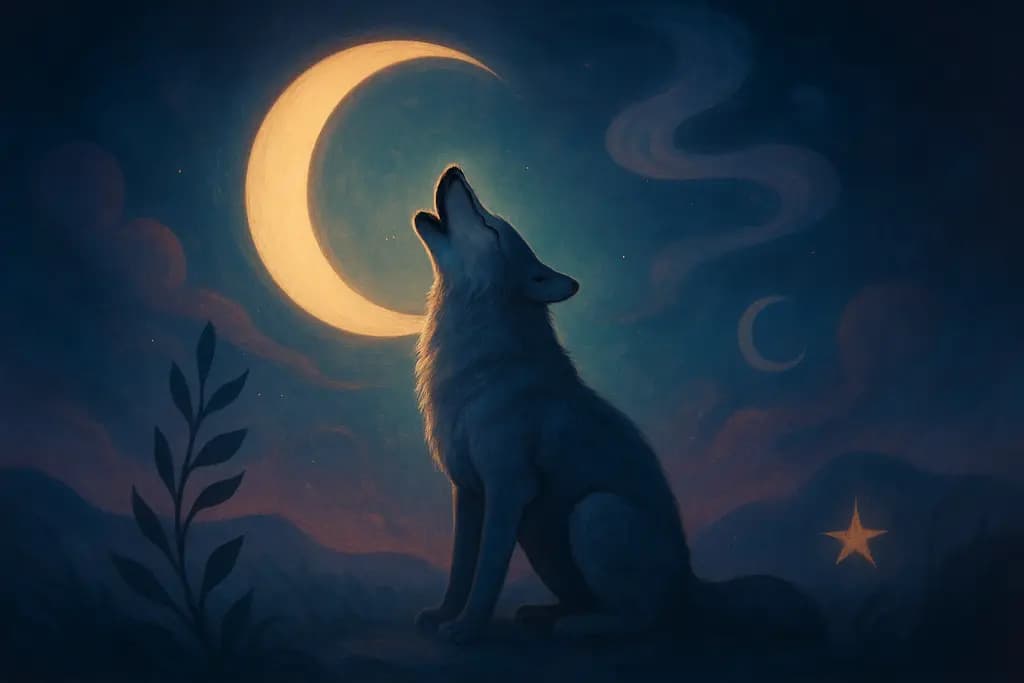
- Wolf howling at the moon: A symbolic image tied to mystery and cycles; may indicate intuition rising or an emotional cycle reaching a peak.
- Distant wolf howl you can barely hear: May point to a subtle concern or intuition that you haven�t fully acknowledged yet.
- Wolf howling outside your home: Can feel invasive and may reflect boundary issues or a perceived threat in your personal life.
- Injured or distressed wolf howling: Often connects to empathy, worry for someone vulnerable, or your own unprocessed pain.
- You answering the howl or joining in: Suggests acceptance of your instincts, readiness to connect, or stepping into leadership among peers.
What to do after such a dream
- Reflect on emotions: write down how the howl made you feel and any images that stood out.
- Review relationships: consider recent interactions with family, friends, or coworkers that might relate.
- Check for warnings: ask whether the dream points to a decision, boundary or risk you�ve been avoiding.
- Reconnect with intuition: spend quiet time listening to your inner voice—meditation, nature walks or journaling can help.
- Take practical steps: if the dream raises a specific concern (safety, conflict, loneliness), consider small actions to address it, like reaching out to someone, setting clearer boundaries or seeking supportive company.
If the dream leaves you unsettled, calmly revisiting its details over several days often clarifies what your unconscious is trying to communicate.