Dream About Wolves howling at night – Meaning
Category: Animals
What this dream often looks like
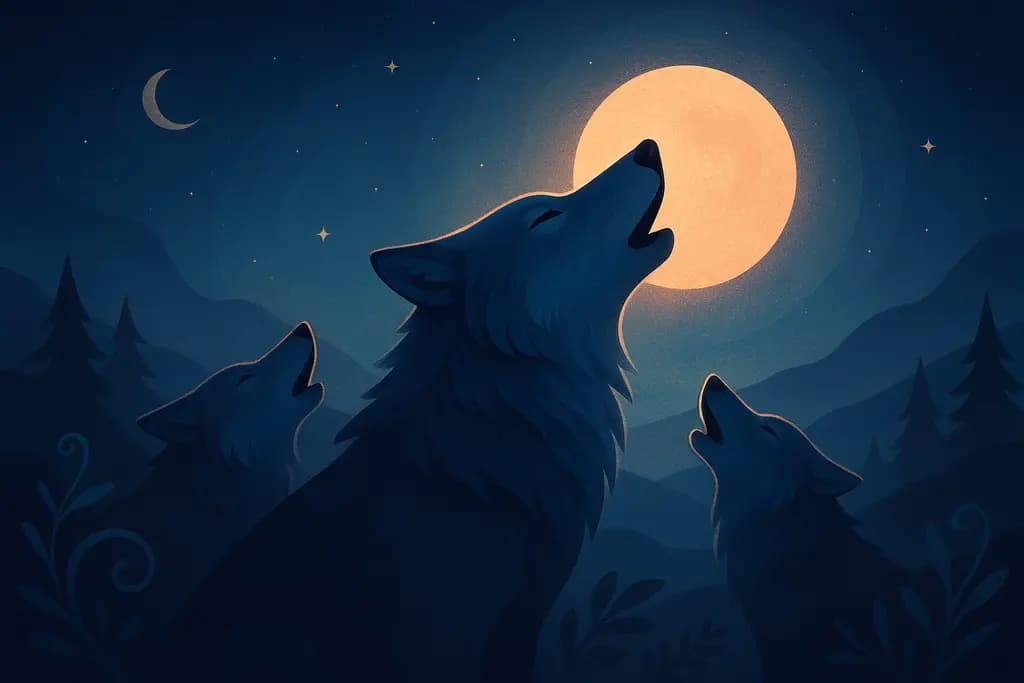
Direct answer: Dreaming of wolves howling at night often points to a call—either from your inner instincts or from people around you asking for attention. Picture standing on a frost-stiff porch under a low moon, the hairs on your forearm prickling as a long, keening chorus rolls over the pines; you can hear a car door slam two blocks away and a bedroom door creak in your house. That mix of urgency and raw vocal power tends to make the dream feel urgent and unmistakably personal.
Unusual details people report
Dreamers often report specific images: a lone wolf beneath a bedroom window, rain tapping on a tin roof while the pack answers from a ridge, the taste of copper in the mouth, or hands digging into blanket fabric. Some hear tires on gravel, see a neighbor’s porchlight swing, or notice moonlight cutting a straight line across a parked car as the howls continue.
Main interpretation
A wolf howl at night commonly represents communication and alertness: it may be a figurative signal about belonging, a warning about boundaries, or a surfacing of instinctual feeling. If the howl feels inviting, it often points toward a need for connection or leadership; if it feels menacing or very close, it may indicate perceived threats to safety or trust in a relationship or situation. Pay attention to who is howling, your location in the scene, and whether you join or withdraw—those details shift the message.
How this dream can be interpreted
- Call to community and belonging. The pack’s howl may represent your social group — family, coworkers, or friends — signaling a need for connection, leadership, or reconciliation. If you respond in the dream, it can reflect stepping into a role or rejoining a group; if you hide or run, it may show feelings of exclusion, shame, or uncertainty about where you fit. Look at recent situations where you felt left out or asked to lead; the dream often highlights those dynamics.
- Alarm about boundaries or looming risk. A loud, close howl often functions as an internal warning: trust is fraying, a boundary has been crossed, or a decision has risk attached. You might be sensing someone’s hostile intent, a workplace power play, or your own unacknowledged anger. Physical details—how close the wolves are, whether doors are locked, whether you can see escape routes—mirror how contained or exposed you feel in waking life.
What it can reflect emotionally
From a modern, neutral viewpoint, wolves howling at night in dreams often reflects the brain’s way of signaling social and survival-related concerns: attachment, alertness, and the negotiation of group roles. The howl taps into primal threat-detection systems without implying danger in waking life; it’s a vivid image the mind uses to process interpersonal tension, recent arguments, or decisions that matter. Notably, recurring loud howls often track unresolved social issues or heightened vigilance rather than a literal external threat.
What this dream usually does not mean
This dream is rarely a literal prediction that an animal encounter or supernatural event will happen; it does not usually work as a precise forecast. Instead, the howl typically acts as symbolic communication about relationships, instincts, or emotional alarms. An emotional nuance: a piercing, frightening howl can still be trying to protect you rather than simply threaten you.
When this dream deserves attention
This dream deserves attention when it recurs, wakes you repeatedly, or leaves you carrying an inexplicable tension into the day. It’s especially important during major transitions (job change, move, breakup) or when you notice similar themes: exclusion, betrayal, or leadership pressure. A single vivid howl can prompt useful reflection; repeated howling that disrupts sleep or daily functioning is a stronger signal to journal details, talk with someone you trust, and check practical boundaries in relationships.
Common questions
Can this dream be positive?
Yes. The dream can be positive when the howl feels welcoming or when you join it—those versions often signal connection, emerging leadership, or clearer communication within a group.
Why does this dream repeat?
Repetition often reflects unresolved social or emotional issues that your mind is processing—ongoing conflict, a persistent decision, or repeated feelings of exclusion can cue the same howl again.
Why do I feel fear in this dream?
Fear usually comes from primal cues—loud, nocturnal calls and proximity trigger threat-related emotions. In addition, worry about betrayal, loss of status, or unclear boundaries can intensify fear in the dream.
Is it related to stress?
Often yes. Social stress, role changes, and boundary strain commonly produce this imagery. Notice whether the dream spikes during busy, anxious periods and consider stress-reduction steps and clearer limits.
Dream meanings connected to this one
People who dream about wolves howling at night often end up exploring Wolves, Alligators, and Animals next, because the same pressure can show up through different symbols. Comparing them usually makes the emotional pattern clearer. You may also want to compare it with Ants if the same mood or conflict keeps showing up.