Dream About Wearing someone else's face – Meaning
Category: Fears & Nightmares
Dreaming that you are wearing someone else’s face is a striking image that often arrives in the realm of fears and nightmares. It can feel uncanny, shameful, frightening or strangely neutral—how you feel in the dream and what else is happening around the image shapes its meaning. Context, the identity of the face, and your ability to remove or control it are all important clues.
General meaning of dreaming about Wearing someone else's face
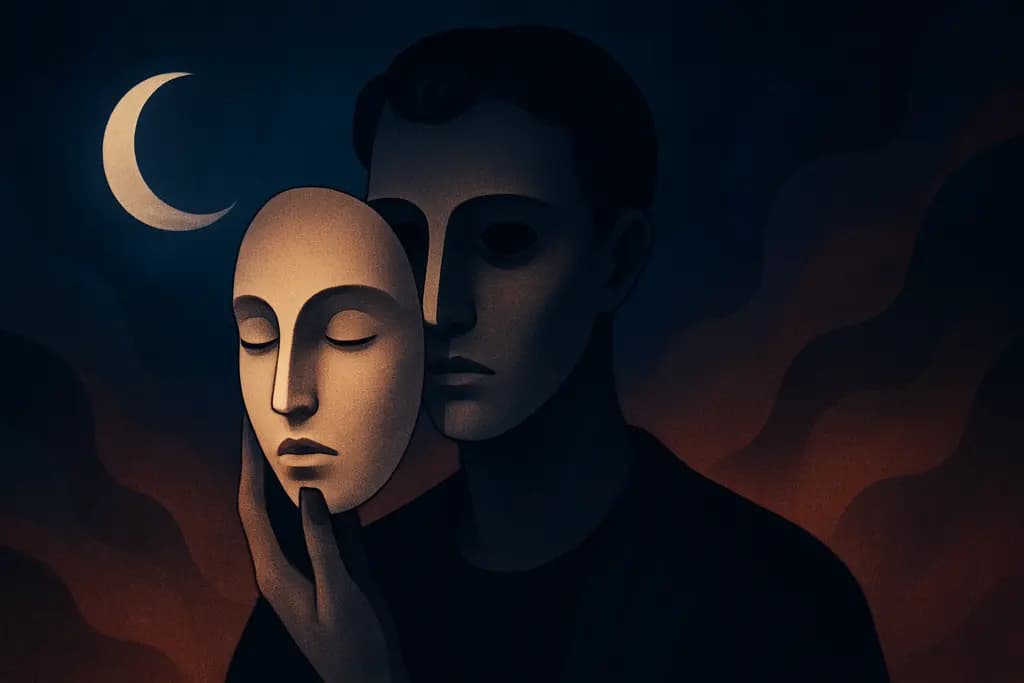
At its core, wearing another person’s face in a dream points to questions about identity, authenticity, and boundary confusion. Faces are the primary means by which we recognize others and present ourselves; putting a different face on suggests a mismatch between inner self and outward role, or anxiety about being seen as someone you are not.
This symbol shows up both in day-to-day concerns—like pretending at work or trying to fit into a social role—and in deeper fears about losing yourself. In nightmares, the image is often charged with urgency: you may feel trapped, discovered, or disconnected.
- Identity conflict: feeling pressured to be someone else or hide true feelings.
- Impostor feelings: anxiety that you are being exposed as a fraud.
- Deception or betrayal: concerns that someone is disguising themselves or that you are misleading others.
- Transformation or role shift: taking on a new persona during life changes.
Spiritual meaning of Wearing someone else's face in dreams
Spiritually, a face-change dream can symbolize a shift in energetic boundaries or soul roles. Some traditions read faces as masks of the ego; wearing another face might mean the ego is adopting borrowed traits instead of following authentic guidance.
In broad, cross-cultural terms the image may point to a need for discernment—either to see past others' appearances or to notice how external identities influence your spiritual path. In shamanic or symbolic frameworks, such dreams can signal initiation, the testing of selfhood, or the need to reclaim a lost aspect of the soul.
Psychological interpretation
Fear, stress or anxiety
When rooted in anxiety, this dream often emerges during high-pressure periods: interviews, performance, social scrutiny. The dream dramatizes the fear that you will be found out, judged, or unable to meet expectations. Physical sensations in the dream—tightness, inability to remove the face—mirror the immobilizing quality of anxiety.
Relationships and emotional bonds
If the face belongs to a partner, parent, or close friend, the dream can reveal enmeshment or role confusion in relationships. You may be adopting someone else’s opinions or emotional tone to maintain harmony, losing your voice in the process. Conversely, the face of a stranger can signal projecting others' traits onto people in your life.
Control, power or vulnerability
Wearing another’s face can reflect dynamics of control—either you feel controlled by an external identity imposed on you, or you are assuming a false persona to gain influence. Vulnerability shows up when the mask can fall away; nightmares often dramatize the terror of exposure and the consequences you imagine would follow.
Positive meaning
- Opportunity for growth: trying on a new face can represent experimentation with healthy roles or skills.
- Adaptive change: the dream may mark a deliberate transformation, such as taking on leadership or new social confidence.
- Empathy and understanding: wearing another's face can symbolize deep empathy, the ability to see life from someone else's perspective.
- Healing integration: incorporating qualities of others may help you reclaim strengths you previously thought were foreign or lost.
Negative meaning and warnings
- May suggest identity loss: repeated dreams can indicate you are compromising core values to please others.
- Can indicate deceit: the dream might warn that someone in your life is being inauthentic or that you are deceiving others.
- May point to boundary issues: frequent face-wearing imagery can indicate unhealthy enmeshment or people-pleasing.
- Can signal unresolved trauma: if the dream is distressing and persistent, it may reflect deeper wounds around safety or self-worth.
Common variations of dreams about Wearing someone else's face
- Wearing a stranger's face: Often points to fear of the unknown, social anxiety, or adopting cultural or social traits that feel foreign.
- Wearing a loved one's face (partner, parent): Can indicate enmeshment, role expectations, or unconscious imitation of that person.
- Wearing the face of someone who has died: May reflect grief, unresolved feelings, or a longing to reconnect with traits you miss.
- Unable to remove the face: Suggests feeling trapped in a role or identity and urgency to reclaim autonomy.
- Face falls off or mask slips during social interaction: Reflects fear of exposure, shame, or worry about a public mistake being revealed.
- Wearing a celebrity's or admired person's face: Points to aspiration, comparison, or pressure to live up to high standards.
- Wearing multiple people's faces at once: Indicates confusion about which identity is authentic, or pressure from many directions to be different things.
- Being forced to wear someone else's face by another person: Can reveal powerlessness, manipulation, or coercive dynamics in waking life.
What to do after such a dream
- Reflect on emotions: note how you felt in the dream and right after waking—fear, relief, guilt, numbness.
- Journal details: write who the face belonged to, whether you could remove it, and what others in the dream did.
- Examine current roles: look at work, family, and social expectations that may be prompting you to act against yourself.
- Check relationships and boundaries: consider where you might be over-adapting or losing your voice.
- Use creative processing: draw the dream, role-play scenarios, or use guided imagery to explore alternatives to the mask.
- Set small experiments: practice showing a small truth or preference to trusted people to rebuild authenticity step by step.
- Seek support if needed: if the dreams are recurring or highly distressing, talking with a counselor or therapist can help unpack persistent patterns.
Pay attention to feelings and context: the same image can warn, heal, or point the way to transformation depending on personal circumstances. Treat the dream as information—one piece of a larger inner conversation about who you want to be and how you want to be seen.