Dream About Standing at a cliff's edge – Meaning
Category: Fears & Nightmares
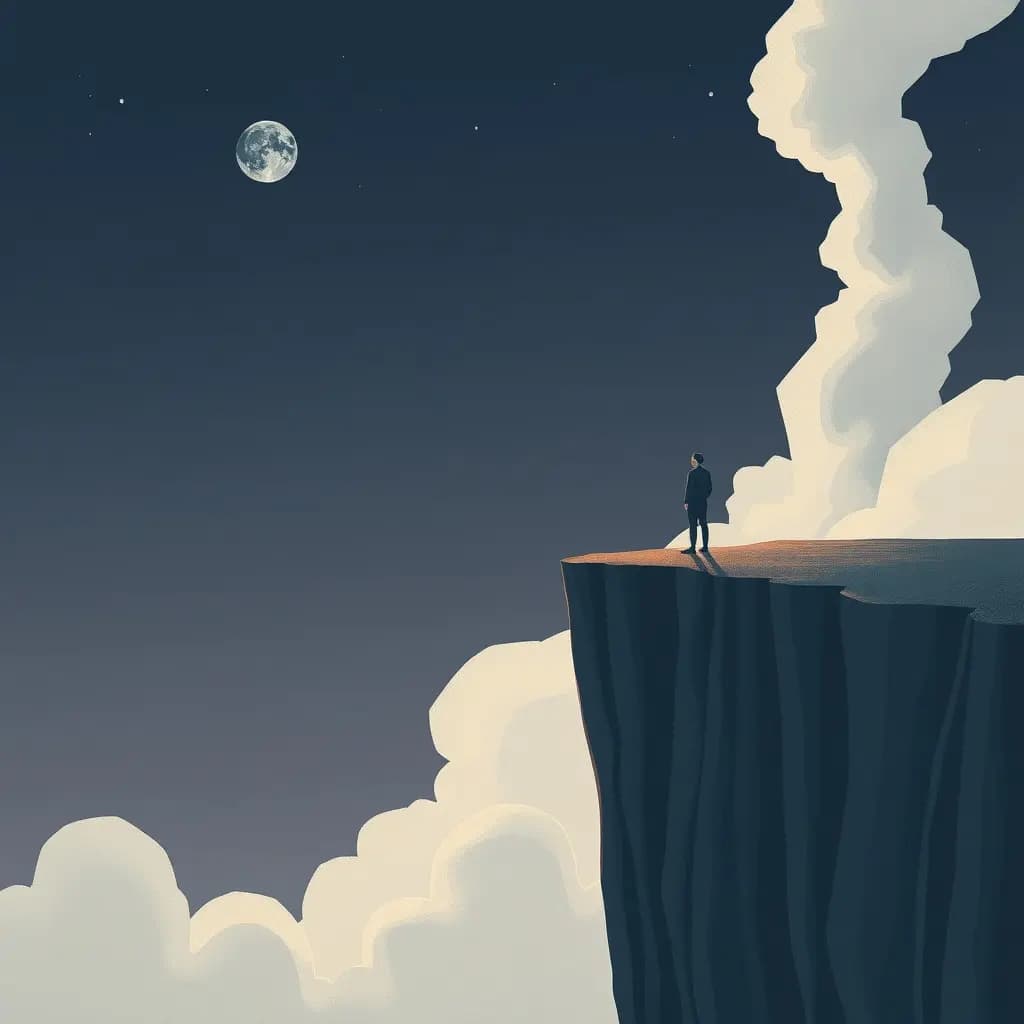
Dreaming that you are standing at a cliff's edge often feels intense and unforgettable. This image commonly points to a moment of risk, choice, or emotional brinkmanship in waking life. The specific meaning depends heavily on how you felt in the dream and the surrounding context.
General meaning of dreaming about Standing at a cliff's edge
Standing at a cliff's edge is a powerful symbol of thresholds. It visually represents being on the border between safety and the unknown, security and change, or holding steady and letting go. The dream tends to magnify whatever decision, fear, or possibility is most active in your life.
Typically, these dreams point to an internal evaluation of risk, boundaries, and potential transformation. They can be a call to examine limits—either those you set for yourself or those imposed by others—and to notice how close you actually are to taking a major step.
- Feeling stuck or on the verge of a decision
- Fear of falling, failing, or losing control
- The pull of new opportunities or radical change
- A test of courage, boundaries, and limits
Spiritual meaning of Standing at a cliff's edge in dreams
Spiritually, a cliff's edge often symbolizes a rite of passage or spiritual threshold. Many traditions view edges and thresholds as liminal spaces where transformation happens: a place where old patterns fall away and a new perspective is born.
In contemplative practices the cliff can signal an invitation to surrender attachments, face fears, or accept a wider horizon. In more animistic or shamanic views, it can mark a boundary between worlds—encouraging inner exploration and trust in the unknown.
Psychological interpretation
Fear, stress or anxiety
At its most straightforward psychological level, standing at a cliff's edge often mirrors acute anxiety. The dream may dramatize worries about failure, loss, or upcoming change. If you felt panic in the dream, it can indicate unresolved stressors or overwhelming pressure in waking life.
Relationships and emotional bonds
When the cliff dream involves another person—or when someone is visible below or beyond the edge—it can reflect relationship dynamics. You may feel emotionally on the brink: uncertain whether to step closer, pull away, or take a leap of faith with someone.
Control, power or vulnerability
Cliffs highlight the tension between control and vulnerability. Standing firm at the edge may reveal attempts to maintain control, while the fear of falling exposes vulnerability. Dreams like this invite you to consider where you hold power and where you feel exposed.
Positive meaning
- Opportunity for courageous change or a new beginning
- Recognition that a major decision is imminent and that awareness is the first step
- Empowerment: deciding to step back with intention rather than being pushed
- Growth through confronting fears and expanding emotional range
- Clarification of priorities: the dream can make what matters more visible
Negative meaning and warnings
- May suggest an avoidance of necessary decisions that could lead to stagnation
- Can indicate a risk of emotional overwhelm or burnout if current pressures continue
- May suggest vulnerability to impulsive choices under stress
- Can indicate unresolved trauma or anxiety that benefits from compassionate attention
- May suggest strained relationships where boundaries are unclear
Common variations of dreams about Standing at a cliff's edge
- Standing too close to the cliff edge: Often points to feeling dangerously close to a decision or crisis; you may need clearer boundaries or a pause to reassess.
- Falling from a cliff after standing at the edge: Commonly reflects fear of failure or loss of control; it can also symbolize a felt need to let go and the anxiety that accompanies surrender.
- Backing away from the cliff's edge: Can indicate avoidance—choosing safety over change—or a healthy retreat to rethink choices.
- Holding someone's hand at the cliff's edge: Suggests shared risk or a relationship decision; you may be negotiating mutual support or co-dependence.
- Standing at the cliff's edge during a storm: Heightens the sense of emotional turbulence; stormy weather can mean inner chaos or external pressures impacting your judgment.
- Looking over the edge at the ocean or valley below: Often evokes deep reflection about life perspective and long-term consequences; the depth below can symbolize unconscious material.
- Running toward the cliff's edge: May indicate impulsivity or a build-up of pressure driving you to act without fully weighing risks.
- Seeing a path along the cliff edge: Suggests there is a way forward that balances risk and safety—look for gradual steps rather than a single leap.
What to do after such a dream
- Reflect on how you felt in the dream: fear, exhilaration, curiosity, or numbness—those emotions are clues.
- Journal specifics: who was present, what you saw below the cliff, weather, and any decisions you faced in waking life.
- Map current life pressures: identify decisions, relationships, or transitions that feel like a brink.
- Talk it over with someone you trust to gain perspective and reduce isolation around the issue.
- Consider small, practical steps to test risks safely rather than forcing dramatic leaps; plan rather than panic.
- Use calming or grounding practices (breathwork, walking, nature time) to reduce anxiety before making big choices.
Pay attention to recurring cliff-edge dreams: repeated images invite deeper reflection and gradual action rather than immediate alarm.