Dream of Vehicles — Spiritual Meaning
Dreams like this often surface during a loss of control, relationship instability, or feeling trapped by obligations. This dream is commonly associated with family pressure, trust issues, or loss of control.
Category: Objects
What this dream often looks like
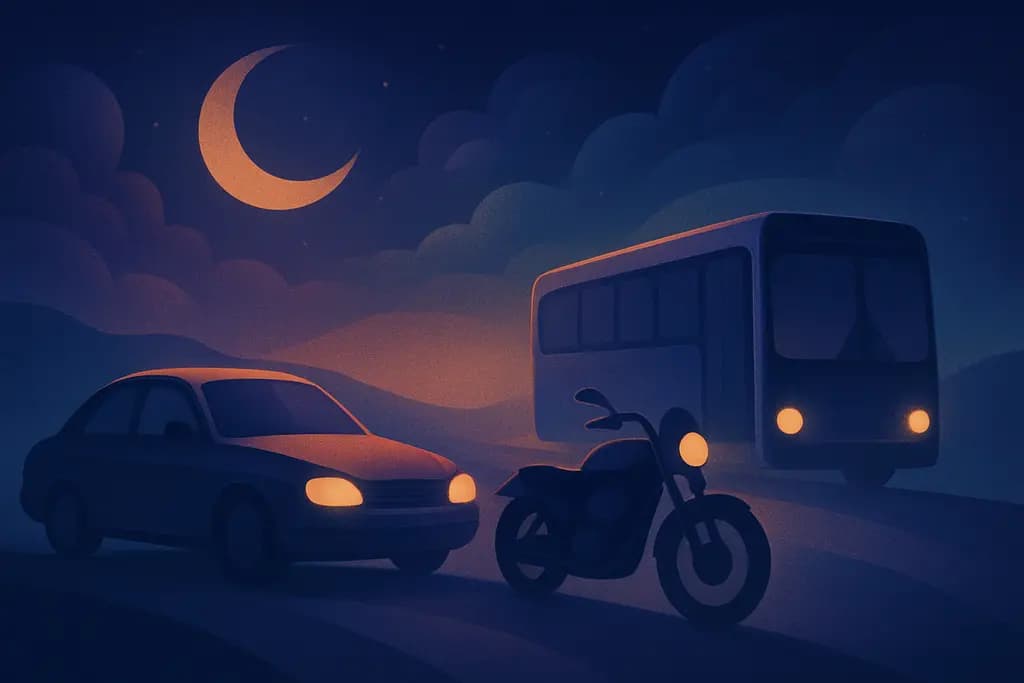
Direct answer: a vehicle dream usually points to your sense of movement through life. You might be driving an old family van down a foggy suburban lane with kids in the back, the tachometer climbing and your palms slick as the engine coughs. Or you stand at a rainy bus stop as a bus with your name painted on the glass pulls away. The scene feels urgent, embarrassed, or hollow—concrete events that map onto control, timing, and who’s steering.
How this dream can be interpreted
- Control and Direction. If you’re driving or steering, the dream often points to how in-charge you feel. Sudden steering failure, missing exits, or brakes that don’t work can mirror waking worries about decision-making, responsibility at work or home, or a sense that life is accelerating beyond your capacity. Notice whether you keep a firm grip or let go—that contrast reveals your confidence level.
- Transition and Endings. Vehicles that stop, break down, or change form—car turning into a train, or a bus becoming an empty ferry—commonly stage endings and transitions. A stalled engine at a crossroads may represent grief, a job ending, or a relationship changing its route. The dream highlights the emotional negotiation of leaving something behind and the uncertainty of what comes next.
- Family, Role, and Belonging. Dreams with family cars or crowded vans often reflect responsibilities and belonging. Driving familiar people can surface pressure to meet others’ expectations or guilt about choices that affect dependents. Being left behind at a terminal or watching relatives drive away can express isolation or a feeling that you no longer fit the role you once did.
- Anxiety About Pace and Control. Crowded highways, speeding, or watching others pass in gleaming vehicles commonly mirror stress about pace—either you fear falling behind or you worry you’re moving too quickly. Traffic jams and missed trains emphasize bottlenecks; the dream draws attention to where you might need to slow down, assert the brakes, or change lanes deliberately.
What this dream is rarely about
This dream is rarely a literal prediction of an accident, financial ruin, or imminent death. It does not usually serve as a one-to-one forecast. Instead, it commonly stages feelings about timing and competence; reading it as a prophecy reduces the emotional nuance. There is often anxiety in the scene, but the message tends to be symbolic about direction or change rather than literal fate.
Specific details people often mention
People often mention small, vivid images: a cracked windshield fogged by breath, the scent of diesel, a child’s backpack on the floor, a tinny radio playing an unfamiliar song, a conductor’s whistle or a clock stuck at 7:13. Those concrete details carry the dream’s emotional charge.
Spiritual meaning
Symbolically, vehicles frequently stand for a soul’s journey or a rite of passage: boats for crossing, chariots for authority, trains for destiny. In a spiritual reading the dream may invite reflection on direction and meaning—what you carry, what you leave at the station. Practices like mindful walking or simple ritual (lighting a candle before deciding) can help embody the change the dream gestures toward, without insisting on a single metaphysical explanation.
What it can reflect emotionally
From a contemporary emotional viewpoint, vehicle dreams often reflect locus of control, role strain, and situational anxiety rather than pathology. They can signal internal conflict about competence, a mismatch between desired speed and reality, or ambivalence about taking responsibility. Noticing repeated motifs—who drives, what breaks, whether you arrive—can reveal patterns in daily life. Journaling immediate feelings after the dream helps translate symbolic motion into practical steps like boundary-setting or scheduling changes.
What to ask yourself
- Who is driving in the dream and who is left as a passenger or on the curb?
- What breaks or stalls, and how do you react—panic, calm, or resignation?
- What would feel different if you intentionally slowed down, sped up, or changed direction this week?
Common questions
Why do I feel fear in this dream?
Fear in these dreams often reflects a waking worry about losing control, failing responsibilities, or running out of time. The body reacts in the dream to uncertainty about direction rather than to immediate physical danger.
Is this about money?
Not usually. While a car can symbolize status or resources, most vehicle dreams focus on movement and timing—how you navigate responsibilities—rather than literal financial forecasts.
Is this about relationships?
Sometimes. If family members appear as passengers or the vehicle is a family car, the dream commonly reflects roles, expectations, and belonging in relationships rather than a direct commentary on romantic issues.
Dream meanings connected to this one
People who dream about vehicles often end up exploring Cages, Keys, and Darkness next, because the same pressure can show up through different symbols. Comparing them usually makes the emotional pattern clearer. You may also want to compare it with Home if the same mood or conflict keeps showing up.