Dream About Uncontrollable laughter at a solemn moment – Meaning
Category: Feelings
A common version of this dream
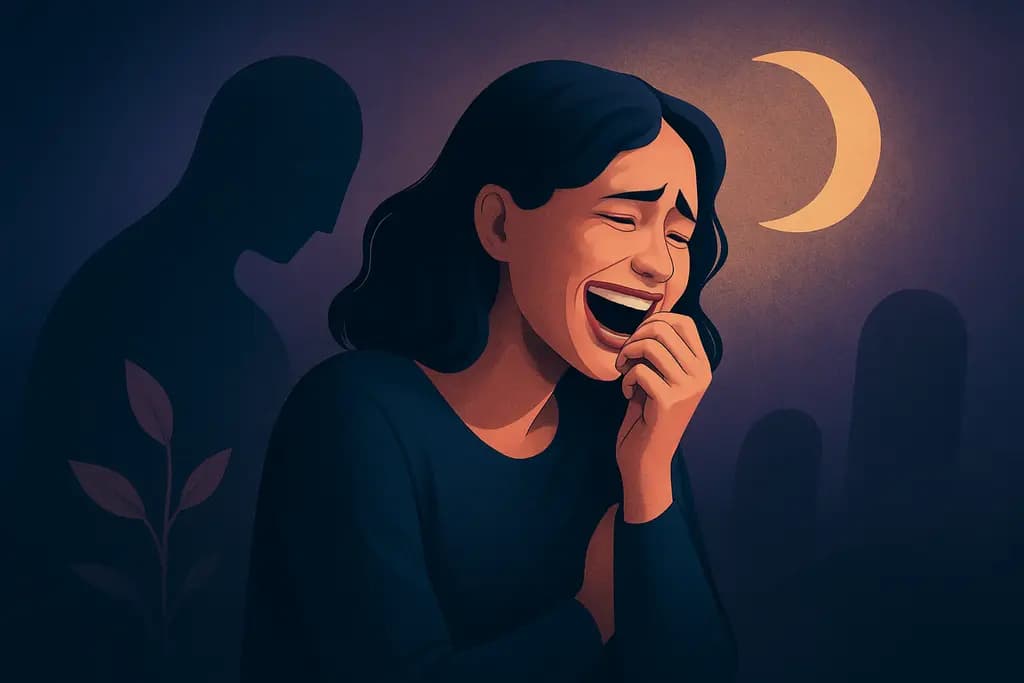
Direct answer: this dream commonly points to an emotional mismatch between what you feel and what the situation requires. You might be at a funeral, standing in a dim church aisle, and suddenly your chest erupts in laughter while others hold still; or you’re in a hushed courtroom and your giggle breaks the silence. The scene feels vivid—formal clothing, polished wood pews or a conference room table, the tightness in your jaw—and the laughter arrives as shock, embarrassment, or a small, undefinable relief.
Key interpretations
- 1. Defensive release. The laughter functions as a pressure valve: the body expels tension through an inappropriate response. In situations where you feel constrained—stiff family rituals, a workplace hierarchy, or a medical appointment—the nervous system may convert anxiety, fear, or suppressed anger into laughter. If the dream left you mortified, it may be your mind signaling unmet emotional needs or long-ignored stress that wants a safer outlet.
- 2. Emotional dissonance about a role or relationship. This dream can point to conflict between how you’re expected to act and who you feel you are. Laughing at a solemn event may reflect resentment toward a social role—caretaker, peacemaker, dutiful child—or discomfort with expectations in a relationship. The scene (wedding, funeral, meeting) often mirrors a real-life transition where you feel misaligned, and the laughter exposes the gap between public behavior and private feeling.
- 3. A boundary or authenticity alarm. Sometimes the laugh is a signal that you’re suppressing honesty to avoid conflict, and the subconscious stages a breach to get your attention. If the dream felt oddly liberating, it may suggest a yearning to be more authentic, to voice a taboo thought, or to break a performative mask. The dream nudges you to consider where small, concealed truths are accumulating until they spill out.
What this dream is not literally saying
This dream is rarely a literal prediction about future events or a sign you will behave that way in real life. It does not usually mean you will actually laugh at a real funeral or ceremony. Instead, it points toward emotional processes—release, discomfort, boundary-testing—not a prophecy. Avoid taking the dream as proof of bad character; it’s more commonly symbolic of internal conflict than a promise of action.
Unusual details people report
People report very specific details: a gust of cold air pushing open a heavy door, a child in a bright red coat in the back pew, a ticking wall clock that seems louder as you laugh, or the taste of metal on your tongue when you try to stop. Some wake with a racing heart, flushed face, or a lingering echo of other people’s footsteps.
Spiritual and symbolic perspective
From a spiritual or symbolic angle, some traditions read inappropriate laughter as a sign of inner incongruity—soul and circumstance out of sync. Laughter might symbolize a release of stagnant energy, a necessary shaking of the system to make room for transformation. Others interpret it as a call to authenticity: a reminder to align values with actions. These frames are suggestive rather than prescriptive; if you follow a particular spiritual path, consider how its symbols for ritual, grief, and joy might cast the dream in a different light.
Psychological perspective
Viewed psychologically, the dream commonly reflects tension between regulated social behavior and spontaneous affect. Laughter is a nonverbal coping response that can appear when anxiety, suppressed grief, or cognitive dissonance become intense. The scene—crowds, formal clothing, a podium—represents social expectation; your reaction indexes how comfortable you are with those expectations. Consider whether you’re avoiding difficult conversations, holding in strong feelings, or feeling trapped in a role. Not pathological on its own, the dream is an informative signal about emotional regulation and social stress.
Questions to reflect on
- Where in my life am I expected to behave a certain way even if it doesn’t feel true to me?
- What emotion did I feel during and after the laughter—panic, relief, guilt, amusement—and when did I last feel that in waking life?
- Is there a recent loss, pressure, or unresolved conflict I’ve been avoiding that might be showing up as this dream?
Frequently asked questions
Why do I feel fear in this dream?
Fear in the dream often comes from the anticipated social consequences—embarrassment, shame, or losing control in a public setting. It signals concern about being judged or punished for an impulse breaking decorum.
Is it related to stress?
Yes, stress commonly contributes. High pressure, exhaustion, or unresolved emotional load make the nervous system more likely to discharge via unexpected behaviors like laughter, even in dreams.
Is this dream a warning?
No—this dream is not usually a literal warning of future conduct. It’s more of an inward alarm about emotional mismatch, prompting reflection or changes in how you handle feelings and boundaries.
Related dreams to explore
If this dream keeps returning, pages about Being Ignored, black climbing, and black crying can reveal the related patterns underneath it. They often overlap around insecurity, transition, or stress in everyday life. You may also want to compare it with black Riding a Bike if the same mood or conflict keeps showing up.