Dream About Sudden Panic – Meaning
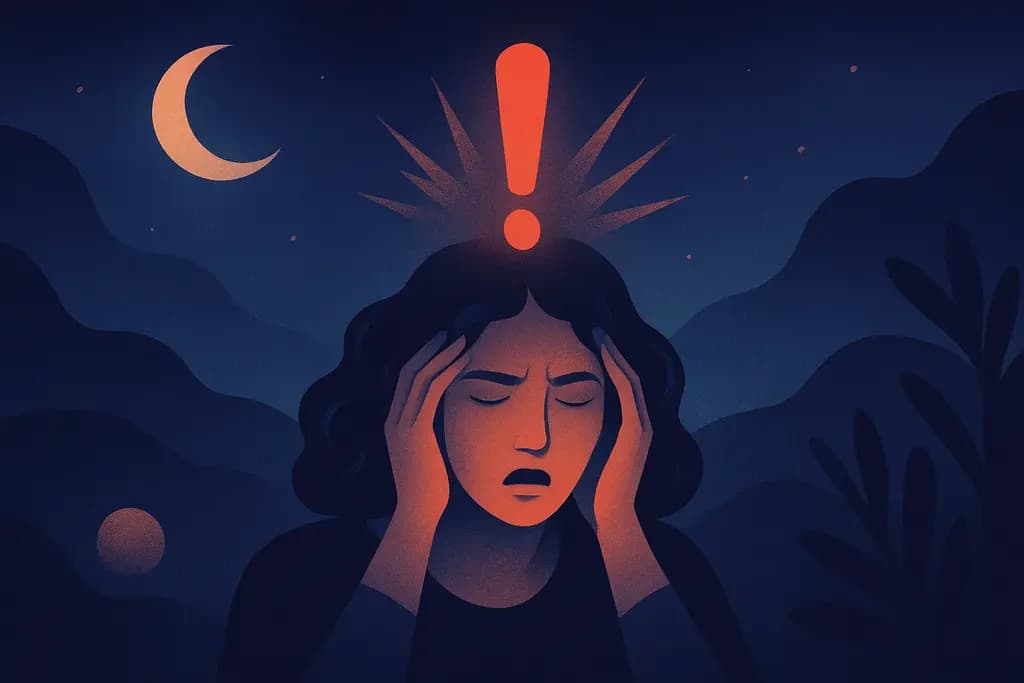
Category: Feelings
A common version of this dream
Direct answer: a sudden panic dream most often signals an immediate emotional alarm linked to something urgent or unsettled in your waking life. Picture this: you’re rushing through a fluorescent-lit train station, late, the departure board blurs, and your chest clenches as you realize the platform has vanished. Or you’re at your office desk and the door locks by itself while deadlines pile up — breath shallow, limbs trembling, a single sharp moment of helplessness. These scenes map to real events (missed transport, final notices, locked conversations) and the raw sensation—panic—becomes the dream’s core symbol.
How this dream can be interpreted
- Acute stress trigger. Label: Acute stress trigger. Quick, intense panic in a dream can point to immediate pressure—an approaching deadline, a sudden argument, or an unexpected bill. The dream dramatizes how overwhelmed your system feels; noticing the waking trigger (texts piling up, boss demands) can guide small practical steps like reorganizing priorities, delegating, or setting a time block to clear one task.
- Boundary or choice alarm. Label: Boundary or choice alarm. If the panic centers on being trapped or forced, it may signal that someone else’s plans or expectations are overriding your own. The urgency suggests you need to assert a boundary or make a clear choice. Look for situations where you’ve been acquiescing or postponing a decision and consider what protection or clarity you can create now.
- Unprocessed fear or memory. Label: Unprocessed fear or memory. Sometimes sudden panic arises when an unresolved past moment resurfaces — a minor accident, a public embarrassment, a childhood scare. The dream compresses past and present, producing a flash of alarm. A focused journal entry or talking through the memory with a trusted person can reduce its surprise power and give the emotion context.
- Physiological spillover. Label: Physiological spillover. Not all panic comes from an obvious stressor; physical states (poor sleep, caffeine, low blood sugar) can push your nervous system into quick alarm during sleep. If the dream repeatedly arrives after nights of little rest or heavy stimulants, adjusting sleep habits and evening routines can lower its frequency and intensity.
What this dream is not literally saying
This dream is rarely a literal prediction of a catastrophe. It does not usually forecast a specific future event in exact detail. Instead of reading it as a prophecy, treat it as an emotional signal: your nervous system is amplifying a feeling so it can be noticed. There is an emotional nuance here — urgent alarm without concrete danger — that asks you to respond rather than to panic about the dream itself.
Unusual details people report
People often report concrete oddities: an elevator that keeps descending past floors, a crowd of silent commuters who won’t move, shoes that dissolve underfoot, a locked bathroom door, sudden thunder, or a single piercing siren. Body reactions like a choked throat, numb hands, or an inability to shout are common, as are visuals of frayed paperwork or blinking warning lights.
Spiritual meaning
From a symbolic or spiritual angle, a sudden panic dream can be read as an inner messenger urging realignment: it may invite you to slow down, clear a blocked path, or release attachments that push you beyond your limits. Some people interpret the shock as a prompt to listen to intuition or to tend neglected elements of life (relationships, health, creativity). Hold this lightly: it’s a metaphorical nudge rather than a command, useful if it leads to deliberate, compassionate action.
What your mind may be processing
Interestingly, your brain and body use quick alarm states to prioritize attention: a sudden panic dream is your threat-detection system broadcasting that something needs notice. This is a neutral, modern framing — not a diagnosis — suggesting cognitive-emotional circuits (worry, anticipation, avoidance) are active. The dream may compress multiple small worries into one bright flash so you wake up aware. Tracking context—what you were doing the day before, recent conversations, or what you fell asleep thinking about—helps identify which mental patterns are feeding the panic.
Questions to reflect on
- When did I last feel that same tightness or helplessness while awake, and what was happening then?
- What specific deadline, conversation, or decision has been approaching that I haven’t addressed?
- Where in my body does this panic land, and what small, concrete action can I take to soothe that area?
Common questions
Is it related to stress?
Often yes. Sudden panic dreams commonly relate to stress—especially fast-onset or unresolved pressure like looming deadlines, abrupt demands, or recent conflicts—but they can also be amplified by poor sleep or stimulants.
Why do I feel fear in this dream?
Fear in the dream is your nervous system signaling a perceived threat. The dream condenses worry and bodily alarm into a vivid scenario so you wake up with attention on the issue; it’s an alert, not proof of imminent harm.
Is this dream a warning?
Rarely as a literal forecast. The dream does not usually predict specific future events; however, it can serve as a useful warning that something needs attention now—take it as a prompt to check what’s urgent or unresolved.
Related dreams to explore
Dreams about sudden panic are often connected to Being Ignored, black climbing, and black crying. Looking at those nearby themes can help you compare control, fear, pressure, or change across similar dream scenes. You may also want to compare it with black Riding a Bike if the same mood or conflict keeps showing up.