Dream About Sleep Paralysis or Unable to Move – Meaning
Category: Fears & Nightmares
What this dream often looks like
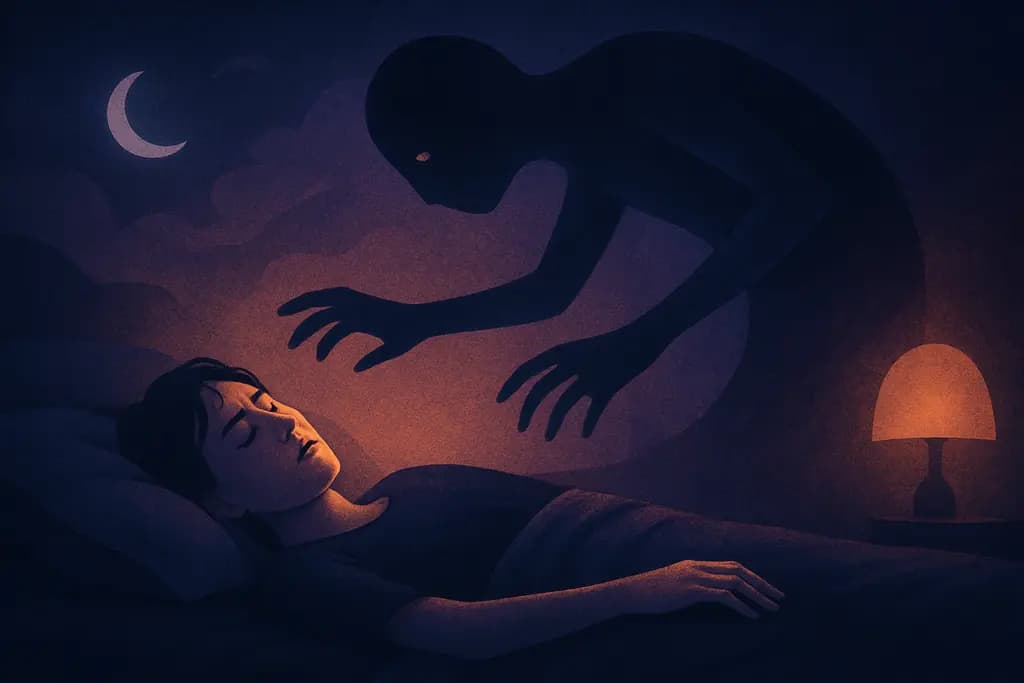
Direct answer: this dream most commonly signals a sense of being stuck or prevented from acting. You might be lying on your back in a dark bedroom, heart pounding, unable to lift your arms while a doorway gapes open and a hallway light pools on the floor. The body feels heavy as if weighted down; panic, shame, or a brittle calm can run through you as minutes in the dream stretch like hours.
Concrete details that tend to stand out
People report sharp sensory details: a buzzing fluorescent light above a hospital bed, a locked wooden door three steps away, the distant murmur of a crowd outside, the raspy click of old shoes on tile. Physical reactions—pins-and-needles in fingers, a choking sensation, or the taste of metal—often anchor the scene and make the helplessness feel immediate.
Key interpretations
Feeling stuck around a decision or role. When the dream centers on a doorway you cannot reach or a conversation you cannot join, it commonly points to a crossroads in waking life—an unwritten resignation, delayed career move, or a parenting/relationship role you feel boxed into. The paralysis captures the frustration of wanting to act but feeling blocked by obligations, habit, or fear of consequences.
Overwhelm, surveillance, or loss of control. If the dream includes someone watching from the end of the bed, a crowd outside, or orders shouted through a corridor, it often reflects pressure from others or a sense of being monitored. The immobility symbolizes how external demands — micromanaging bosses, exacting family expectations, or social scrutiny — can sap your sense of agency and trigger a freeze response.
Spiritual and symbolic perspective
Symbolically, some people read paralysis dreams as a moment of stalled spiritual energy or a threshold before a shift. The inability to move can be framed as an invitation to examine inner blocks: beliefs, regrets, or attachments that keep life from flowing. Take this gently — the image can serve as a prompt to cultivate small practices (breath, ritual, asking for help) that restore motion in both spirit and daily life, not as a definitive spiritual verdict.
Psychological perspective
From a neutral psychological angle, this dream may echo the body's instinctive freeze response when options feel exhausted. It can surface after intense stress, sleeplessness, or periods of chronic busy-ness where you had little chance to rest or assert yourself. The imagery of immobility helps your attention narrow to where you feel constrained; noticing the recurring settings and who’s present can point to patterns of avoidance, perfectionism, or unresolved conflict rather than a single medical cause.
What this dream usually does not mean
This dream is rarely a literal prediction of future paralysis or imminent danger. It does not usually mean a supernatural attack or that something will happen exactly as pictured. Instead, treat the imagery as symbolic of restriction or delay; the scene usually reflects emotional conditions rather than a forecast of events.
Personal reflection prompts
- When did I last avoid making a choice because I feared the outcome, and what would a small, reversible step look like now?
- Who or what in my daily life makes me feel observed, controlled, or unable to speak, and where could I try setting a boundary?
- What two practical actions could I take this week to create a sense of movement (schedule change, short conversation, or a tiny personal ritual)?
FAQ
Why do I feel fear in this dream?
Fear comes from the same instinct that signals danger: when your body feels immobilized, the brain interprets it as threat and triggers strong emotional responses like panic or dread.
Is this dream a warning?
Not usually. The dream is rarely a literal warning; it's more often a signal to examine pressure points in your life or to act on needs you've been postponing.
Is this about relationships?
Sometimes. If people you know appear as the source of the immobility, the dream can reflect relationship dynamics—control, unmet needs, or silence that leaves you feeling stuck.
Is this about money?
Usually not directly. However, financial stress or the pressure of scarcity can create the same freeze sensation, so if money worries dominate your waking life, they can show up in this dream.
Dream meanings connected to this one
Dreams about sleep paralysis or unable to move are often connected to Abandonment, Aging, and Being Chased. Looking at those nearby themes can help you compare control, fear, pressure, or change across similar dream scenes. You may also want to compare it with Being Followed if the same mood or conflict keeps showing up.