Dream About Sleep paralysis experience in a dream – Meaning
Category: Body & Health
A typical dream scenario
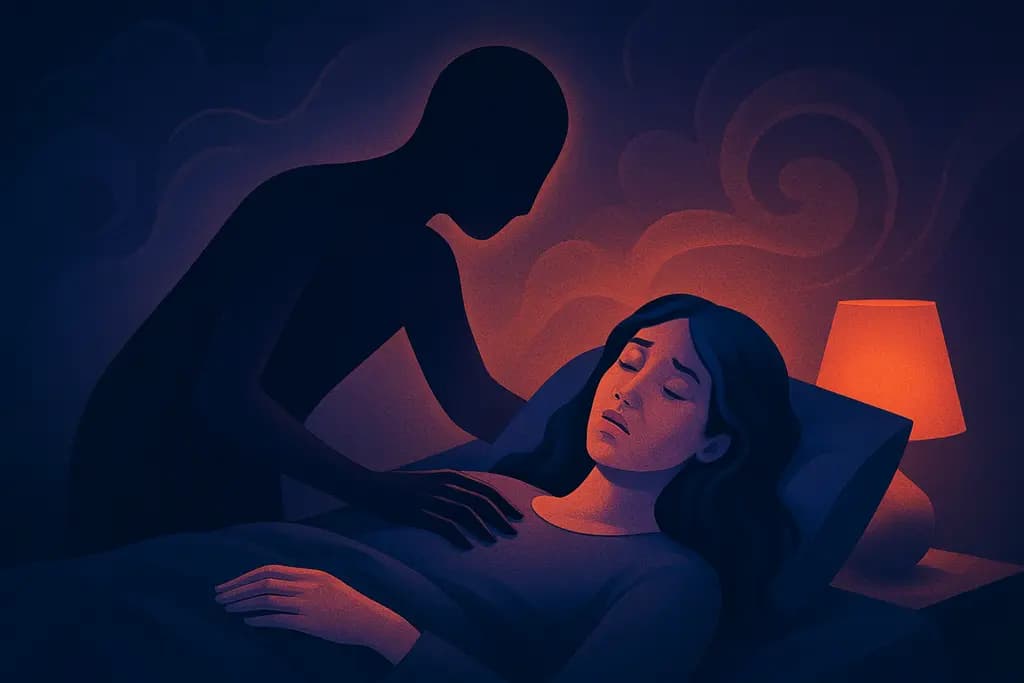
You wake in a dim bedroom, the alarm clock blurred, and find your limbs unresponsive. Your chest feels heavy as if a blanket presses down; a shadow stands at the doorway, or you can hear muffled footsteps in the hallway. In the dream you want to call out but your voice won’t form — panic ripples through you, or sometimes a resigned calm replaces fear. This usually comes after a disrupted night, a late argument, or a day when you felt powerless.
Main interpretation
Direct answer: dreaming of sleep paralysis most often signals a sense of being immobilized in some area of life — stalled choices, caregiving overwhelm, or a job situation where you feel you have no control. The pinned body and pressure often map onto concrete situations: missed deadlines that left you frozen, a relationship where you can’t speak up, or a health scare that made you feel physically limited. Pay attention to who’s in the room and what you wanted to do; those details point to where the paralysis is happening.
Three common meanings
- Loss of agency or stuck decision. The immobilized body often symbolizes a choice you can’t make or a path you feel blocked from taking. If you dreamed of being pinned during a conversation, you may be avoiding a difficult talk at work or home. The pressure on the chest can translate to the weight of options you’re afraid to act on.
- Overwhelm and exhaustion. When the scene follows a long day or caregiving stretch, the dream can reflect physical and mental burnout: every muscle feels leaden because you’ve been giving too much. The presence at the door may be a task list or obligation waiting to be addressed; your body’s refusal to move is a literalized “I have nothing left.”
- Suppressed emotion or unspoken fear. If the dream includes a judged or silent witness — a family member, boss, or stranger — it can mean anger, grief, or fear you’re withholding. The inability to shout or cry in the dream highlights how those feelings are trapped in your waking life, not necessarily the emotions themselves being dangerous.
- Boundary or control issues in relationships. Being held down by another presence, or by an indistinct pressure, may signal someone overstepping boundaries. This dream can point to a relationship where you feel controlled, smothered, or unable to assert yourself, from a close partner to an overbearing colleague.
What this dream is not literally saying
This dream is not usually a literal prediction of physical paralysis or a supernatural assault. It rarely functions as a forecast of an imminent medical event. Instead, it points to emotional, situational, or sensory overlap — your sleeping brain borrowing the feeling of immobility to represent stress, stalled action, or intense bodily awareness.
Unusual details people report
Interestingly, people report specific sensory details: a single cracked lamp by the bed, a peeling blue door ajar, the buzz of an overhead streetlight, or the taste of cold metal in the mouth; some feel the fabric of their pajamas stick to their skin or hear a distant car horn growing louder.
Psychological perspective
From a psychological angle, this dream often reflects an overlap between bodily sensations and emotional states rather than a single cause. During stressed or sleep-deprived periods the brain stitches together fragments—tension, shallow breathing, hypervigilance—and turns them into a vivid scene of paralysis. It’s a meaningful signal: notice patterns in timing (after arguments, late nights) and the emotion that dominates the dream, whether terror, resignation, or odd calm.
Why recurring versions matter
This dream becomes important when it repeats or arrives during major life changes. Recurrence can flag unresolved decisions, ongoing stressors, or a pattern of silencing your needs. If the dream intensifies after a trauma, a breakup, or a career pivot, treat it as a prompt: track triggers, improve sleep habits, and bring the images to a therapist or a trusted friend to work through the stuck feeling.
Common questions
Is it related to stress?
Is it related to stress? Yes. This dream often appears during high stress, sleep disruption, or when responsibilities pile up; those conditions increase the odds of feeling immobilized in sleep imagery.
What should I do after this dream?
What should I do after this dream? Note who or what was in the scene, rest well, use grounding breath or gentle movement before bed, and journal one specific action you can take about the waking problem the dream points to.
Why do I feel fear in this dream?
Why do I feel fear in this dream? Fear usually comes from the experience of losing control or being silenced; the brain amplifies that fear during sleep, combining bodily sensations with emotional themes to create a vivid sense of threat.
Related dreams to explore
People who dream about sleep paralysis experience in a dream often end up exploring Sleep paralysis (can't move), Paralysis, and Aging or Seeing Yourself Old next, because the same pressure can show up through different symbols. Comparing them usually makes the emotional pattern clearer. You may also want to compare it with Amputated Limb if the same mood or conflict keeps showing up.