Dream About shadow acting on its own dream meaning – Meaning
Category: Spiritual & Symbolic
A common version of this dream
You’re alone in a small kitchen at midnight, fluorescent light buzzing, and you notice your silhouette lift from the linoleum and cross the room toward the front door. The feeling is not just fear but a tight, private curiosity — like watching a hidden habit leave the house. This often arrives after a sleepless night, a heated argument, or when you’ve just handed in a resignation letter and can’t stop replaying choices in your head.
What this dream usually means
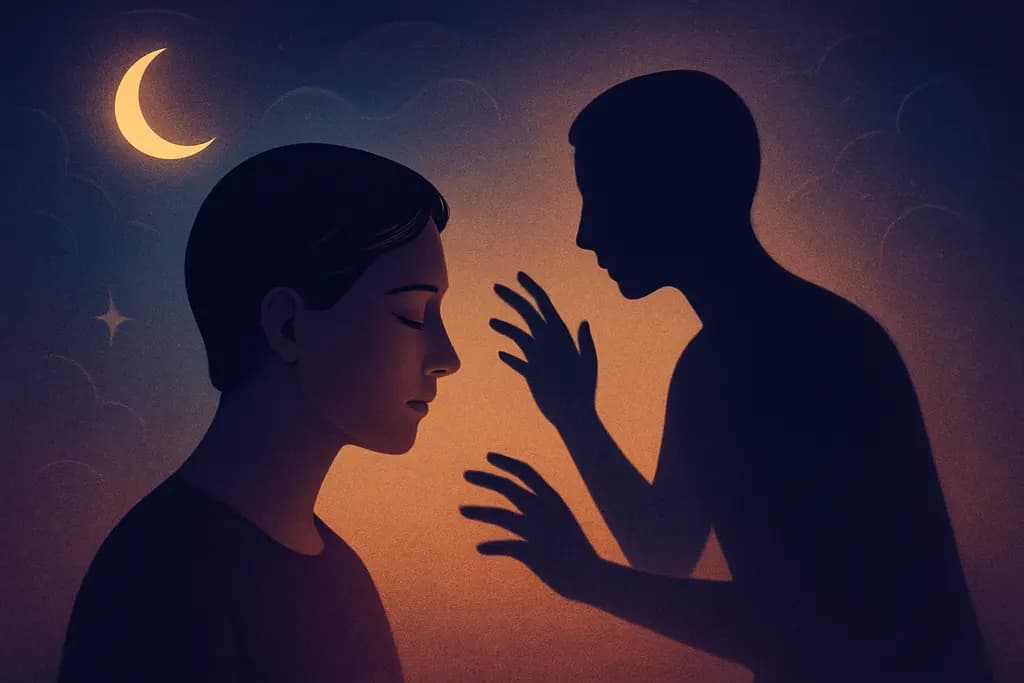
Direct answer: this dream most commonly means a disowned part of you is becoming conscious. The shadow’s independent motion is a symbolic signal that feelings, impulses, or memories you’ve kept out of sight are moving into awareness. Practically, it may follow anger you suppressed at work, grief you postponed after a breakup, or the sudden freedom and unease of change; the dream points to integration or the need to notice what you’ve been avoiding rather than to a literal external threat.
How this dream can be interpreted
- Emerging self: repressed traits or needs. The autonomous shadow can represent personality aspects you sidelined: anger after staying silent, desire after long restraint, or creative urges you dismissed. When the shadow moves away from you it may be showing you what you’ve been denying. The dream asks you to name the quality (anger, curiosity, play) and consider where you can safely express or integrate it into daily life.
- Trauma or anxiety replaying as independent motion. If you’ve experienced sudden stress, abuse, or a frightening event, the shadow acting on its own can be a replay of implicit memories — sensations or reactions that feel separate from your deliberate self. The autonomous movement often mirrors hypervigilance, flashbacks, or a sense of lost control, indicating a need for containment strategies: grounding, boundaries, and slow exposure to what feels unsafe.
- Intuition or creative impulse stepping forward. Sometimes the shadow leaves because an overlooked intuition or creative idea is ready to be followed. It can appear less menacing and more purposeful when it moves toward a sketchbook, doorway, or stage. Read this version as a nudge: a part of you knows a new direction or artistic form is viable, and the dream’s separation is an invitation to experiment rather than a threat.
What this dream is not literally saying
This dream is rarely a literal prediction of a separate being acting in the world. It does not usually signal supernatural possession or an external agent controlling events. Instead of forecasting specific external outcomes, it highlights inner dynamics — though it can feel ominous, it more often warns you to pay attention to feelings and patterns that need addressing.
Concrete details that tend to stand out
People frequently recall specific sensory details: a cracked hallway light, an umbrella left by the door, the shadow wearing a coat you don’t own, or rain tapping on a window. Some hear distant voices or a single, metallic key turning; others describe goosebumps and the taste of copper in the mouth as the shadow passes.
What your mind may be processing
From a contemporary psychological view, this dream reflects processes of attention and memory rather than prophecy. Your brain is simulating scenarios that bring unattended emotions into foreground awareness; the autonomous shadow is a metaphor produced by associative networks linking bodily sensation, unresolved affect, and situational cues. Repetition tends to mark stronger salience: the emotion or memory is prioritized by affective systems and keeps reappearing until it’s processed, labeled, and given adaptive outlets.
Why recurring versions matter
This dream becomes important when it repeats, coincides with ongoing stress, follows unresolved fear, or appears during major transitions like divorce, career change, or relocation. Recurrence signals that the issue hasn’t been integrated: the mind keeps returning to the image until you either acknowledge the feeling or change the surrounding life situation. Pay attention when the dream grows more vivid, when it returns after you think you’ve moved on, or when it influences daytime decisions.
FAQ
Can this dream be positive?
Can this dream be positive? Yes. While it can feel unsettling, the shadow acting on its own may indicate growth: a buried skill, intuition, or creative impulse asserting itself. If the movement feels purposeful rather than threatening, it often points to opportunity for integration.
Why does this dream repeat?
Why does this dream repeat? Repetition usually means the content has unresolved emotional weight. Your brain prioritises that material—stress, guilt, or an unmet need—until you notice, name, and address it or until circumstances change.
Is this about relationships?
Is this about relationships? Sometimes. The autonomous shadow can reflect dynamics with others—roles you play, boundaries you avoid, or feelings you suppress in close relationships—but it can also be entirely intrapersonal, signaling inner conflicts unrelated to a specific person.
Related dream meanings
People who dream about shadow acting on its own dream meaning often end up exploring shadow acting on its own in the house, shadow acting on its own in bed, and shadow acting on its own attacking me next, because the same pressure can show up through different symbols. Comparing them usually makes the emotional pattern clearer. You may also want to compare it with white shadow acting on its own if the same mood or conflict keeps showing up.