Dream About Playing with your younger self – Meaning
Category: Family & Children
A typical dream scenario
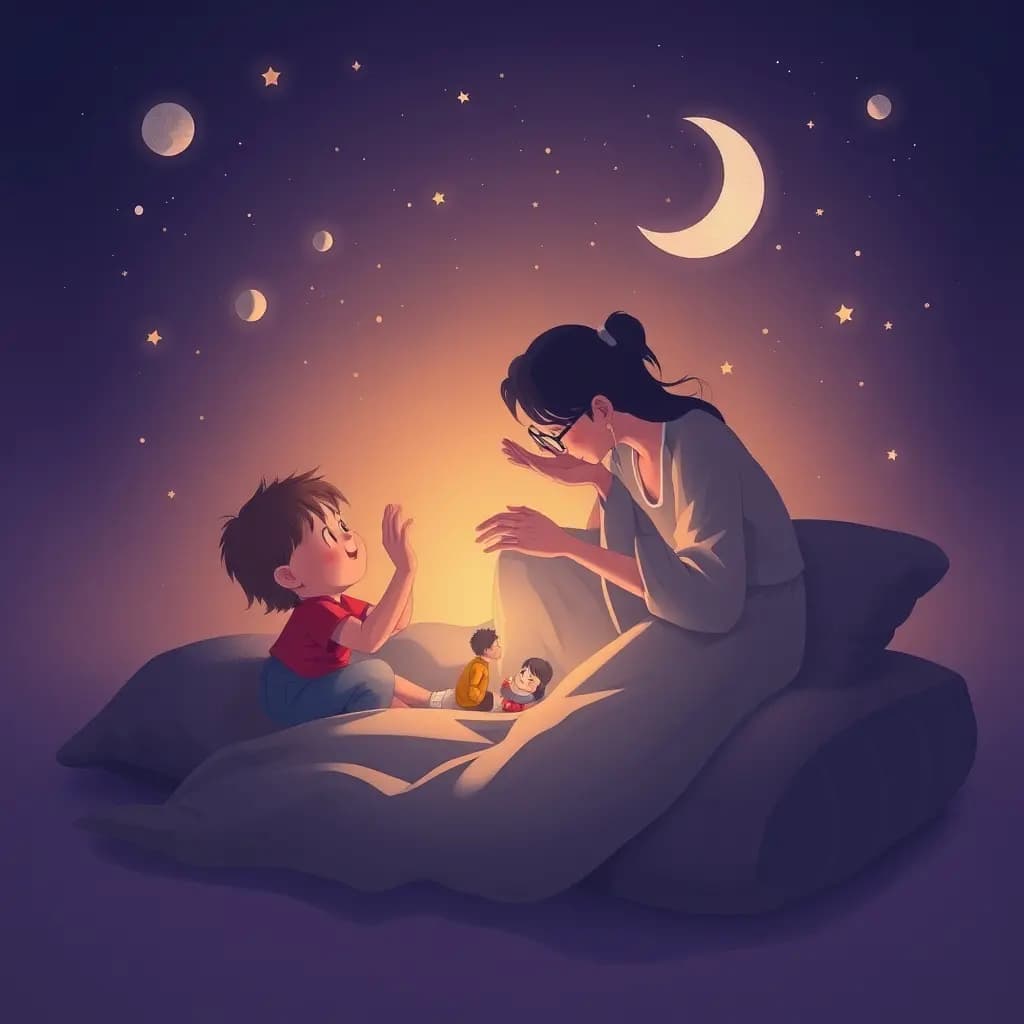
Direct answer: Dreaming that you are playing with your younger self most often signals a desire to reconnect with past feelings or to mend something unfinished. In the dream you might be on a neighborhood swing set at dusk, holding a smaller version of you who laughs nervously while you try to tie their shoe. The scene feels simultaneously warm and awkward: the smell of cut grass, a scraped knee from running, a parent’s distant voice, and the tight, unexpected urge to both protect and learn from that child.
Specific details people often mention
People often report exact images: an attic door left ajar, a school uniform splashed with rain, the sound of a chalkboard scrape, sticky candy in small hands, or the sensation of your heartbeat syncing with the child’s laugh. Sometimes a familiar toy, a broken bicycle, or a parent’s sweater appears and anchors the scene.
Three common meanings
- 1. Healing unresolved needs. This reading treats the younger self as a holder of unmet needs—comfort, approval, safety. Playing with that child in the dream can mean you’re trying on new ways to give yourself what was missing: setting boundaries you never had, speaking kindly to yourself, or finally confronting a memory. Practically, it may suggest specific repair actions like writing a letter you never sent, or setting a concrete boundary with someone who repeats an old pattern.
- 2. Reclaiming lost play and creativity. Here the dream highlights lost freedom: imaginative risks you quit taking, hobbies you abandoned, or a sense of ease replaced by busyness. The act of play—running, drawing, climbing—signals permission to restore small rituals: an afternoon of drawing, a weekend rule that emails stay closed, or a creative project you kept postponing. Emotionally, this interpretation often feels bittersweet: joyful in release, uneasy about time lost.
- 3. Inner guidance for present choices. Seeing your younger self can function as an internal advisor, pointing out values you adopted early—truth, courage, simplicity—that you may need again. If you’re facing a decision (career move, relationship shift), the child’s behavior in the dream—brave, fearful, curious—can indicate which option aligns with those core values. The dream may prompt a practical step: a small test that honors that earlier value before a big commitment.
Symbolic and spiritual meaning
Symbolically, many spiritual traditions interpret the younger self as the ‘inner child’ or an archetype that needs integration. In that framing the dream may suggest soul-level reconciliation, a rite of passage, or reclaiming innocence lost to trauma or duty. It can be seen as an invitation to bring compassion to earlier parts of yourself and to allow those qualities to inform your present path. This is a non-dogmatic reading—useful as metaphor rather than fixed doctrine.
What it can reflect emotionally
From a modern, non-medical viewpoint, this dream often reflects memory reconsolidation: current emotions reactivating childhood scenes so you can re-evaluate them. It can highlight internalized caregiver voices or learned coping strategies (people-pleasing, avoidance). Emotionally, it suggests processing—giving attention to feelings you shelved—and practicing new responses. If a recurring trigger shows up (a similar argument pattern, a fear about competence), the dream is like an internal rehearsal room where you can try different approaches safely.
What this dream is rarely about
This dream is rarely a literal prediction of events or a prophecy about your future. In real life, it does not announce specific outcomes like reunions or sudden wealth. Instead, it tends to be symbolic and emotional—an invitation to notice patterns rather than a roadmap. It can feel urgent, but that urgency usually points inward, not outward.
What to ask yourself
- What specific scene from my childhood keeps appearing in the dream, and what emotion does it bring up now?
- Which small activity from childhood (drawing, running, making things) could I reintroduce this week?
- Who in my life today acts like the caregiver in the dream, and what boundary or conversation would feel healing?
Common questions
Is it related to stress?
Is it related to stress? Yes. These dreams often surface during stress or life transitions; they draw attention to how old coping strategies are holding up now and may suggest gentler ways to respond.
Is this about money?
Is this about money? Not usually. While financial worries can trigger the dream, playing with your younger self more commonly addresses emotional needs, identity, or creativity rather than literal finances.
Why do I feel fear in this dream?
Why do I feel fear in this dream? Fear can come from encountering early vulnerabilities or from the sense that you might repeat past mistakes. The emotion signals what still feels unsafe and what needs reassurance.
Is this about relationships?
Is this about relationships? Often. The dream commonly highlights how early bonds shaped present relationships—patterns of closeness, distance, caretaking, or boundary issues you might now want to change.
Related dreams to explore
Dreams about playing with your younger self are often connected to Child hands you suitcase, Voices of ancestors call you, and Family photo with blank faces. Looking at those nearby themes can help you compare control, fear, pressure, or change across similar dream scenes. You may also want to compare it with Lost sibling returns older if the same mood or conflict keeps showing up.