Dream About Playing a musical instrument badly in public – Meaning
Category: Feelings
A typical dream scenario
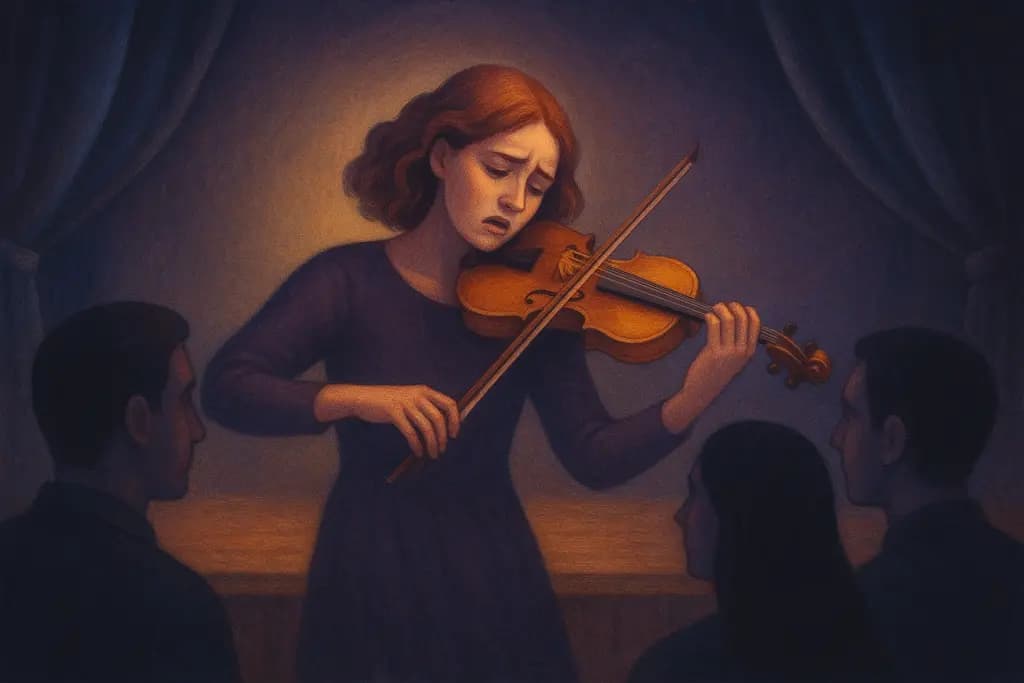
You’re standing on a bright school auditorium stage or on a crowded street corner, a cracked violin or dented trumpet in your hands. People around you whisper and frown as you fumble the opening notes; your fingers skip strings or you miss the beat. You feel your face heat, your palms sweat, and a hollow panic—like being exposed during an exam—rushes through you. The scene ends with embarrassed silence or someone walking away.
Specific details people often mention
Dreamers often report specific details: a single flickering stage light, a row of folding chairs, a leaking ceiling above the audience, an oversized coat hiding your hands, a car horn cutting through the music, or a physical reaction like your jaw locking or your throat closing.
What this dream usually means
In many cases, this dream points to anxiety about being judged and worries about how you present yourself in public. The instrument is a symbol of your voice or a skill you value; playing it badly in front of others often signals concern that you’re not meeting expectations or that your self-expression feels clumsy. Rather than predicting actual public failure, the dream commonly highlights a discomfort with vulnerability and the desire to improve social confidence and authenticity.
Key interpretations
- Fear of Social Judgment. The most direct reading: the public setting highlights concern about other people’s opinions. If the crowd’s faces feel critical, the dream may be processing anxiety about being evaluated at work, in relationships, or on social media. It can push you to notice where you censor yourself or avoid visible roles because you fear negative feedback.
- Struggle with Self-Expression. An instrument represents your voice or a creative skill. Playing it badly suggests you feel awkward expressing who you are—perhaps you worry your ideas sound unpolished or that your emotions come out the wrong way. This interpretation invites practical steps: practice small acts of honest expression and notice which settings feel safer for your authentic voice.
- Perfectionism and Identity Pressure. If you expect flawless performance of yourself, any small mistake can feel catastrophic; the dream surfaces this internal pressure. It can point to roles where you’re carrying others’ expectations—family, career, community—so the misshapen notes are symbolic slips in identity. The dream asks whether you’re holding an unrealistic standard and where gentler benchmarks could reduce crippling anxiety.
What it can reflect emotionally
From a modern, non-medical viewpoint, this dream commonly reflects social anxiety patterns, self-critical inner dialogue, and the habit of equating worth with public competence. It shows how the mind uses a performance metaphor to rehearse feared outcomes and rehearse coping strategies. Not a diagnosis, but a signal: notice recurring negative self-talk, tasks you avoid, and small situations where you already succeed despite doubts—those are practical starting points for changing how you evaluate yourself.
What this dream usually does not mean
This dream is rarely a literal prediction that you will perform poorly in the future. It does not usually mean you lack talent or that public humiliation is inevitable. Instead, it commonly reflects inner doubts about exposure and competence; the image is symbolic, not a forecast. Emotional nuance matters—shame and urgency in the dream signal different work than quiet embarrassment.
When to take this dream seriously
Take this dream seriously when it repeats, when you wake with lingering shame, or when it appears during major life transitions—starting a new job, entering a relationship, or moving cities. Recurrence suggests an unresolved pattern: avoidance of visibility, harsh self-criticism, or a bolt of vulnerability that hasn’t been processed. The dream becomes most useful when it points to concrete changes: lowering perfectionist standards, rehearsing small public tasks, or seeking supportive feedback.
FAQ
Why does this dream repeat?
Why does this dream repeat? Repetition usually flags unresolved anxiety or a recurring life situation—habitual self-criticism, ongoing public pressure, or repeated exposure to judgment that your mind keeps trying to process until you change the underlying pattern.
Why do I feel fear in this dream?
Why do I feel fear in this dream? Fear comes from the threat of social exposure and loss of status; the dream simulates being evaluated and the body responds with panic to rehearse avoidance or prepare coping strategies.
Is this dream a warning?
Is this dream a warning? Not usually; it’s more of a signal about inner pressure and where you feel vulnerable. It can point out risks in your habits but is not a literal prediction of future events.
Can this dream be positive?
Can this dream be positive? Yes. It can motivate practical growth—practice, honest feedback, and gradual exposure can convert the dream’s embarrassment into increased confidence and clearer self-expression.
Dream meanings connected to this one
People who dream about playing a musical instrument badly in public often end up exploring Being Ignored, black climbing, and black crying next, because the same pressure can show up through different symbols. Comparing them usually makes the emotional pattern clearer. You may also want to compare it with black Riding a Bike if the same mood or conflict keeps showing up.