Dream About Persistent deja vu – Meaning
Category: Feelings
What this dream usually means
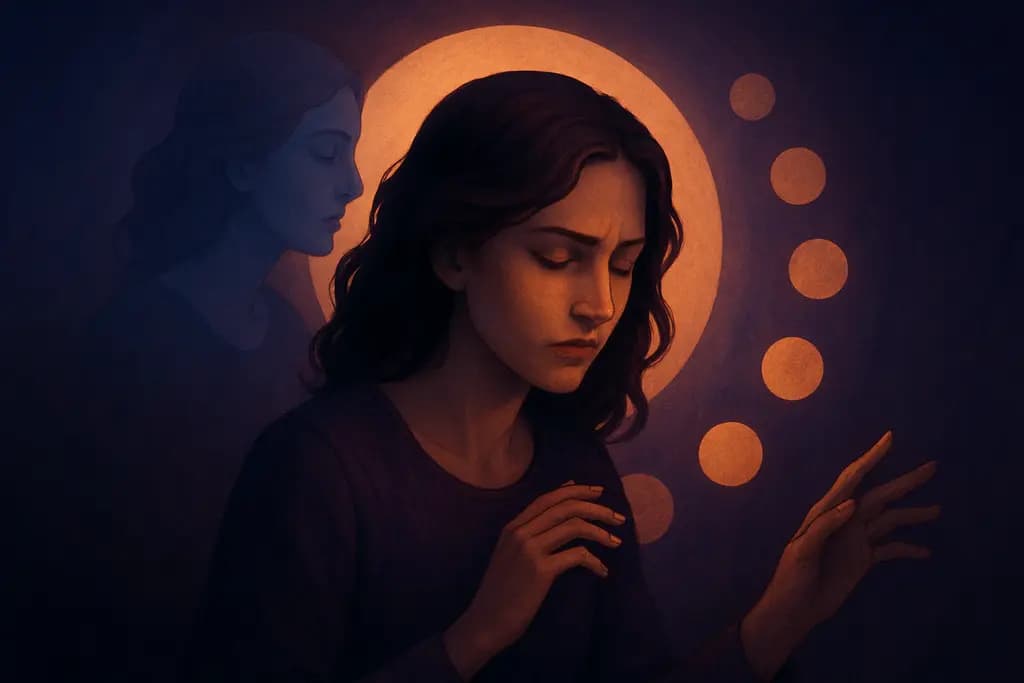
This dream usually means your mind is signalling a looped emotional issue or an unresolved decision rather than predicting future events. Repeating the same scene — an argument that restarts, a door that keeps opening to the same room, or a commute that never completes — commonly points to a habit, regret, or unresolved responsibility that your attention keeps returning to. The intensity of the feeling in the dream (panic, calm resignation, curiosity) helps identify whether it’s avoidance, guilt, or a practical choice you’re stalling on.
What it can reflect emotionally
From a modern, neutral viewpoint this pattern often reflects cognitive rumination and the mind’s need to resolve unfinished business. In real life, when decisions are avoided or emotions are suppressed, the brain keeps returning to the same scenario to work through possible outcomes. Stress, sleep fragmentation, and repetitive daily cues strengthen these loops, so the dream is commonly associated with mental rehearsal and the habit of running the same mental tape rather than with any clinical diagnosis.
What this dream usually does not mean
This dream is rarely a literal premonition or a straightforward prophecy about future events. It does not usually work as a direct warning that a particular event will happen. Instead, the repetition is symbolic: your mind is rehearsing feelings and responses, not predicting exact real-world outcomes. Treat the dream as a spotlight on an internal pattern rather than a calendar of fate.
Three common meanings
- Unresolved decision loop. When the same choice or fork in the road repeats, the dream may be pinning you to a decision you’ve deferred: accepting a job, ending or recommitting to a relationship, or moving house. The loop tests how you feel about each option — fear, relief or boredom — and pushes you to examine why you hesitate and what would change if you acted.
- Ruminating emotional pattern. If a familiar interaction, like an argument or a humiliating moment, replays, the dream often reflects a lodged emotional pattern such as shame, resentment, or caretaking exhaustion. Your subconscious replays the scene to help you process feelings you’re repeatedly replaying in waking life, suggesting it’s time to change your response rather than relive the memory.
- Memory rehearsal or rehearsal of safety. Sometimes the repetition serves as rehearsal — practicing a different response to a stressful scene, such as telling someone the truth or walking out of an unsafe space. The dream provides a low-risk arena to try new actions; recurring deja vu can indicate a preparatory stage before you actually change behavior.
Unusual details people report
People often notice oddly specific images: a foggy platform where a train never arrives, a hallway with one locked door, a crowd wearing the same color, or the repeated sound of a single song. Some report bodily reactions like a tightening throat or fingers tracing the same object — a watch, a ticket, or a chipped cup — each time the scene loops.
When to take this dream seriously
Take this dream seriously when it recurs frequently, appears during major stress, follows a trauma, or coincides with a life transition like a career shift or breakup. Recurrence suggests the brain hasn’t resolved the issue; if the dream spikes during sleepless nights or after an argument, it’s a practical cue to address the situation directly. If it brings persistent anxiety or disrupts daily functioning, prioritize concrete action: a conversation, a decision timetable, or professional support.
How different traditions interpret it
Meanings differ across traditions: some folk beliefs read repeated scenes as omens about relationships or luck, Jungian-influenced views see them as archetypal patterns surfacing from the collective unconscious, and certain eastern practices interpret them as karmic loops to be noticed and transformed. No single culture claims a universal answer; the same image can be framed as a warning, a lesson, or a prompt for mindfulness depending on the tradition.
Common questions
Why does this dream repeat?
Why does this dream repeat? - The dream repeats because your mind is rehearsing an unresolved issue or habitual response; repetition helps the brain test outcomes and draw attention to a decision or emotion you haven’t fully processed.
Why do I feel fear in this dream?
Why do I feel fear in this dream? - Fear often signals perceived risk in changing behavior or confronting someone; the emotion highlights what you think you might lose, be judged for, or fail at if you act differently.
Can this dream be positive?
Can this dream be positive? - Yes. Repetition can be a rehearsal that lets you practice new responses, gain confidence, and quietly prepare for change instead of condemning you to inaction.
Is this dream a warning?
Is this dream a warning? - It’s rarely a literal warning about specific future events; more often it indicates a pattern that needs attention and may serve as a practical prompt to address a real-life concern.
Dream meanings connected to this one
Dreams about persistent deja vu are often connected to Being Ignored, black climbing, and black crying. Looking at those nearby themes can help you compare control, fear, pressure, or change across similar dream scenes. You may also want to compare it with black Riding a Bike if the same mood or conflict keeps showing up.