Dream About Owls at night – Meaning
Category: Animals
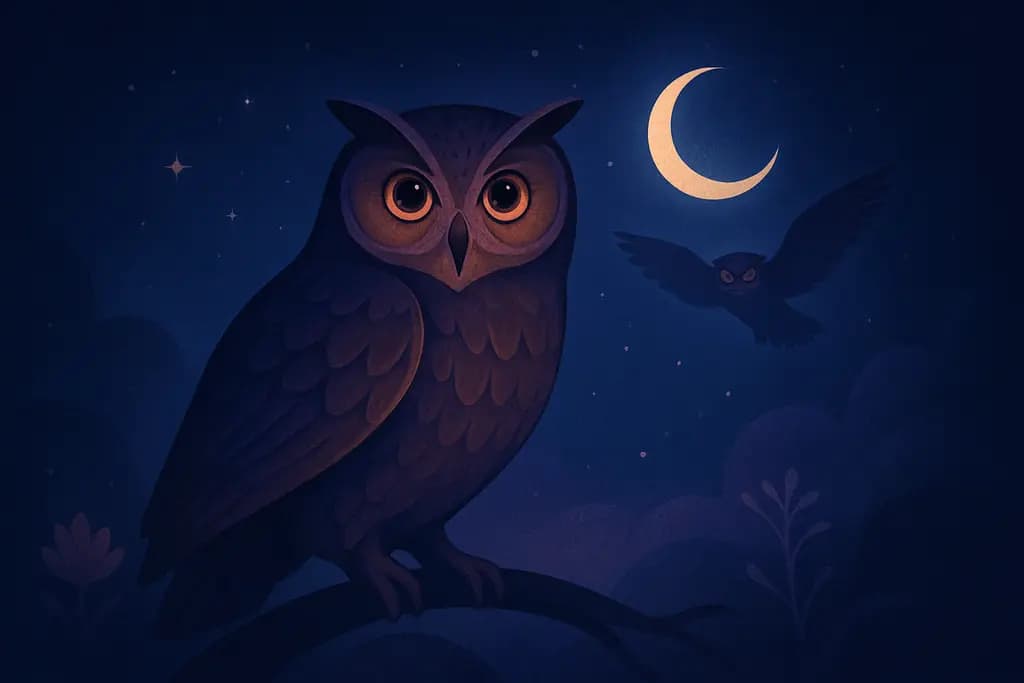
Dreaming of owls at night often feels vivid and charged—these nocturnal birds symbolize seeing what is hidden, heightened intuition, and messages from the unconscious. The precise meaning depends a lot on how the dream felt and what was happening around the owl: your emotions, the owl's behavior, and the broader dream context shape the interpretation.
General meaning of dreaming about Owls at night
Owls in night-time dreams commonly represent wisdom, perception, and things that emerge from darkness into awareness. Because owls are active at night, they are linked to the unconscious, secrets, and insight that appears when the conscious mind is quiet. Many people report that such dreams coincide with periods of introspection or when an important decision requires deeper inner listening.
Typical interpretations emphasize the owl as a messenger or mirror: it can point to knowledge you already have but haven’t acknowledged, or warn you that something hidden needs attention. Key meanings often include:
- Intuition and inner knowing: a call to trust your instincts.
- Awareness of the unseen: secrets, hidden facts, or subconscious material surfacing.
- Transition and change: an indicator that a period of transformation is underway.
- Guidance and protection: feeling watched over or guided during uncertainty.
Spiritual meaning of Owls at night in dreams
Spiritually, owls at night are frequently seen as guides between worlds—the waking and the dream, the conscious and the unconscious. Many traditions treat the owl as a symbol of higher sight and the ability to perceive truths that daylight conceals. In shamanic practice an owl might appear as a spirit animal offering guidance on inner work; in some folklore it signals prophecy or messages from ancestors.
Across traditions the common thread is the owl’s role as a bridge: it encourages quiet listening, inner clarity, and respectful attention to subtle signs. The spiritual message is often less literal and more about opening to intuition and deeper awareness.
Psychological interpretation
Fear, stress or anxiety
If the dream felt frightening—an owl staring, swooping, or causing alarm—this may reflect anxiety about the unknown or worries about what you cannot control. Nighttime owls can mirror the mind’s unease with hidden problems, impending changes, or unresolved fears that surface when you are less distracted.
Relationships and emotional bonds
Owls appearing at night can also relate to how you perceive intimacy and emotional safety. A calm, watchful owl may suggest you are tuning into the subtler needs of a relationship, while an aggressive or distant owl can point to emotional withdrawal, secrets between partners, or unspoken concerns.
Control, power or vulnerability
Because owls are predators and silent hunters, they can symbolize dynamics of power and vulnerability. Dreaming of an owl near you might indicate feelings about control—either a sense of empowered observation or a fear of being observed, judged, or outmaneuvered. The dream can highlight where you feel exposed or where you hold influence.
Positive meaning
- Heightened intuition and clearer inner guidance.
- New insights that help solve problems or make decisions.
- Personal transformation and readiness for change.
- Protection during uncertain phases and feeling guided.
- Greater capacity for quiet reflection and wisdom.
Negative meaning and warnings
- May suggest hidden information or secrets that need attention.
- Can indicate anxiety about change or fear of the unknown.
- Might reflect emotional distance, secrecy, or mistrust in relationships.
- Could signal a tendency to isolate or overthink; pay attention if the dream repeats.
Common variations of dreams about Owls at night
- Single owl hooting at night: Often points to a clear inner message or sudden awareness; the sound can emphasize calling attention to something overlooked.
- A pair of owls together: May relate to partnership, cooperation, or a shared secret; it can symbolize mutual intuition in a relationship.
- Owl flying overhead in moonlight: Suggests opportunity or insight passing into your awareness—watch for a decision or chance that requires timely action.
- Owl staring silently at you: Can indicate self-scrutiny or feeling watched; reflect on where you feel observed or judged in waking life.
- An owl swooping or attacking: May represent a sudden fear, confrontation with a hidden truth, or pressure to face something you’ve been avoiding.
- Baby owls or owlets at night: Often connected to new ideas or nascent intuition that need care and attention to develop.
- Dead or injured owl: Can point to lost insight, neglected intuition, or grief over a change; it may prompt you to reconnect with inner guidance.
- Talking owl: If the owl speaks in the dream, this often feels like direct inner counsel—listen to the content, as it may carry symbolic advice rather than literal instruction.
What to do after such a dream
- Reflect on the feelings the dream provoked—were you calm, afraid, curious? Emotions point to which areas of life need attention.
- Journal details: where the owl was, what it did, and any words or symbols. Patterns help identify recurring themes.
- Examine current life situations: decision points, hidden information, or transitions that might connect to the dream.
- Consider relationships and communication: ask whether secrets, distance, or unspoken needs are present with loved ones or colleagues.
- Use the dream as an invitation to practice quiet reflection—meditation, a walk at night, or simply allowing time to listen to your instincts.
- If imagery keeps returning and creates strong distress, consider talking with a trusted friend or a dream-work practitioner to explore deeper layers (this is not medical advice).