Dream About Owl at night – Meaning
Category: Animals
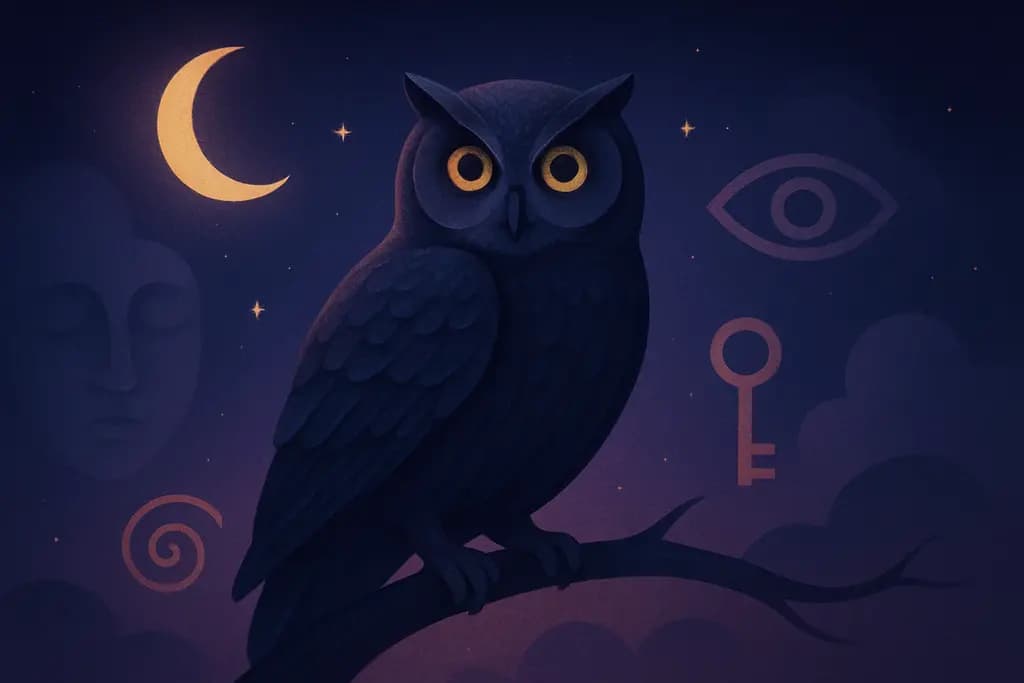
Dreaming of an owl at night often points to intuition, hidden knowledge and moments of quiet watching. Because owls are nocturnal, these dreams tend to highlight what comes alive for you in darkness — secrets, inner knowing or fears that emerge when things aren’t fully visible. The exact meaning depends heavily on your feelings in the dream and the context around the owl.
General meaning of dreaming about Owl at night
The owl at night is a rich, layered symbol. At its core the image combines wisdom and mystery: owls see in the dark, so they’re commonly linked with insight into things we cannot easily perceive in daylight. Simultaneously, the night brings ambiguity, endings and the unknown — so the dream can point to transitions or hidden aspects of a situation.
Many people report that an owl dream feels like a nudge to pay attention to intuition or to examine what is being kept quiet. Depending on the scene, the owl can be a quiet guide, an ominous messenger, or a mirror of your own shadow side.
- Intuition and inner knowing: the owl represents sensing what’s beneath the surface.
- Secrets and hidden truths: night suggests what is unseen or repressed.
- Transition and endings: the darkness can indicate change, closure or transformation.
- Watchfulness and protection: a perched owl may symbolize vigilance or guardianship.
Spiritual meaning of Owl at night in dreams
Spiritually, owls are often seen as psychopomps or guides between worlds — mediators of change between the conscious and unconscious. Many traditions associate the owl with soul-journeys, shadow work and the uncovering of spiritual truths.
In shamanic and indigenous perspectives, a night owl can be a messenger urging careful listening and respectful attention to inner signals. In broader spiritual language, the owl may encourage you to integrate intuition, trust nighttime revelations, and prepare for inner transformation.
Psychological interpretation
Fear, stress or anxiety
An owl at night can surface when you feel hypervigilant or fearful of unseen problems. The bird’s nocturnal nature may mirror anxiety about what emerges when you are least guarded — worries that seem louder in quiet moments.
If the owl in your dream felt threatening, it may reflect stress about unknown outcomes or a sense that something is watching or judging you.
Relationships and emotional bonds
In relationship contexts, an owl may point to secrets, withheld feelings or the need for honest communication. It can also signal solitude: either a protective preference for independence or a loneliness that appears once the day’s distractions fade.
An owl watching from a distance can suggest emotional distance, while an interactive owl (approaching, calling) might urge you to address what has been unspoken.
Control, power or vulnerability
Owls can represent quiet power: competence that doesn’t need to be loud. Dreaming of an owl at night might reflect your desire for control or a feeling of being watched by someone with influence.
Conversely, if you felt vulnerable in the dream, the owl may mirror perceived threats or a fear of being exposed when you’re most defenseless.
Positive meaning
- Heightened intuition: you may be becoming more perceptive and able to read subtle cues.
- Guidance through transition: the dream can indicate inner support during change.
- Clarity from introspection: hidden truths may surface, enabling wiser choices.
- Protection and calm vigilance: the owl can symbolize a watchful ally in difficult times.
- Adaptive solitude: embracing alone time for reflection and growth.
Negative meaning and warnings
- May suggest unresolved fears that intensify at night or in private moments.
- Can indicate secrecy or deception in a relationship that needs attention.
- May point to isolation or withdrawal that could undermine emotional support.
- Can indicate impending change that feels threatening rather than liberating.
- May suggest suppressed grief or shadow material needing conscious work.
Use cautious language for interpretation: an owl dream can indicate these patterns, but context and personal feeling are crucial.
Common variations of dreams about Owl at night
- Hearing an owl hoot at night: Often symbolic of an internal alert — a call to pay attention to a gut feeling or an important but quiet message.
- Seeing an owl perched near your window at night: May suggest that insight or a piece of information is close at hand; it could be an invitation to observe rather than act immediately.
- An owl circling above you at night: Can feel ominous or protective depending on tone; it often reflects a situation that is unresolved and still “in the air.”
- An owl staring at you in the dark: Frequently relates to feeling judged, watched, or confronting a truth about yourself you’ve been avoiding.
- Finding a baby owl (owlet) at night: May indicate new intuitive abilities, vulnerable ideas, or a nascent truth that needs care and nurturing.
- A dead or injured owl at night: Can point to suppressed wisdom, blocked intuition, or grief over a loss of guidance; it may signal a need to mourn and then heal.
- A white or snowy owl at night: This natural color variation often emphasizes purity of message, unusual insight, or a rare revelation that stands out in your life.
- An owl attacking or screeching at night: Can be a wake-up call about urgent issues; it may indicate mounting stress, conflict, or a boundary being challenged.
What to do after such a dream
- Reflect and journal: note the dream details and your emotions immediately after waking to preserve subtle clues.
- Check current life rhythms: look for situations that push you into secrecy, solitude, or silence.
- Ask questions rather than jump to conclusions: what in my life needs more honest attention? Where am I avoiding truth?
- Pay attention to intuition: try small, practical experiments to test inner hunches before major choices.
- Share selectively: if the dream points to relational issues, consider a calm conversation with someone you trust.
- Track recurrence: recurring owl dreams often point to ongoing inner work; patterns reveal what needs change.
Take the dream as information, not rigid fate: it can spotlight areas for reflection, growth and careful action.