Dream About Near-death experience – Meaning
Category: Spiritual & Symbolic
Dreaming of a near-death experience often feels intense and surreal. Such dreams can signal a confrontation with endings, big change, or the limits of your control. The exact meaning depends a lot on how you felt in the dream and what was happening in your life when you woke.
General meaning of dreaming about Near-death experience
At its core, a near-death experience in a dream points to transformation. Dreams about coming close to death or returning from death are rarely literal predictions; they usually symbolize a psychological or spiritual threshold. These dreams put you at a boundary between what is ending and what is being born, and they often force you to reckon with priorities, fears, and the possibility of deep change.
Common interpretations emphasize endings, perspective shifts, and rebirth. The same dream can mean release and relief for one person, and alarm or unresolved trauma for another, so context matters.
- Major life change or transition: a symbolic death of an old habit, career, or relationship
- Awakening or renewed purpose: a sudden shift in values or direction
- Unprocessed fear or trauma: resurfacing memories or anxieties that need attention
- Testing resilience: a scenario that reveals your coping strategies and inner strength
Spiritual meaning of Near-death experience in dreams
Spiritually, near-death dreams often point to encounters with the unknown and the soul's deeper questions. Many traditions view near-death imagery as a symbolic crossing of thresholds: a call to examine spiritual beliefs, to reconnect with higher purpose, or to integrate lessons that feel larger than ordinary life.
In universal spiritual terms, such dreams can represent a clearing out of old attachments, a nudge toward compassion and meaning, or an opening to more expansive consciousness. Whether framed as a spiritual awakening, guidance from beyond, or an initiation, these dreams frequently invite reflection on what matters most.
Psychological interpretation
Fear, stress or anxiety
Dreams of near-death situations can mirror high levels of anxiety or chronic stress. The dream may distill generalized fear into a dramatic scene, showing how overwhelmed you feel. If the experience in the dream is chaotic or terrifying, it often points to acute worry about safety, health, or uncontrollable circumstances.
Relationships and emotional bonds
Close calls in dreams can symbolize relationship endings or intense emotional shifts. You may be processing grief, betrayal, separation, or the need to let go of a dynamic that no longer serves you. Alternatively, returning from a near-death event in a dream can reflect reconciliation, renewed closeness, or an emotional awakening between people.
Control, power or vulnerability
Near-death imagery highlights vulnerability and the limits of control. These dreams can reveal feelings of helplessness, powerlessness, or the sense that life is being dictated by forces beyond your influence. Conversely, surviving the event in the dream can show emerging strength and regained agency.
Positive meaning
- Symbolic rebirth: the dream may mark the start of a major personal transformation.
- Release from old patterns: letting go of habits, roles, or relationships that held you back.
- Renewed priorities: clarifying what truly matters and making purposeful changes.
- Increased compassion and perspective: seeing life with deeper empathy and less trivial worry.
- Creative or spiritual awakening: new inspiration, insights, or commitment to growth.
Negative meaning and warnings
- May suggest unresolved trauma: repeated near-death dreams can indicate unprocessed events or panic that benefit from careful attention.
- Can indicate persistent anxiety or burnout: frequent intensity may point to chronic stress that needs lifestyle adjustments.
- May signal avoidance of change: a fear of letting go that keeps you stuck in unhealthy patterns.
- Can reveal risky behaviors or denial: the dream may nudge you to reassess choices that put well-being at stake.
Common variations of dreams about Near-death experience
-
Near-death then recovery: surviving a near-fatal incident often symbolizes resilience or a second chance in waking life.
- Interpretation: A prompt to act on new opportunities or to appreciate a fresh start.
-
Witnessing someone else nearly die and return: watching another person cross the threshold focuses attention on that relationship.
- Interpretation: May reflect concerns about their wellbeing or a desire to change how you relate to them.
-
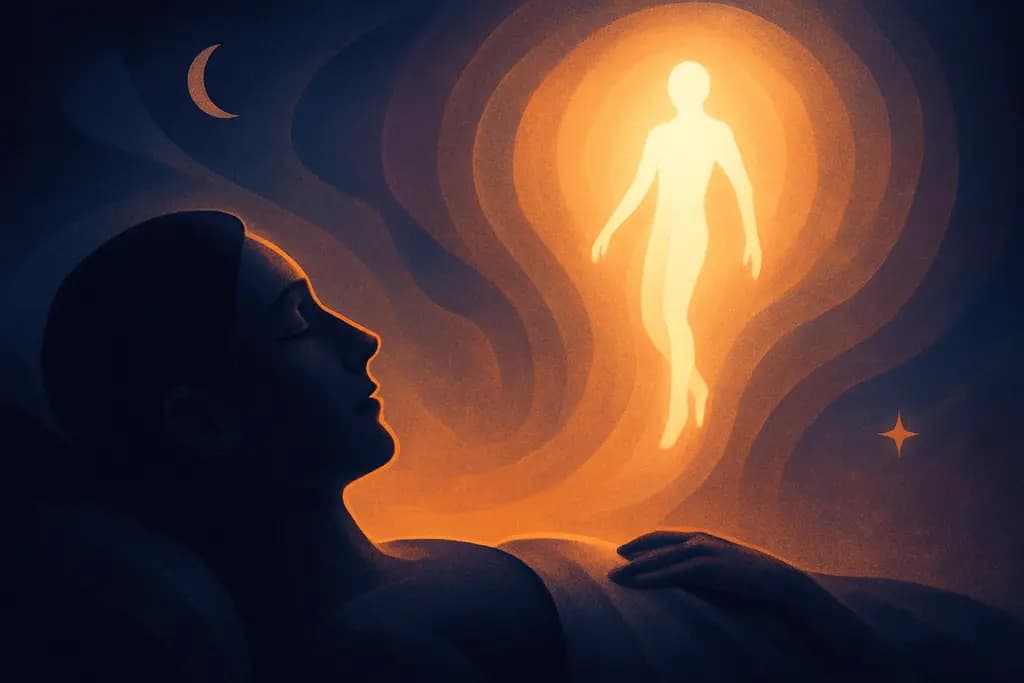
Out-of-body near-death experience: observing yourself from above during a near-death event points to detachment or self-observation.
- Interpretation: Suggests introspection, dissociation, or a need to integrate separate parts of yourself.
-
Re-experiencing a real past near-death event: replaying an actual traumatic incident often indicates unresolved processing.
- Interpretation: May call for compassionate self-reflection and gradual emotional integration.
-
Seeing a light, tunnel, or deceased loved ones during the experience: spiritual or comforting motifs in the dream can feel reassuring.
- Interpretation: Often interpreted as a sense of guidance, closure, or connection beyond ordinary life.
-
Near-death in a specific setting (car crash, illness, drowning): the context often links the dream to waking life concerns about travel, health, or relationships.
- Interpretation: Points to the area of life where stress or change is most active.
What to do after such a dream
- Reflect on emotions: note how you felt during and after the dream. Strong feelings are meaningful clues.
- Journal details: write the sequence, people, and symbols to spot patterns over time.
- Look at current life situations: compare the dream images to recent changes, decisions, or tensions.
- Review relationships and responsibilities: consider whether ties or obligations need rebalancing.
- Pause before major choices: use the dream as a prompt to slow down and clarify motives.
- Use grounding practices: breathwork, gentle movement, or a calming ritual can help integrate intense material.
- Share with a trusted person: talking through the dream with a friend or spiritual mentor can bring perspective and relief.