Dream About Your Own Death – Meaning
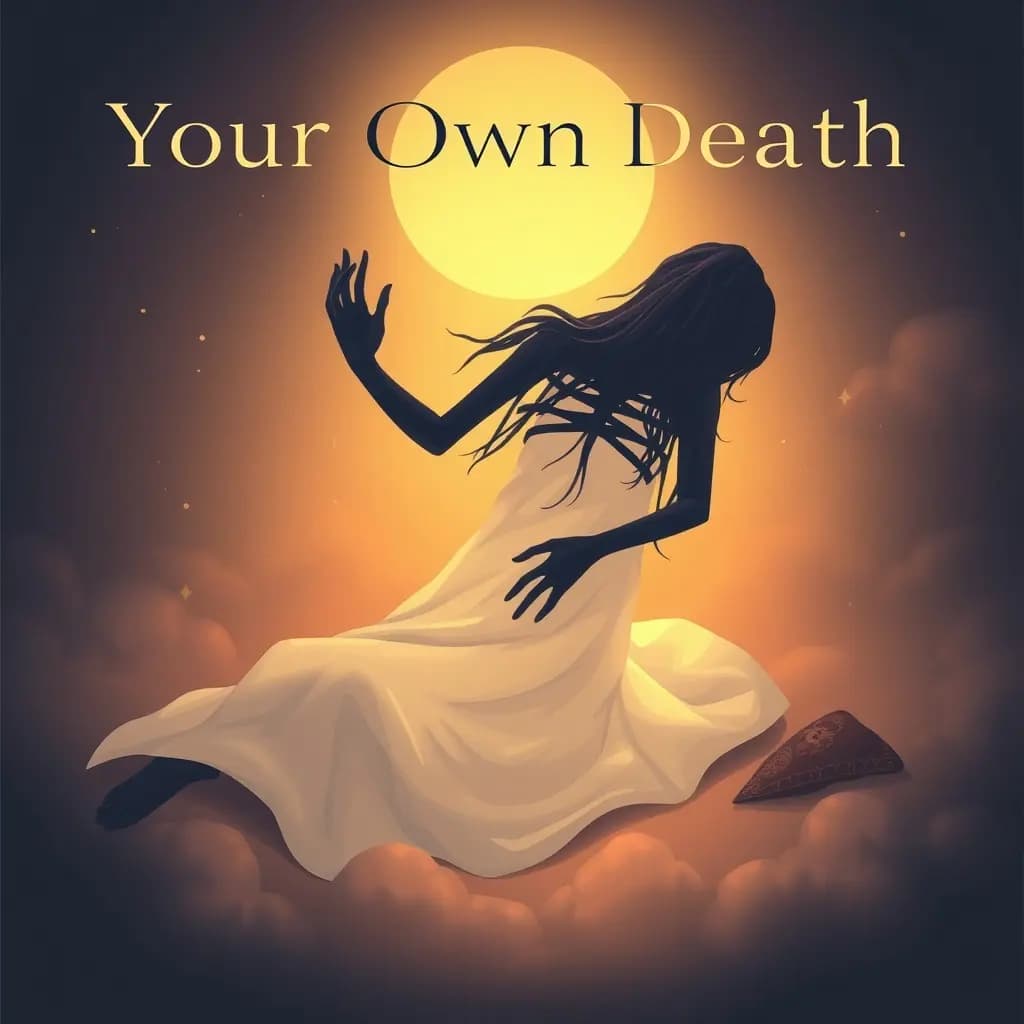
Category: Spiritual & Symbolic
Dreaming of your own death can feel shocking, vivid and deeply symbolic. Such dreams rarely predict literal death; they often point to endings, change or inner transformation. The precise meaning depends a lot on how you felt in the dream and what was happening around you.
General meaning of dreaming about Your Own Death
At its core, dreaming about your own death symbolizes endings and transitions. It is a powerful image that the psyche uses to signal that something in waking life is finishing — a phase, identity, relationship, habit or role. Because death is universal and absolute, the dream compresses emotional intensity and highlights how significant the change feels.
These dreams are also connected to renewal: when one thing ends, another space opens. Context and emotional tone — fear, relief, indifference or curiosity — guide whether the dream points toward threat or opportunity.
- Endings and transitions: closure of a chapter in life
- Transformation and rebirth: psychological or spiritual renewal
- Fear and loss: anxieties about change, aging or mortality
- Control and vulnerability: feeling powerless or relieved
Spiritual meaning of Your Own Death in dreams
Spiritually, dreaming of your own death often represents profound inner shift or initiation. Many traditions interpret symbolic death as the necessary letting go before a spiritual rebirth: shedding attachments, outdated self-images or limiting beliefs. In Jungian and mystical frameworks it can represent the ego's death so the true Self emerges.
Different faiths emphasize different shades — from cleansing and purification to karmic completion — but universally the image suggests a movement from one state of being into another, often inviting the dreamer to surrender to a larger process.
Psychological interpretation
Fear, stress or anxiety
These dreams can surface when anxiety about the future, health, work or loss is high. The dream dramatizes deepest fears to force attention: impending deadlines, burnout, or existential worry can all be represented as your own death. The intensity often reflects how overwhelmed you feel waking.
Relationships and emotional bonds
If the dream coincides with relationship change — breakup, estrangement, a shift in family roles — it may symbolically register the "death" of that connection or of the role you played in it. Grief, ambivalence or relief in the dream can reveal unresolved feelings about attachment and separation.
Control, power or vulnerability
Dreaming you die can highlight issues of control: feeling powerless or exposed in a situation, or conversely, experiencing relief at relinquishing burdens. It can point to struggles over autonomy, authority, or physical vulnerability, especially if the dream involves violence or helplessness.
Positive meaning
- Personal transformation: the dream may mark the end of an old self and the start of a new way of being.
- Release from burden: letting go of obligations, guilt or harmful habits.
- Spiritual awakening: deeper connection to meaning, purpose or inner guidance.
- Opportunity for change: a prompt to make bold life adjustments or pursue new projects.
- Healing and closure: working through grief so you can move forward.
Negative meaning and warnings
- May suggest unresolved fear or chronic anxiety that needs attention.
- Can indicate avoidance: not facing necessary changes or decisions.
- May point to grief that is unprocessed and affecting daily functioning.
- Could signal feelings of hopelessness or a sense of being trapped in a role.
These possibilities are not certainties; they indicate areas to reflect on rather than fixed outcomes.
Common variations of dreams about Your Own Death
- Dying peacefully in sleep: Often signifies acceptance and readiness for change, or relief at ending a stressful chapter.
- Violent or sudden death: Can indicate shock, abrupt loss, or intense anxiety about a situation ending without control.
- Seeing your own funeral: Suggests processing of grief or how others perceive you after a major change; may highlight legacy and identity.
- Waking up after dying (resurrection): Points to transformation and recovery — emerging from a difficult period renewed.
- Being told you are dead by others: May reflect feelings of invisibility, being misunderstood, or losing social identity.
- Dying of old age: Often symbolizes natural completion and acceptance of life cycles rather than fear.
- Near-death or medical crisis in dream: Could mirror real health anxieties or a dramatic confrontation with mortality that prompts reevaluation.
What to do after such a dream
- Reflect on emotions: note how you felt during and after the dream — fear, relief, grief or calm can change the meaning.
- Journal details: write down settings, people, actions and sensations to connect symbols with waking life.
- Look at current life situations: consider endings, transitions, health concerns, or major decisions you face.
- Consider relationships and roles: ask whether a role you hold is ending or needs redefining.
- Take gentle action: if the dream highlights unresolved issues, consider small steps like talking with a trusted person, setting boundaries, or creating rituals to mark transitions.
If the dream leaves you distressed or keeps recurring, reflecting with a therapist, spiritual advisor or trusted friend can help you integrate its message into practical change.