Dream About Maze or labyrinth – Meaning
Category: Places
Dreaming of a maze or labyrinth often signals a period of complexity in your life — decisions to make, routes to weigh, or emotions that feel tangled. The specific meaning shifts depending on how you feel in the dream (frustrated, curious, calm) and the context (finding a way out vs. wandering). Pay attention to whether you move with purpose, feel stuck, or discover something at the center.
General meaning of dreaming about Maze or labyrinth
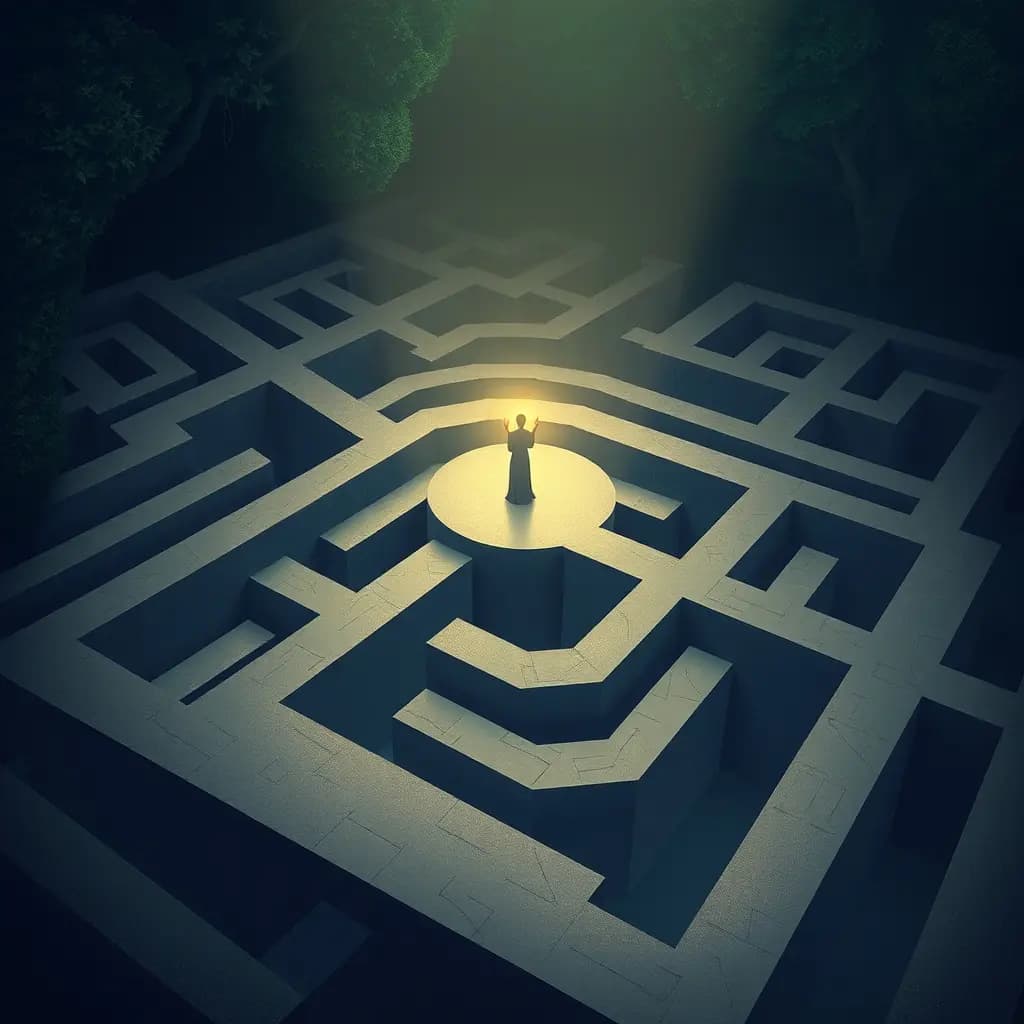
Mazes and labyrinths are powerful symbols of journey and challenge. In dreams they commonly represent a mental, emotional, or life process where choices, obstacles, and dead-ends must be navigated. The image points to problem-solving under pressure, inner confusion, or a transitional phase when the path forward isn’t obvious.
A labyrinth can also indicate a structured quest: unlike random chaos, it implies a design to the complexity — there may be a method or lesson hidden in the twists. How you interact with the maze (searching, panicking, calmly following walls) colors the interpretation.
Key meanings often include:
- Confusion or indecision about a life choice
- Feeling trapped, delayed, or obstructed by circumstances
- A search for meaning or a deeper inner truth
- A process of problem-solving and gradual discovery
- Personal transition, initiation, or testing of resilience
Spiritual meaning of Maze or labyrinth in dreams
Spiritually, labyrinths have long stood for the soul’s pilgrimage. Walking a labyrinth has been used in many traditions as a meditative practice: the path itself is the work of centering and surrender. In dreams, a labyrinth can symbolize a spiritual journey inward — an invitation to slow down, reflect, and trust the process.
Different traditions emphasize varied angles: medieval Christian labyrinths point to penitence or pilgrimage; Greek myths (Theseus and the Minotaur) highlight confronting inner monsters; modern spiritual practices use labyrinths for integration and clarity. Universally, the dream suggests transformation through intentional wandering rather than random escape.
Psychological interpretation
Fear, stress or anxiety
A maze dream often mirrors anxiety about choices or fear of the unknown. Getting lost, hitting dead ends, or racing through corridors can be a dream’s way of replaying waking stressors where stakes feel high. Repeated maze dreams may indicate chronic worry or a sense that decisions aren’t being resolved.
Relationships and emotional bonds
In relational terms, a labyrinth can show how complicated emotional ties feel: you may feel unable to find the right path to a partner, family member, or friend. Dead ends may represent misunderstandings; winding corridors can reflect layered histories or communication problems that require patience to untangle.
Control, power or vulnerability
The maze can reflect feelings about control. Being forced through a maze, manipulated by unseen forces, or blocked from exits can indicate vulnerability or powerlessness in a situation. Conversely, solving a maze or choosing your route can symbolize regained agency and strategic thinking.
Positive meaning
- Growth through challenge: navigating a labyrinth can mean you are learning resilience.
- Spiritual or personal initiation: reaching the center suggests a breakthrough or new insight.
- Improved problem-solving: repeated attempts may sharpen creativity and strategy.
- Patience and acceptance: the dream may encourage slowing down and trusting a process.
- New perspective: finding unexpected routes can open doors to opportunities.
Negative meaning and warnings
- May suggest avoidance: repeatedly circling could indicate procrastination or unwillingness to face an issue.
- Can indicate stagnation: feeling trapped without progress in career or relationships.
- May point to overwhelming anxiety: racing through corridors can mirror chronic stress.
- Can suggest manipulative dynamics: blocked exits or shifting walls may represent controlling people or unstable situations.
- May warn against overcomplication: the dream sometimes hints that you are making a simple issue unnecessarily complex.
Common variations of dreams about Maze or labyrinth
- Getting lost in a maze — Often highlights current confusion or lack of direction; suggests you need to pause and reassess options.
- Finding the center of a labyrinth — Typically positive: symbolizes insight, clarity, or arriving at a core truth about yourself or a situation.
- Being unable to find an exit — May indicate feeling trapped in a job, relationship, or mindset; can suggest the need for external help or a new strategy.
- Escaping a maze successfully — Points to problem-solving skills, resilience, and forward momentum after a difficult period.
- Endless or repetitive maze — Can reflect cyclical patterns or rumination; may suggest breaking habits or seeking change.
- Finding a key or map inside the maze — Suggests discovering resources, guidance, or inner tools that help solve a problem.
- Mirror maze — Emphasizes self-reflection, identity questions, or confronting multiple aspects of yourself; confusion about which path is authentic.
- Garden or cathedral labyrinth (walking pattern) — Often denotes a purposeful inner practice or spiritual seeking rather than chaotic confusion.
What to do after such a dream
- Reflect on emotions: note how you felt in the dream and after waking; emotion points directly to the waking concern.
- Journal or sketch the maze: drawing the layout and details can reveal repeating themes or the blocked points to address.
- Check real-life contexts: look at major decisions, relationships, or work situations where you feel stuck or pulled in many directions.
- Break choices into steps: identify one small next action rather than trying to solve everything at once.
- Talk it through: share the dream with a trusted friend or counselor to gain perspective and new ideas.
- Practice centering techniques: slow walks, breathing, or meditative labyrinth walks (real or visualized) can reduce anxiety and clarify options.
Use the dream as a guide: it points to complexity that can be worked through rather than a permanent dead end.