Dream About Lost in a Maze – Meaning
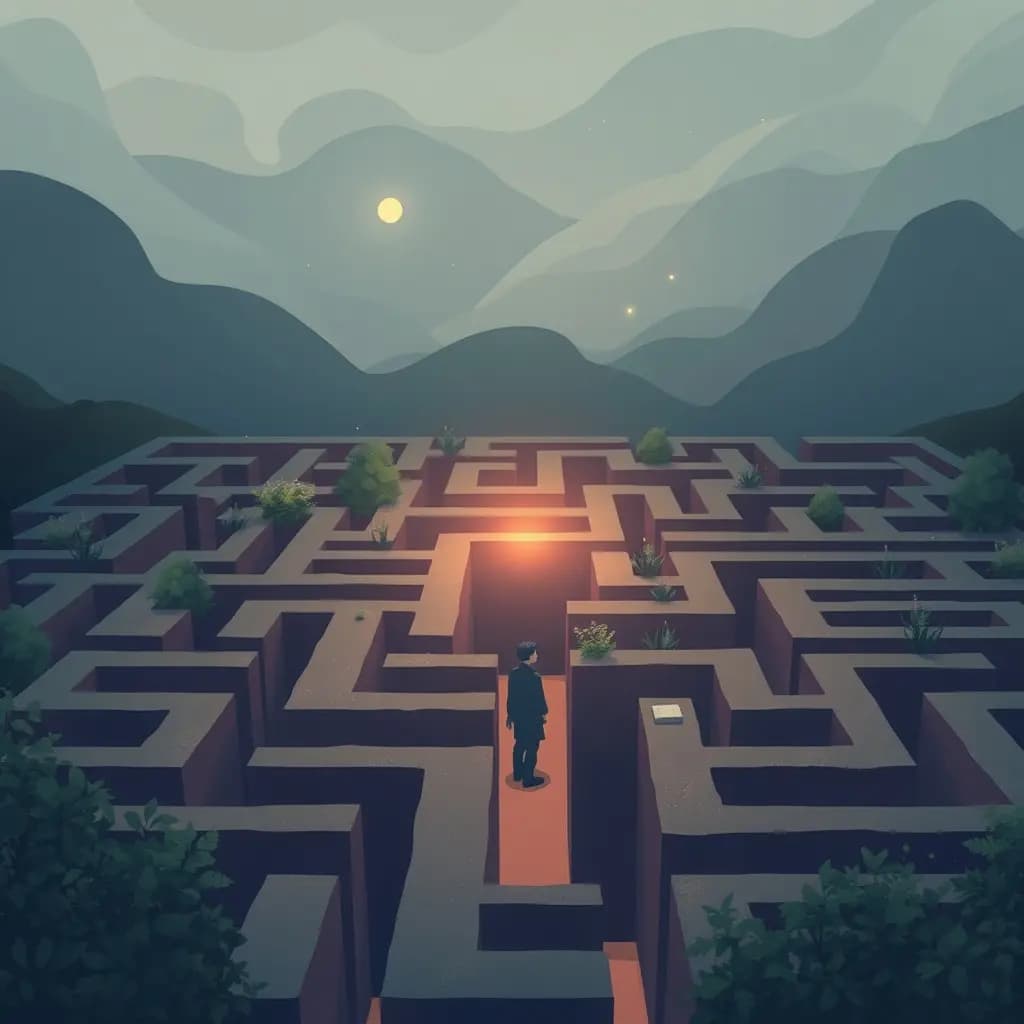
Category: Places
Dreaming that you are lost in a maze often feels disorienting and urgent. It usually points to situations in waking life where direction, clarity or choice feel limited. The exact meaning depends heavily on how you felt in the dream and the context around the maze.
General meaning of dreaming about Lost in a Maze
At its core, a maze in dreams symbolizes complexity, decision-making and inner navigation. Being lost inside a maze suggests you are facing a problem or life phase with many possible paths and few clear signs, so you may feel stuck or unsure which way leads out.
A maze can also stand for a personal journey: the turns represent choices, the walls represent limits or beliefs blocking progress, and the exit stands for resolution or insight. How you move through the maze — hesitating, running, methodically mapping turns — gives further clues about how you are approaching challenges.
Key meanings often associated with being lost in a maze:
- Feeling confused or overwhelmed by options or responsibilities
- Facing a complex emotional or practical problem with no obvious solution
- Searching for identity, purpose or a next step in life
- Feeling trapped by habits, relationships or expectations
Spiritual meaning of Lost in a Maze in dreams
Spiritually, a maze can represent an inner pilgrimage — an initiation into deeper self-knowledge. Being lost may indicate a phase of soul-searching where outer certainties fall away and you are invited to trust intuition rather than a fixed map.
Across many traditions, the labyrinth or maze is a symbol of transformation: the journey inward is necessary before emerging changed. Some spiritual views see the maze as a call to slow down, relinquish control and let inner guidance reveal the path. Others treat it as a test of faith and resilience: staying present within uncertainty is part of spiritual growth.
Psychological interpretation
Fear, stress or anxiety
A maze dream commonly appears during periods of high stress. If you felt panic or urgency, the dream may be mirroring generalized anxiety or fear about making the wrong choice. The repeated dead ends echo worry loops, where the mind cycles through possible outcomes without settling.
Relationships and emotional bonds
When the maze centers around finding someone, or when loved ones appear inside, the dream can reflect confusion in relationships: unclear roles, miscommunication, or difficulty finding emotional closeness. Being lost together may reveal mutual uncertainty; being alone can point to isolation.
Control, power or vulnerability
Finding yourself unable to navigate a maze can highlight feelings of powerlessness or loss of control. Conversely, successfully solving it — even after being lost — may show regained agency or the emergence of coping skills. Walls and barriers in the maze often symbolize internal limits that feel imposed rather than chosen.
Positive meaning
- Opportunity to develop patience and problem-solving skills as you learn to map choices slowly
- Invitation to explore inner values and priorities that clarify long-term direction
- A transformative phase: being lost can precede sudden insight or creative breakthroughs
- Strengthening resilience through repeated attempts and learning from mistakes
- Rekindling intuition: the dream may push you to rely on gut feelings instead of external advice
Negative meaning and warnings
- May suggest avoidance: repeated maze dreams can indicate reluctance to face difficult decisions
- Can indicate increasing anxiety or burnout if the feeling of being lost is persistent
- May point to a relationship dynamic that confuses or restricts you, needing clearer boundaries
- Can indicate confusion caused by too many commitments or unclear goals
- Might suggest procrastination or indecision is delaying important progress
Common variations of dreams about Lost in a Maze
- Lost in a maze at night: Often amplifies fear and uncertainty; darkness suggests you feel deprived of information or support.
- Finding the exit after many turns: Suggests eventual clarity after persistence, or that a breakthrough is near if you keep working at a problem.
- Maze made of familiar rooms (like a house): Indicates internal conflict tied to home life, childhood patterns or deeply held beliefs that you keep returning to.
- Dead-end maze: Highlights feelings of frustration and the need to change strategy rather than repeating the same approach.
- Walking a maze with someone else: If you’re accompanied, the dream can reflect collaborative problem-solving or dependence on that person for direction.
- Child lost in a maze: May reveal worries about vulnerability, responsibility or protection for someone you care about.
- Open maze with low walls: Suggests that obstacles are more perceived than real — you may have more freedom to choose than you think.
- Labyrinth vs maze (no choices, single winding path): A labyrinth often represents contemplative inward journeys rather than being lost, so this variation points more to inner reflection than confusion.
What to do after such a dream
- Reflect on the emotions you felt in the dream: fear, curiosity, calm or determination — these emotions signal how you are handling choices in waking life.
- Keep a dream journal and note recurring patterns, people, or locations that appear in the maze to identify persistent themes.
- Map your real-life maze: list decisions, obstacles and options to bring structure to what feels chaotic.
- Identify one small, practical step you can take toward clarity (ask for information, set a boundary, prioritize a task).
- Talk it through with a trusted friend or mentor who can offer perspective if you feel stuck.
- Use creative practices — drawing the maze, free-writing or walking mindfully — to access intuitive insights about next steps.
- If the dream recurs and causes ongoing distress, consider discussing it with a counselor or dream-work practitioner to explore deeper patterns.