Dream About Losing a Child – Meaning
Category: Fears & Nightmares
Quick interpretation
Quick answer: this dream most commonly points to intense anxiety about protection, responsibility, or something precious slipping from your control, not an actual prediction. Concretely, it can reflect fears about failing a role (parent, partner, manager), losing influence over a relationship, or the stress of a big transition like a move, illness, or career change. The emotional tone — terror, guilt, frantic searching — tells you whether the issue is about past mistakes, present overwhelm, or anticipatory worry about the future.
A typical dream scenario
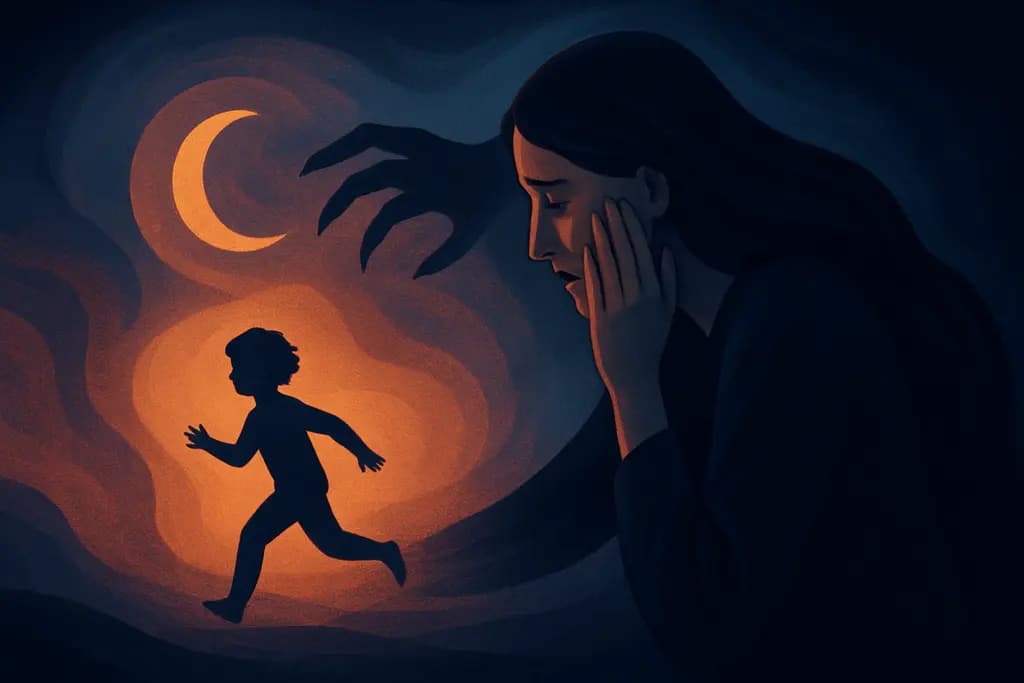
You might wake remembering a grocery store or playground where a small child slips from your hand and vanishes between aisles or down a path. You feel the sharp squeeze of panic in your chest, the hot rush of running, a collapsing sense of blame as other people blur past. A parked car, an empty stroller, or a locked door often anchors the scene — ordinary details that turn urgent and impossible to fix.
What this dream may be expressing
Attachment and Responsibility. Here the lost child represents something you care for—an actual child, a relationship, or a responsibility at work. Panic and running suggest you feel you’ve dropped the ball or that circumstances are pulling that 'child' away. If you are a parent, this can amplify real worries about protection and judgment; for non-parents it often symbolizes a delicate project or a relationship in jeopardy.
Change and Identity Loss. In this angle the child stands for a part of your identity—youth, creativity, freedom—that you fear losing as life changes. Dreams where the child grows distant while you stand still point to transitions: a breakup, career shift, or aging that makes you grieve a former self. The predominant emotion (sadness vs. fury vs. helplessness) guides whether you need acceptance, action, or boundary-setting.
What this dream is rarely about
This dream is rarely a literal prediction about a child’s safety or an impending tragedy. Rather than forecasting an event, it usually signals symbolic loss: a role, trust, autonomy, or a project that feels endangered. Emotional nuance matters — sometimes the panic is less about danger and more about guilt or inadequacy — and that shifts how you respond when awake.
Specific details people often mention
Common vivid touches include bright fluorescent lights in a supermarket aisle, a red stroller left at a curb, distant sirens, damp weather that blurs faces, crowds turning away, the metallic squeak of a gate, or the sudden feeling of numb hands that can make the dream shockingly tactile.
How different traditions interpret it
Interestingly, traditions differ widely: some folk interpretations see a lost child as a warning to restore community ties, while other systems treat it as a sign of spiritual transformation where something beloved must be released. In some cultures the emphasis is practical—check social bonds and obligations—whereas in others the focus is inner (soulcare, rites of passage). There is no universal meaning; cultural background shapes which angle will resonate most.
What to ask yourself
- What specific responsibility or relationship felt at risk the day before I had this dream?
- When I felt panic in the dream, was it fear, guilt, helplessness, or anger — and which real-life situation mirrors that feeling?
- What practical step (one phone call, one appointment, one boundary) could I take this week to protect what I value?
Frequently asked questions
Can this dream be positive?
Yes. It can be positive if the dream forces attention to something neglected; confronting the fear can motivate change, protect a valued relationship, or recover a lost creative spark.
Why do I feel fear in this dream?
Fear arises because the image triggers primal protection instincts; the brain equates losing something dependent with failure and danger, producing intense bodily and emotional alarm.
Is it related to stress?
Often yes. High stress, sleep disruption, or major transitions increase the likelihood of these nightmares because they amplify worries about competence, control, and safety.
Related dream meanings
Dreams about losing a child are often connected to Losing Control, Abandonment, and Aging. Looking at those nearby themes can help you compare control, fear, pressure, or change across similar dream scenes. You may also want to compare it with Being Chased if the same mood or conflict keeps showing up.