Dream About Ketu trailing behind moon – Meaning
Category: Moon & Vedic Astrology
What this dream usually means
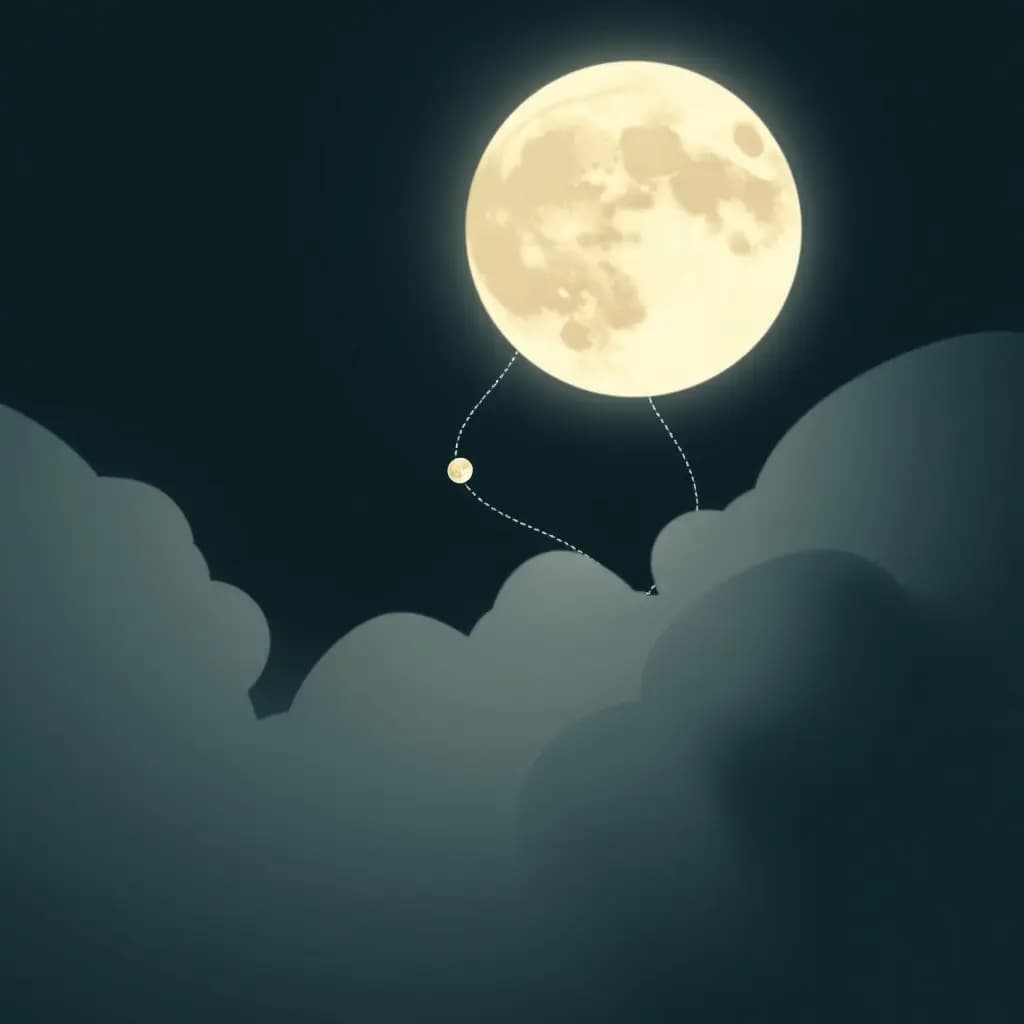
Seeing Ketu following the Moon in a dream commonly signals a period when emotions and intuition are being stripped down so you can recognize what no longer serves you. Ketu represents detachment and past-life or karmic patterns; the Moon represents feelings, memory, and the receptive mind. Together they often indicate an emotional release, the fading of a dependency or grief, or the need to step back from a relationship, role, or habit so deeper clarity can emerge. This tends to be about inner recalibration rather than immediate external change.
A typical dream scenario
You stand on a cool shoreline at night, wrapped in a thin shawl, watching the full Moon glide low over black water with a dim, comet-like tail following it. The wind presses salt into your face; waves tap like a distant clock. You feel a mix of unease and relief—like waking from a long argument or leaving a job you once loved. A faint bell rings from a pier and someone calls your name, but you hold your ground, noticing your chest loosen as the tail slips further behind the silver orb.
The emotional and symbolic message
- Emotional clearing and release. This dream may reflect a phase of grieving or emotional detox: old attachments, habits, or expectations are receding. If you recently ended a relationship, moved house, or gave up a role, Ketu trailing the Moon can mean the mind is processing that loss, making room for quieter feelings and more honest self-care.
- Karmic detachment and redirected purpose. Ketu often represents karmic residue and spiritual direction. Dreaming it behind the Moon can suggest that patterns tied to family roles, ancestral duties, or repeating mistakes are losing influence. This is commonly experienced before a meaningful change of direction—studies, travel, or a new spiritual practice—that requires letting go first.
What this dream is not literally saying
This dream is rarely a literal prediction of loss or imminent calamity. It does not usually mean someone will physically leave or die tomorrow. Instead, it points to internal shifts—reduced emotional influence or the end of psychological patterns. Taking it as a direct prophecy tends to cause unnecessary fear; treat it as symbolic guidance for what’s shifting inside you.
Concrete details that tend to stand out
People report small, crisp details: a loosened button on a coat, a closed wooden door at the edge of the beach, children in a distant crowd turning away, the taste of metal in the mouth, or the sound of temple bells that make the dreamer’s palms go cold. These tactile and auditory images often lodge in memory after waking.
How different traditions interpret it
Meanings vary across traditions. In Vedic astrology, Ketu indicates moksha tendencies and past-life residues; astrologers might read this dream as a prompt to perform remedies or deepen sadhana. In Jungian or Western approaches it maps onto shadow integration and unconscious release. Folk interpretations can cast it as an omen of separation or a sign to appease ancestors. No single tradition guarantees one outcome; practices and remedies differ and people integrate the image according to cultural context.
Personal reflection prompts
- When in the past year did you intentionally or accidentally let go of a role, relationship, or habit; how did it feel then?
- Which recurring emotional pattern (jealousy, people-pleasing, fear of abandonment) has been softer or quieter lately?
- What one small practice—ten minutes of journaling, a walk at dusk, or a short meditation—could help you track these inner changes this week?
Frequently asked questions
What should I do after this dream?
Ground yourself: write down what you remember, note any recent endings or decisions, and choose one practical calming step (sleep, a walk, call a friend). If strong emotions persist, schedule quiet reflection or talk with a trusted person.
Is this about money?
Not usually. While Ketu relates to loss of attachment, the dream more often concerns emotional or psychological release than direct financial events. Look for patterns of letting go rather than monetary signals.
Can this dream be positive?
Yes. Many people experience relief, clarity, or a sense of spiritual opening after such a dream. The positive aspect is increased freedom from old habits and clearer priorities, even if the process feels unsettling at first.
Dream meanings connected to this one
People who dream about ketu trailing behind moon often end up exploring Rahu blocking moonlight, Moon wearing a crown, and Moon phases on wristwatch next, because the same pressure can show up through different symbols. Comparing them usually makes the emotional pattern clearer. You may also want to compare it with Ketu whispering names if the same mood or conflict keeps showing up.