Dream About Intense Loneliness – Meaning
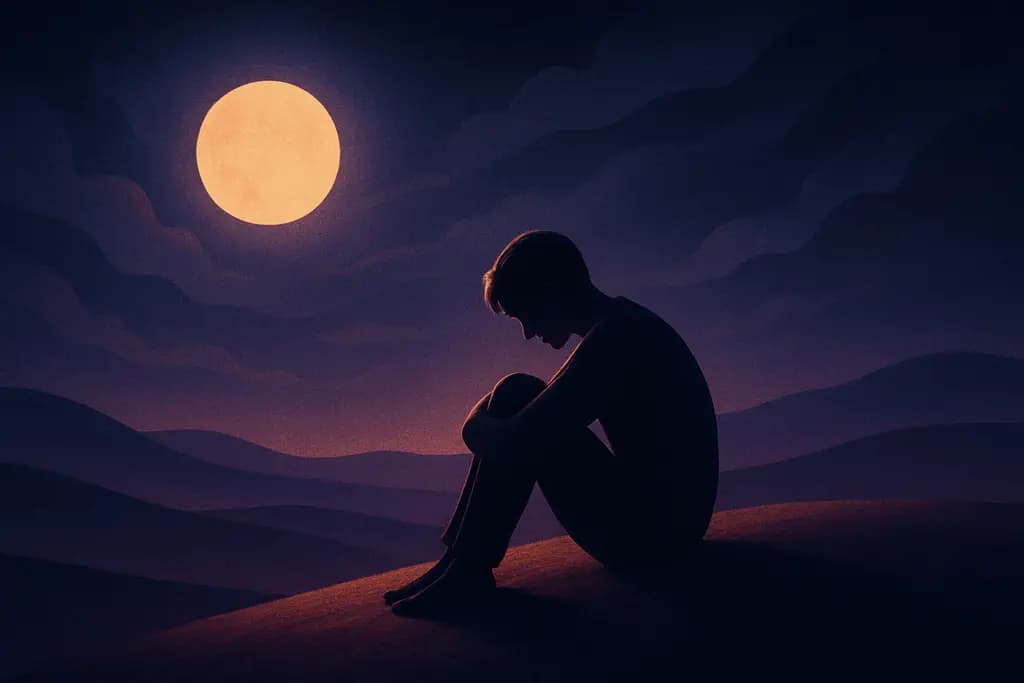
Category: Feelings
What this dream often looks like
I felt a punch of loneliness as if the world had paused: you stand in a kitchen where coffee steams on the counter but no one answers when you call their name, or you walk an empty subway car while every seat is occupied by strangers whose faces blur. The setting is ordinary — a childhood living room, a college dorm hallway, or a silent apartment after a breakup — and the feeling is sharp, physical: chest tightness, a hollow in the throat, slow footsteps that sound louder than they should.
Main interpretation
This dream most commonly signals a lived shortage of connection or inner alignment — not a prophecy. It often appears after a concrete event (a move to a new city, the end of a partnership, a day of social rejection) and highlights a specific need: protection, support, belonging, or a return to familiar roles. The emotional tone in the dream — resigned, panicked, numb, or simply aching — points to whether the issue is procedural (practical loneliness like fewer friends nearby) or existential (a loss of identity or purpose).
Key interpretations
- Unmet social needs. If the dream centers on empty rooms, missed messages, or crowded places where you are ignored, it commonly points to practical social shortfalls: fewer friends nearby, long work hours, or a recent argument that cooled contact. The emotion is resentful or aching; action steps include noticing whose company you miss, scheduling one concrete social outreach this week, and naming three small ways to increase regular contact.
- Identity or transition gap. When the dream feels heavier — as if something inside you is missing — it may reflect a shift in roles: leaving a job, becoming a parent, or ending a long relationship. The loneliness here is existential: you miss the version of yourself that belonged to that role. Addressing it means mapping what you lost, listing skills or routines you can reclaim, and experimenting with a small role that feels like yours again.
What this dream is not literally saying
This dream is rarely a literal prediction that someone will abandon you or that you will literally end up alone forever. It does not usually announce an external catastrophe; instead it signals how you feel about your connections or role in life. Avoid reading it as a direct timeline of events — the imagery is symbolic, emotional, and often tied to recent losses or decisions rather than forecasting.
Concrete details that tend to stand out
People often remember small, specific images: an open front door that leads to fog, a coat hanging on an unseen hook, rain leaking through a ceiling, the sound of distant laughter that never comes closer, or the metallic echo of footsteps in an empty mall. Some report physical reactions in sleep — sweating, throat tightness, or a cold hand that feels like someone just left.
Psychological perspective
Modern sleep research and emotion theory suggest that intense loneliness dreams are the brain’s way of rehearsing social threat and unmet needs. Interestingly, during REM sleep the brain processes social signals and attachment memories, which can amplify feelings of isolation into vivid scenarios. This perspective treats the dream as adaptive rehearsal and emotional processing rather than an omen — useful for highlighting what to address during waking life.
When to take this dream seriously
Take the dream seriously when it recurs, when it follows a major life change, or when waking loneliness affects daily functioning. Recurrence suggests an unresolved pattern (an unfinished conversation, an unmet boundary, or a persistent role loss). If the feeling intensifies after stressors like job change, bereavement, or isolation, prioritize concrete steps: reach out to a specific person, set a small routine that restores contact, or write a letter you don’t send to clarify what’s missing.
Frequently asked questions
Is it related to stress?
Is it related to stress? Yes. Intense loneliness dreams commonly follow sustained stress — long work hours, social withdrawal, or recent conflict — because stress narrows emotional resources and raises sensitivity to social threat.
Why do I feel fear in this dream?
Why do I feel fear in this dream? Fear often reflects perceived risk: loss of support, rejection, or being unable to meet others’ needs. It’s the mind signalling urgency to protect attachment or restore a role you value.
Is this dream a warning?
Is this dream a warning? Not usually. It’s more a signal of current emotional shortage than a literal warning. Use it as information about what needs attention rather than a fixed prediction.
Related dream meanings
People who dream about intense loneliness often end up exploring Being Ignored, black climbing, and black crying next, because the same pressure can show up through different symbols. Comparing them usually makes the emotional pattern clearer. You may also want to compare it with black Riding a Bike if the same mood or conflict keeps showing up.