Dream About Getting Married and Not Recognizing Your Partner – Meaning
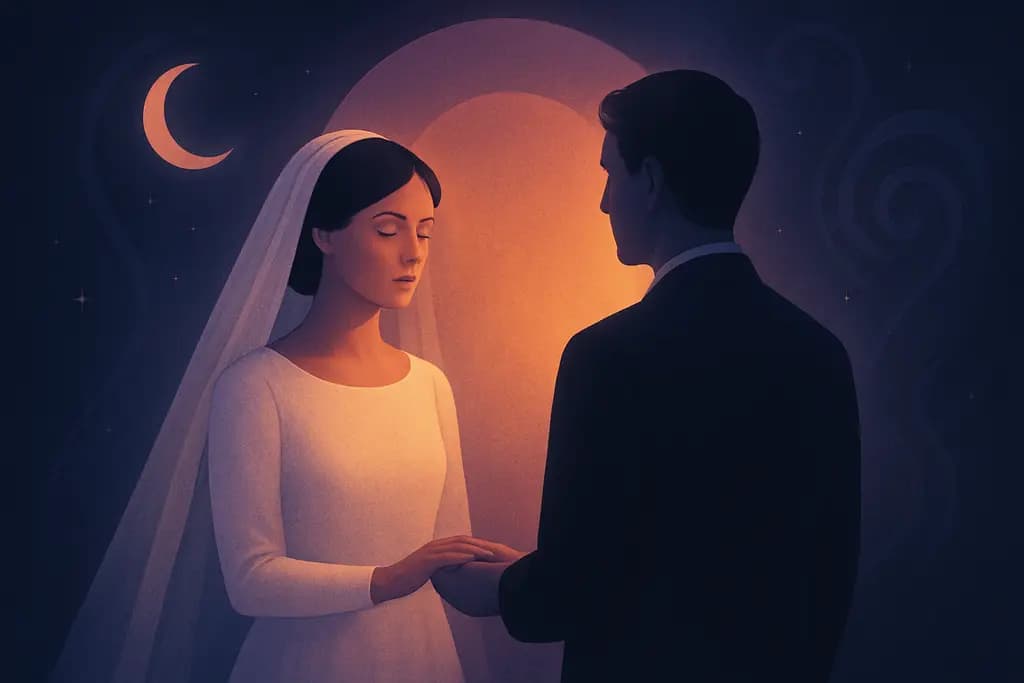
Category: Events & Situations
Quick interpretation
At its core this dream commonly reflects internal uncertainty about joining two parts of your life — obligations, values, or identities — rather than predicting actual betrayal. In real life, it can reflect stepping toward marriage, a new job, relocation, or a dramatic change in daily routine that makes you question who you’ll be afterward. There can be a mix of dread and reluctant curiosity: you may want the stability but fear losing independence.
What your mind may be processing
From a modern psychological viewpoint this dream often emerges when your mind is processing role conflict and identity consolidation. The ceremony is an event signifying formal change; the emotion—confusion, dread, curiosity—signals internal negotiation about which parts of your past self you’ll keep. It commonly surfaces during pending decisions (engagements, moves, job changes) and can be the brain’s way of spotlighting unresolved questions about values and boundaries without implying pathology.
What this dream is rarely about
This dream is rarely a literal prediction that your partner will become unfamiliar or that you’ll marry a stranger. It does not usually forecast specific events. Instead, it points to symbolic unfamiliarity — doubts about a role, a shifting identity, or new responsibilities. The image of not recognizing someone is a metaphor, not a straightforward prophecy.
How this dream can be interpreted
Commitment Anxiety. This angle sees the unknown partner as commitment anxiety: the wedding is the commitment event, and the unrecognized face represents fear of losing autonomy or making the wrong promise. If you’re considering engagement, marriage, or any long-term pact, the dream can highlight hesitation about changing your daily life and obligations.
Identity Shift. Here the dream points to personal transformation: the partner symbolizes a new aspect of yourself that will be more visible after a change (parent, professional, spouse). The unfamiliarity reflects an internal gap between who you are now and who you’re expected to become, often triggered by promotion, parenthood, or moving to a new community.
Relationship Distance or Surprise. This reading focuses on interpersonal dynamics: not recognizing your partner can reflect emotional distance, recent conflicts, or discoveries that change how you see someone close. It may also appear after sudden revelations—different values, secrets, or behavior—that make a familiar person feel foreign for a time.
Life Transition Anxiety. The wedding acts as a marker of a big life transition—graduation, career change, immigration—and the stranger-partner stands in for uncertainty about outcomes. The dream often appears when practical and social roles will shift quickly, and you feel unprepared to meet new expectations or routines.
Specific details people often mention
People often report being in a small chapel, a bright reception hall, or on a windswept outdoor aisle; doors that won’t open, a hush that becomes loud, mismatched shoes, a lost ring box, or the smell of rain. Physical reactions like a racing heart, dry mouth, or the sensation of floating are common details that stand out.
When this dream deserves attention
This dream deserves attention when it repeats, arrives during high stress, or follows a concrete life transition. Recurrence suggests your mind hasn’t resolved the underlying conflict; frequent appearance during job changes, moves, or relationship crossroads indicates actionable anxiety. If it comes with persistent waking worry, take note: it can be a practical prompt to clarify expectations, talk with a partner, or plan next steps rather than ignore the feeling.
Cultural and symbolic views
Meanings vary across traditions: in some cultures a disrupted wedding symbolizes bad luck or a test from ancestors; in others it can be a cleansing sign that old attachments must fall away before a proper union. Different religious and folk systems place emphasis on community roles, honor, or fate. There is no single cultural meaning—local beliefs and ritual context shape how the image is understood.
FAQ
Is this dream a warning?
Is this dream a warning? Not usually a literal warning about another person; it often signals internal doubts or upcoming changes worth paying attention to. Treat it as a prompt to reflect, not a prophecy.
What should I do after this dream?
What should I do after this dream? Pause and inventory any pending decisions or relationship tensions. Make a short list of concrete concerns, talk with anyone affected, and set one practical step (clarify expectations, schedule a conversation, or create a timeline).
Why do I feel fear in this dream?
Why do I feel fear in this dream? Fear commonly comes from anticipated loss of autonomy, uncertainty about new responsibilities, or a mismatch between expected identity and imagined outcome. The subconscious uses a strong emotional image to highlight that mismatch.
Is it related to stress?
Is it related to stress? Yes, it often appears during stress or major transitions. Acute stress makes future roles feel more threatening; the dream amplifies that feeling so you can notice and address it.
Related dream meanings
People who dream about getting married and not recognizing your partner often end up exploring Getting Lost, Getting lost in the woods, and Alien Abduction next, because the same pressure can show up through different symbols. Comparing them usually makes the emotional pattern clearer. You may also want to compare it with Attending a funeral if the same mood or conflict keeps showing up.