Dream About Funeral – Meaning
Category: Events & Situations
What this dream often looks like
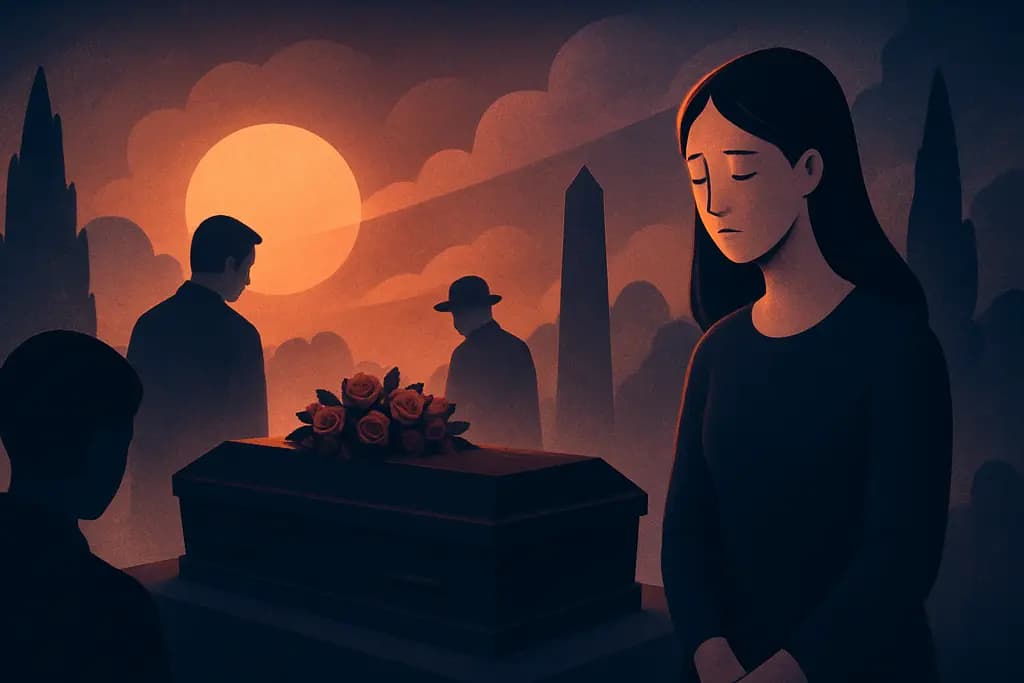
You arrive at a small, familiar chapel and the air is heavy with lilies and low organ music. A face you recognize lies in a polished coffin; people you know stand silent in pews. You notice details — your shoes muddy, a program in your hand, the rain at the stained-glass window — and feel a tight chest mixed with a strange calm as someone asks you to speak.
Main interpretation
A funeral in a dream commonly points to an ending or closure that your mind is processing — whether that’s the end of a job, the closing of a relationship, or the loss of an old personal identity. Pay attention to who is present and whether you are mournful, relieved, or indifferent; those emotions map to what is ending. You may feel sorrow and relief at once, which often marks a complex release rather than a single clear-cut loss.
Life-context meanings
- 1. Ending a chapter. A funeral often symbolizes the deliberate end of a life chapter: leaving a profession, moving from a long-term role like parent or caregiver, or closing a creative project. If you were organizing the service in the dream, it can suggest you are the one bringing closure; if you were excluded, it may signal feelings of helplessness about a change. Look for parallels with recent choices or the completion of responsibilities.
- 2. Grief over relationships or unresolved feelings. When someone familiar appears in the coffin, the dream can be working through loss that’s already happened or anticipatory grief about a relationship’s decline. Dreams of funerals sometimes surface when conversations went unsaid, boundaries were crossed, or forgiveness is pending. The emotional tone — guilt, relief, numbness — indicates whether the dream is processing sorrow, letting go, or protecting you from pain.
- 3. Identity shift and letting go of old self. A funeral can dramatize the ‘death’ of an identity: the end of a role you identified with (athlete, partner, professional) and the emergence of something new. If you find yourself in the coffin, it may mean you are consciously shedding behaviors or beliefs. If you watch from the periphery, the dream may show you witnessing internal change rather than participating in it.
What this dream is rarely about
This dream is rarely a literal prediction of someone’s death and does not usually work as a literal prediction. It is not normally an omen that an event will happen exactly as pictured; instead, it tends to reflect emotional endings, decisions, or the psychological need for closure rather than future facts.
Concrete details that tend to stand out
People often mention oddly specific images: a frozen clock on the wall, a back door left open to a bright street, a lone car idling outside, or the sound of rain on the roof. Those small, concrete details frequently anchor the dream’s feeling more than the fact of the funeral itself.
Personal reflection prompts
- Who in the dream stood out to you and what is your current relationship with that person or role?
- What concrete ending in life (job, relationship, habit) have you been postponing or resisting?
- After waking, what physical sensation or thought stayed with you and what might it be asking for?
Spiritual and symbolic perspective
Interestingly, many spiritual traditions view funerals as liminal moments — symbolic passage from one state to another. Seen this way, a funeral dream can represent inner dying and rebirth: the ending of an old pattern and the quiet emergence of a new orientation. This reading is non-dogmatic: it offers a symbolic lens for personal meaning rather than asserting a single absolute truth about the afterlife.
FAQ
Is this dream a warning?
Is this dream a warning? - Not usually. Funeral dreams seldom function as literal warnings about imminent events; they more often highlight internal endings or decisions that need attention.
Can this dream be positive?
Can this dream be positive? - Yes. It can mark relief, the end of a harmful pattern, or the start of a new chapter; feelings of calm or release in the dream tend to signal constructive change.
Why does this dream repeat?
Why does this dream repeat? - Repetition often means the issue hasn’t been resolved: a grief, a choice, or an identity shift needs further attention or action before your mind will move on.
Related dream meanings
Dreams about funeral are often connected to Attending a funeral, Funeral scene, and Alien Abduction. Looking at those nearby themes can help you compare control, fear, pressure, or change across similar dream scenes. You may also want to compare it with Attending a Wedding as a Guest if the same mood or conflict keeps showing up.