Dream About Feeling Overwhelmed – Meaning
Category: Feelings
A typical dream scenario
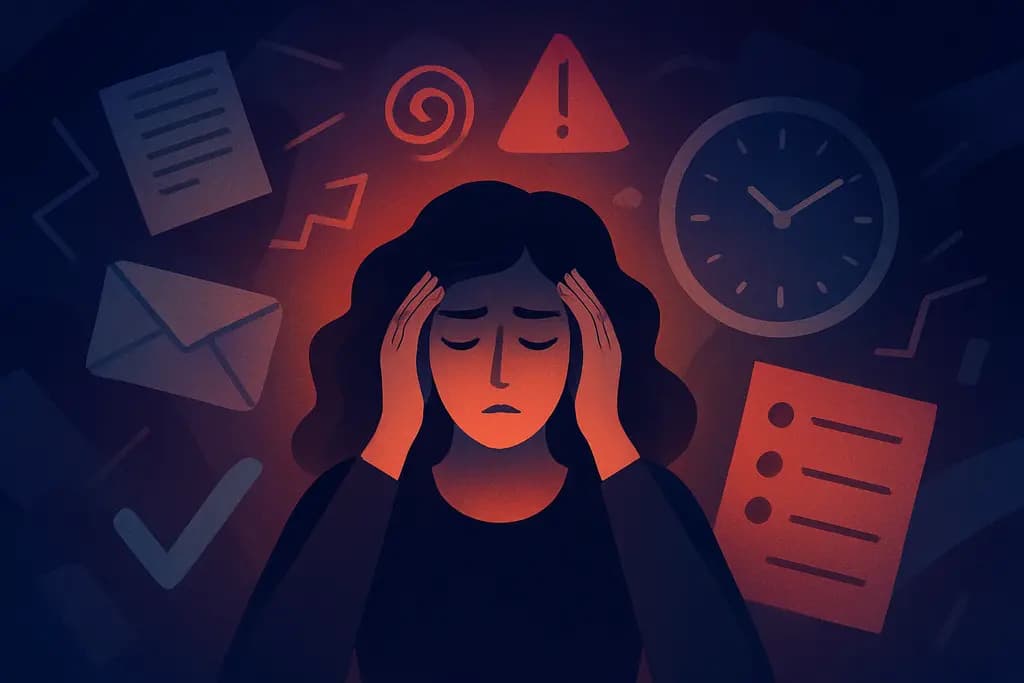
You are in a fluorescent-lit office corridor carrying a teetering stack of folders while notifications buzz on your phone and someone behind you keeps asking a question. The floor tilts slightly, a meeting starts on the other side of glass doors, and you can feel your chest tighten as papers slide toward the edge. The immediate emotion is breathless urgency—you're moving, trying to catch up, but the world in the dream insists on accelerating faster than you can manage.
What this dream usually means
This dream most commonly signals a gap between demands and available energy: too many tasks, responsibilities, or emotional inputs pressing on you at once. It often highlights specific bottlenecks—deadlines, caregiving duties, or a decision where options feel paralyzing—and suggests the part of your life that needs simplifying or boundary-setting. The image of imbalance or collapse dramatizes existing pressure rather than predicting an external event.
How this dream can be interpreted
- Pressure from Roles and Responsibilities. If the dream centers on tasks, schedules, people asking things of you, or objects piling up, it often reflects overwhelm from real-world roles—work deadlines, parenting duties, or caretaking. The dream points to where expectations exceed available time or energy and nudges you to identify one obligation you can reduce, delegate, or delay.
- Internal Conflict and Decision Overload. When the scene emphasizes choices—doors that close, paths that multiply, or voices offering conflicting advice—it commonly represents internal indecision or competing values. The feeling of paralysis in the dream mirrors a mental logjam: too many options or unclear priorities. The dream suggests simplifying criteria or testing a small choice to restore momentum.
What this dream is not literally saying
This dream is rarely a literal warning that something will physically break or a precise prophecy about one future event. It does not usually mean an imminent catastrophe; instead, it amplifies how strained your resources feel. Treat the images as metaphors for pressure and limits, not as direct forecasts.
Unusual details people report
People often report small, vivid details: a door that won't open, a sudden rain inside a room, shoes stuck in quicksand, a crowd pressing from all sides, or the sound of a clock that speeds up. Physical reactions such as trembling hands, shortness of breath, or a ringing in the ears are common in these dreams.
Psychological perspective
From a modern psychological angle, these dreams can function like an emotional intake valve: they make abstract stress concrete so you can notice it. The imagery compresses multiple stressors into one dramatized scene, which helps your mind highlight bottlenecks—time, attention, or emotional labor. Respond by mapping specific stress sources in waking life and experimenting with one small boundary or scheduling change rather than attempting a total overhaul.
When to take this dream seriously
Pay attention when this dream repeats, becomes more intense, or follows a life transition—starting a new job, moving, becoming a parent, or ending a relationship. Recurrence often signals unresolved practical pressure or a steady drain on coping resources. If it appears during acute stress, use it as a prompt to inventory tasks, ask for help, and make a concrete plan to redistribute load.
FAQ
Why do I feel fear in this dream?
Why do I feel fear in this dream? The fear usually reflects perceived lack of time, control, or resources—your nervous system responding to an imagined overload. The dream magnifies that emotional alarm so you notice where you feel stretched thin.
Is this about money?
Is this about money? Not usually. Financial worry can be one source of the stress, but the dream more commonly points to limited time, emotional capacity, or conflicting obligations rather than strictly financial issues.
Is this dream a warning?
Is this dream a warning? It is rarely a literal warning about a specific future event. Instead, it functions as an alert to the pressure you're under and invites practical adjustments—simplifying, boundary-setting, or asking for help.
Related dream meanings
People who dream about feeling overwhelmed often end up exploring Being Ignored, black climbing, and black crying next, because the same pressure can show up through different symbols. Comparing them usually makes the emotional pattern clearer. You may also want to compare it with black Riding a Bike if the same mood or conflict keeps showing up.