Dream About Feasts – Meaning
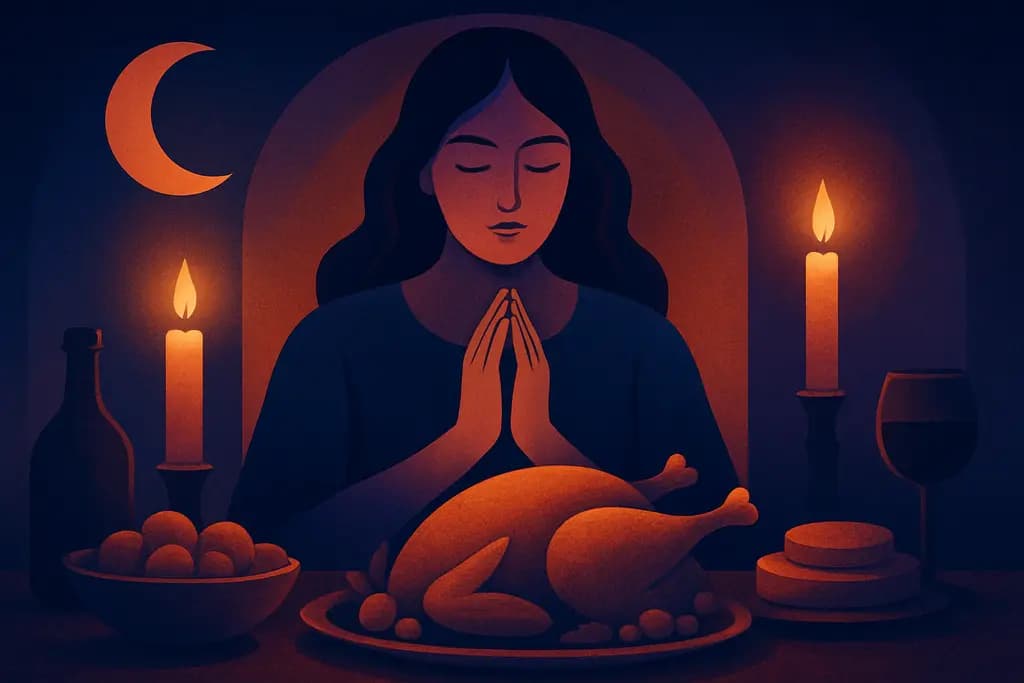
Category: Feelings
What this dream usually means
If waking from a feast leaves you relieved or unsettled, the dream is commonly associated with social dynamics—reward, pressure, inclusion and exclusion. Feasts often reflect feelings about abundance and scarcity: the joy of shared success, guilt over excess, anxiety about how you’re seen, or desire for care. Pay attention to who is present and how you behave; those details frequently point to whether the dream is about celebration, unmet needs, or tensions around giving and taking.
A typical dream scenario
You arrive late to a long table piled with steaming platters, the room smelling of roasted herbs and sticky glaze. Faces are familiar but distant: a cousin in a threadbare sweater, a boss laughing too loudly, a chair empty where someone should sit. You hold a plate that keeps filling, and your chest tightens between pleasure and obligation—like being asked to celebrate while you still owe someone an explanation.
Concrete details that tend to stand out
People often report a cracked chandelier, a locked door to the kitchen, or rain tapping the banquet hall windows. Another recurring detail is clothing that doesn’t fit—gloves stained with sauce or a coat that’s too small—plus a steady low hum of conversation that makes your heart race.
The emotional and symbolic message
- Celebration and Reward. A joyful, plentiful feast with relaxed conversation often signals recognition—your efforts, a project completed, or social approval. This reading emphasizes nourishment: you may be internally digesting success or finally allowing yourself rest. The emotion here is relief mixed with gratitude; the dream encourages acknowledging accomplishments and accepting kindness when it arrives.
- Social Pressure and Obligation. If the feast feels crowded, rushed, or staged, it may indicate pressure to perform or meet expectations. You might be trying to please family, coworkers, or a partner at the cost of your own needs. The scene points to boundaries under strain—saying yes to appearances when you want to say no—and invites you to notice where obligation replaces genuine enjoyment.
- Inner Scarcity and Desire. A feast with missing dishes, an empty chair, or hunger despite full plates can reflect unresolved lack—emotional, creative, or material. This interpretation focuses on yearning: wanting connection, recognition, or resources you feel excluded from. The dream highlights a gap between outer abundance and private need, asking you to identify what you truly want to be nurtured by.
- Temptation and Self-Control. When feasting in a dream turns to overindulgence, nausea, or shame, it often symbolizes conflict between immediate satisfaction and longer-term values. This angle explores impulse, guilt, and the cost of excess—whether with food, spending, or relationships. It may urge you to examine habits that momentarily comfort but create complication later.
What this dream usually does not mean
A feast dream rarely serves as a literal prediction that a party or windfall is coming. It does not usually mean you will experience external abundance exactly as shown. Instead, it commonly works as a symbolic rehearsal for real-life relationships and feelings; emotionally it can be both warm and uncomfortable, pointing more to inner states than to future events.
Symbolic meaning across traditions
Meanings vary across traditions: in Christian contexts a shared meal may echo communion and forgiveness; in Hindu or Buddhist settings, communal food can signify blessing and karma; Chinese New Year banquets emphasize family continuity and luck. Indigenous potlatch ceremonies read feasting as status and reciprocity. Keep in mind traditions frame feasts differently—interpretation should respect that cultural lens without assuming universal rules.
Personal reflection prompts
- Who was at the table and which presence triggered the strongest feeling—comfort, irritation, guilt, or joy?
- What was on your plate or missing from it, and how does that map to something you want or lack in waking life?
- Where did you feel pressure in the scene—your hands, voice, or body—and what boundary does that point to?
Common questions
Is it related to stress?
Yes. Feasts often relate to stress when the scene includes rushing, obligation, or a sense of being watched; those feelings usually mirror social or work pressures in waking life.
Is this about money?
Not usually. While money can appear as abundance or scarcity in the dream, the image more commonly symbolizes emotional resources, approval, or time rather than direct financial prediction.
Is this dream a warning?
Rarely. A feast dream is not typically a literal warning of immediate danger; it more often signals interpersonal tensions or internal conflicts that merit attention rather than an imminent external threat.
What should I do after this dream?
Reflect on who and what stood out, note any repetitive details, and take one small action—set a boundary, say thank you, or schedule rest—to address the feeling the dream highlighted.
Related dreams to explore
Dreams about feasts are often connected to Being Ignored, black climbing, and black crying. Looking at those nearby themes can help you compare control, fear, pressure, or change across similar dream scenes. You may also want to compare it with black Riding a Bike if the same mood or conflict keeps showing up.