Dream About Fear of abandonment – Meaning
Category: Feelings
A typical dream scenario
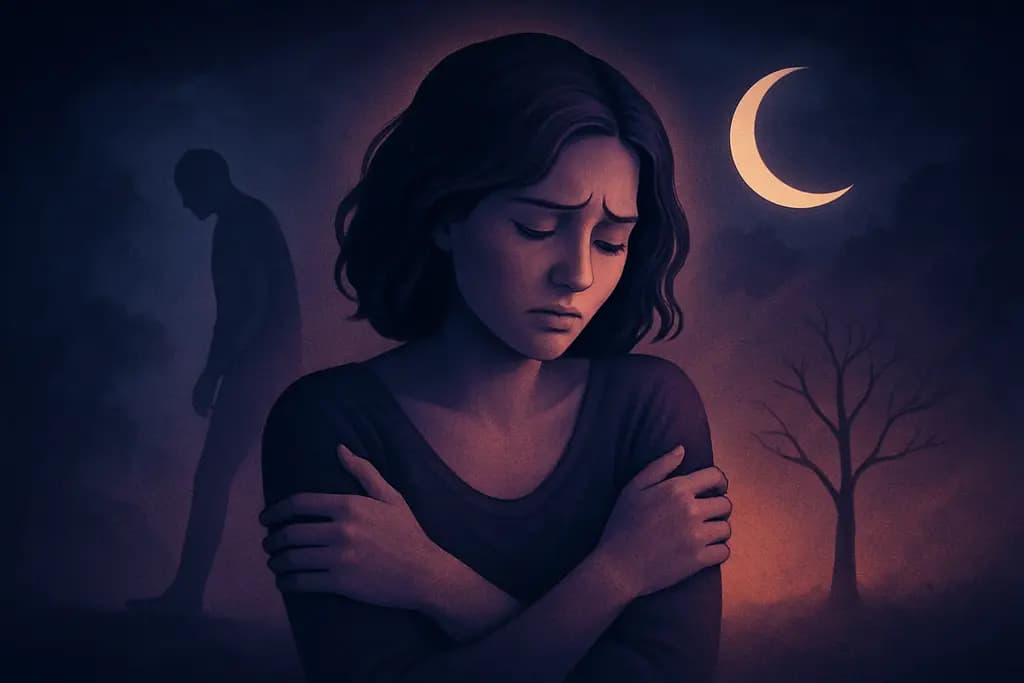
You wake tired from a week of long shifts, heart pinched by an argument that morning, and suddenly you’re in a train station at dusk. The platform is crowded, your bag slipping from your hand as the train doors hiss closed. A familiar silhouette turns away — a partner, parent, or friend — and walks down a rain-slick street. You run, breath burning, but the doors seal. The sensation is immediate: hollow chest, cold hands, a raw smallness as you watch the lights recede.
Concrete details that tend to stand out
People commonly report slammed doors, an empty childhood bedroom with a lone jacket on a chair, a bus pulling away in pouring rain, the sudden silence of a phone, an elevator that stops between floors, or a pounding heartbeat so loud it drowns out voices.
What this dream usually means
A fear-of-abandonment dream most often signals perceived threats to the attachments you rely on. It can reflect anxiety after a real break-up, a job loss, moving cities, or resurfaced childhood separation. Concrete images — closed doors, receding vehicles, empty rooms — act like shorthand for a felt loss of support. The core message is about safety and belonging: your mind is calling attention to relationships, routines, or inner resources that feel at risk and asking you to notice and respond.
How this dream can be interpreted
- Relationship insecurity. If the dream centers on a partner, friend, or parent walking away, it often points to anxiety about trust and closeness. Recent fights, perceived distance, or news of infidelity or separation can trigger these images. The dream highlights fears that emotional needs won’t be met and may be urging more honest conversation, boundary-setting, or checking whether expectations are shared.
- Self-abandonment and life transitions. When the dream emphasizes empty rooms, missed trains, or leaving your belongings behind, it can point to how you treat yourself during change — skipping self-care, ignoring instincts, or conceding your priorities. This version often appears during moves, career shifts, or after caregiving burnout and invites you to reclaim routines that signal safety and to practice small acts of self-support.
What your mind may be processing
From a modern, non-medical view, these dreams commonly reflect attachment-related fear — a felt sense that key supports may be unstable. Memory, current stressors, and learned coping styles mix in REM processing to produce vivid scenes. Notice who leaves, how you react, and what symbols repeat; they map patterns rather than prove outcomes. If the dreams cluster around a recent loss or big change, they’re a natural part of emotional processing and a cue to address unmet needs or long-standing relational habits.
What this dream is not literally saying
This dream rarely predicts someone literally leaving you tomorrow. It is not usually a straightforward prophecy about a partner’s decision or a specific event. Instead, it reflects how you feel about security and connection now; literal interpretations often miss the emotional signal beneath the scene. Emotions in the dream matter more than the exact plot.
When this dream deserves attention
This dream deserves attention when it recurs, intensifies with stress, or follows a real separation. Recurring scenes or rising physical panic on waking suggest unresolved fears that influence daytime choices — staying in unsafe situations, over-apologizing, or withdrawing. It’s also important during transitions like moving, new parenting, job change, or caregiving endings. Practical steps: track triggers, set small safety-building routines, and talk with trusted people. If the fear limits daily functioning, consider professional support for long-standing attachment wounds.
FAQ
Can this dream be positive?
Yes. It can signal growth: facing the fear allows you to set healthier boundaries, seek real support, or develop greater self-reliance. Positive outcomes follow from acting on the insight.
Is it related to stress?
Often. Stress amplifies separation fears; deadlines, grief, or insecurity at work can make abandonment images more vivid and frequent.
Is this about money?
Not usually. While financial stress can trigger the overall anxiety behind the dream, the imagery of leaving typically speaks to emotional safety rather than literal money problems.
Why does this dream repeat?
Because it points to an unresolved pattern or ongoing stressor. Repetition happens when the underlying concern — unresolved hurt, a repeated life situation, or habitual coping — hasn’t been addressed and the mind keeps signaling for attention.
Dream meanings connected to this one
People who dream about fear of abandonment often end up exploring Being Ignored, black climbing, and black crying next, because the same pressure can show up through different symbols. Comparing them usually makes the emotional pattern clearer. You may also want to compare it with black Riding a Bike if the same mood or conflict keeps showing up.