Dream About Eating without hands – Meaning
Category: Food & Drink
What this dream often looks like
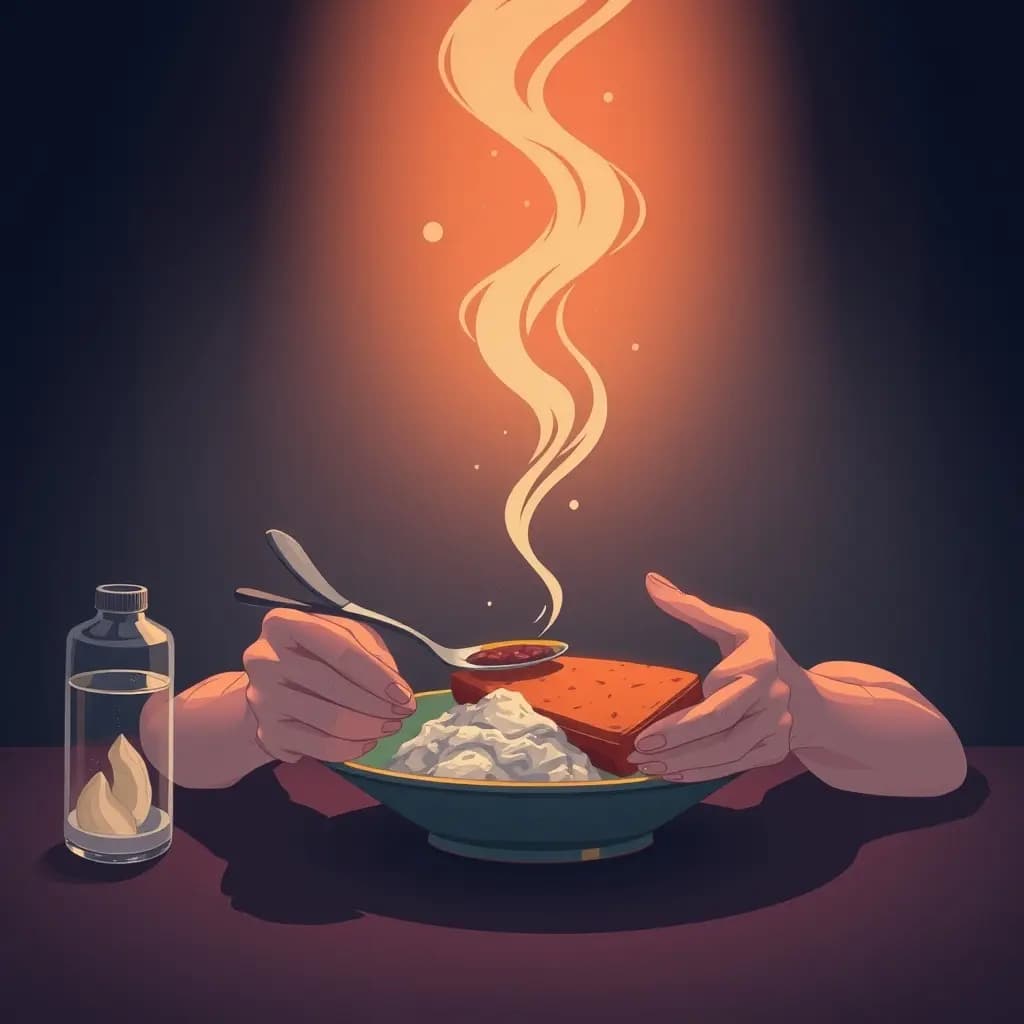
You wake feeling pressured and hurried, seated at a long table beneath harsh fluorescent lights while a clock ticks loudly. Plates of steaming food sit before you but your hands are missing, slick with sauce, or tied behind your back; the fork slides away. People whisper or laugh at the edge of your vision. Hunger is real—warm bread on your tongue—but embarrassment and impotence wash over you, as if a mundane dinner has become a test you can’t pass.
Unusual details people report
People report being in a banquet hall with a cracked chandelier, on a crowded subway car with food stains on the seat, or outdoors in sudden rain while trying to eat. Common extras include broken forks, a child handing you a spoon, the scrape of chairs on tile, a buzzing fluorescent hum, and a hollow stomach rumble that won’t stop.
What this dream usually means
This dream commonly reflects a sense of lost agency: you may be depending on others for basic needs, feeling blocked from acting, or embarrassed about needing help. It often signals emotional hunger—wanting intimacy, respect, or autonomy—while facing deadlines, caregiving responsibilities, or new roles that make you feel exposed. In practical terms it points to where control, boundaries, or self-sufficiency feel strained in waking life, rather than predicting specific events.
How this dream can be interpreted
- Loss of autonomy. If your waking life involves new responsibilities, micromanagement, caregiving, or legal/medical dependency, the dream may be dramatizing loss of self-direction. Being unable to use your hands at the table highlights tasks you once did easily but now must delegate or negotiate. The public setting—others watching, forks out of reach—adds shame and performance anxiety: you may fear judgment for needing help or for not meeting expectations.
- Unmet emotional needs or boundary issues. Alternatively, eating without hands can represent emotional hunger: craving care, recognition, or touch that isn’t being met. The dream may expose boundary problems—people intruding, feeding you without consent, or taking responsibility away. It can also signal resentment at being 'taken care of' in a way that diminishes your agency, or a need to establish clearer give-and-take in relationships.
What it can reflect emotionally
In many cases, this imagery aligns with stress, cognitive overload, and attachment dynamics rather than a medical condition. Psychologically, the dream compresses feelings of helplessness, social evaluation, and resource scarcity into a concrete scene: food equals nourishment and status, hands equal agency. When overwhelmed, the mind stages a situation where basic needs are visible but action is limited, highlighting where coping resources or assertiveness are low.
What this dream is not literally saying
This dream is not usually a literal forecast—rarely does it mean you will suddenly lose the use of your hands or be publicly humiliated in exactly this way. It does not typically predict specific outcomes; instead it uses vivid bodily imagery to dramatize emotional states. That contrast can feel painful: the scene is literal-feeling while the message is symbolic, pointing at control, dignity, and need rather than physical fate.
When this dream deserves attention
This dream deserves attention when it recurs, follows a period of high stress, or appears after role changes like becoming a parent, taking a new job, or caring for an ill relative. If it contains escalating panic, repeated public humiliation scenes, or wakes you repeatedly, it points to unresolved fears about competence and dignity. Use it as a signal to check boundaries: who is taking charge, who is relied upon, and what small steps would restore practical control.
Common questions
What should I do after this dream?
After this dream, note the setting and people in it, then ask yourself one small practical question: what can I change in the next week to feel more in control? Try a boundary experiment—delegate one task differently or practice asking for what you need.
Is this dream a warning?
It is rarely a literal warning. The dream can signal risk of burnout or poor boundaries, so treat it as an alarm to reassess demands, not as a prophecy about a specific threat.
Is this about money?
Usually not directly about money. Financial stress can be the backdrop (if you feel dependent or resource-starved), but the primary theme is control, dependence, and dignity rather than finances themselves.
Can this dream be positive?
Yes. It can be positive if read as an invitation to accept support, slow down, or reconfigure relationships so you get care without losing agency. That acceptance can free energy for other changes.
Related dream meanings
If this dream keeps returning, pages about Starving among feasts, Drinking from a broken cup, and Spoon bending while eating can reveal the related patterns underneath it. They often overlap around insecurity, transition, or stress in everyday life. You may also want to compare it with Cooking with missing ingredients if the same mood or conflict keeps showing up.