Dream About Spoon bending while eating – Meaning
Category: Food & Drink
Quick interpretation
Seeing a spoon bend while eating most commonly signals an experience of everyday supports or routines failing when you need them. It often reflects a sense that what usually helps you—habits, roles, responsibilities—won’t hold up under current pressure. The dream can suggest you’re adapting to change, testing limits, or feeling socially judged while trying to meet basic needs. Emotionally it’s often a mix of embarrassment and determination rather than a literal portent about metal or magic.
What it can reflect emotionally
From a modern, non-medical angle, this dream often mirrors concrete pressures: interrupted routines, small failures that accumulate into anxiety, or role strain at home or work. In real life, when tools or habits stop working we notice it in mundane moments—broken coffee machines, missed buses—and the dream compresses that recognition into a sharp image. The emotional palette tends toward surprise, mild shame, and problem-solving energy; the dream invites you to notice where your daily scaffolding is buckling and whether you need to reallocate resources or ask for help.
What this dream usually does not mean
This dream rarely functions as a literal prediction of physical events or supernatural ability—it's not usually about actually bending spoons in waking life. It does not usually mean you'll gain physical power or that objects will behave magically; rather, the bending is symbolic, pointing to changes in reliability, control, or social support.
Three common meanings
- 1. Everyday control and reliability. The spoon is an ordinary tool for nourishment; its bending can symbolize everyday systems or supports that feel unreliable. If you’re juggling work deadlines or family duties, the dream may be highlighting that routine resources (time, energy, help from others) are warped or stretched thin, prompting you to reassess what you trust to get you through the day.
- 2. Adapting to sudden change. A bending spoon while eating may represent your need to adapt quickly in the middle of a normal task. This interpretation fits when you’re in a life transition—moving, changing jobs, or adjusting roles—and you’re forced to improvise. The image expresses creative resilience: the tool changes shape and you must change how you use it.
- 3. Social pressure and embarrassment. Eating is a social act; a spoon that fails can point to fear of judgment or humiliation in public settings. If you’ve recently felt scrutinized at work, in family gatherings, or on social media, the dream condenses that anxiety: ordinary behavior becomes vulnerable, and you feel exposed when something goes wrong.
- 4. Inner conflict about self-sufficiency. The dream may reflect tension between wanting to be independent and sensing you need help. Bending cutlery while you try to feed yourself can be a metaphor for struggling to do things 'on your own'—pride, stubbornness, or fear may be making basic tasks harder than they need to be, signaling a chance to accept support.
Concrete details that tend to stand out
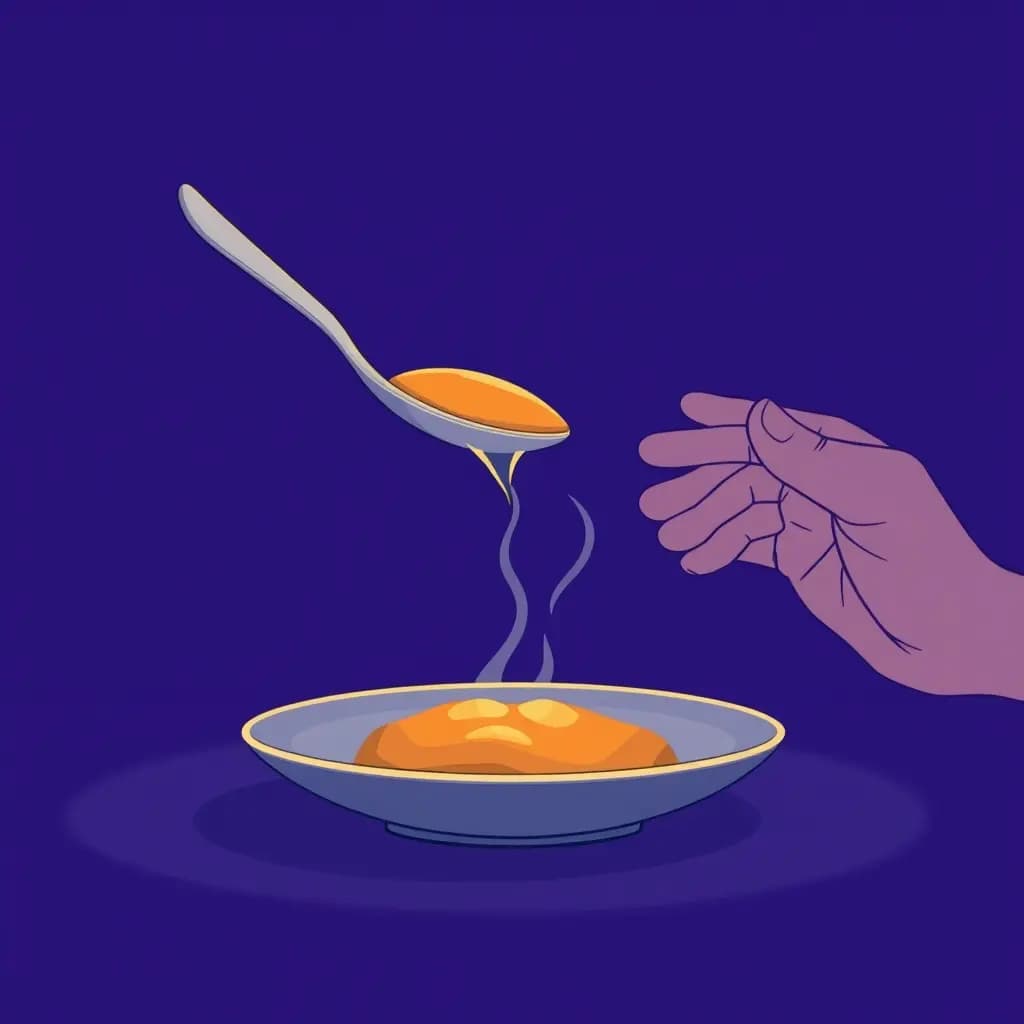
Dreamers often report specific sensory details: the throat-burning steam of soup, a clock ticking loudly on the wall, rain smacking the window, a metallic screech when the spoon snaps, and a strange copper taste in the mouth. Sometimes a doorway in the background is closed or a child in striped pajamas watches in silence.
When to take this dream seriously
Take this dream more seriously when it repeats, appears during a major life transition, or arrives alongside persistent waking anxiety. A single, vivid dream can be a useful nudge; recurrent dreams suggest an unresolved pattern—ongoing stress, an unmet need for support, or a fear you keep avoiding. If the dream coincides with sleepless nights, intrusive worry, or real-world mistakes, it’s a signal to pause and examine routines, boundaries, and sources of help.
Symbolic meaning across traditions
Meanings vary across traditions: in some Western symbolic frameworks utensils point to agency and domestic competence; in parts of Asia a warped tool might be read as imbalance in household harmony; in other cultures transformation of objects can be linked to spiritual tests or rites of passage. These are different lenses rather than fixed answers—meanings depend on local symbols, personal background, and community stories.
FAQ
Is this about money?
Not usually. The spoon-bending image is rarely about money directly; it more commonly reflects perceived failure of everyday supports. However, if finances are the tool that’s failing for you, the dream can symbolize resource strain or scarcity feelings.
What should I do after this dream?
Write down the dream details, note what failed and how you felt, then check for practical fixes—delegate, adjust routines, or set small recovery tasks. If it recurs, discuss it with a trusted friend or counselor.
Is it related to stress?
Yes. This dream often appears during periods of stress or overwhelm, especially when small, repeated setbacks make you feel unstable. It frequently marks accumulated pressure rather than a single acute incident.
Why do I feel fear in this dream?
Fear usually comes from the surprise of an ordinary action going wrong and the social vulnerability of being seen struggling. It’s a physiological alarm about losing reliability or control, not a literal threat.
Related dream meanings
People who dream about spoon bending while eating often end up exploring Cooking with missing ingredients, Feeding a hungry crowd, and Spilling food on floor next, because the same pressure can show up through different symbols. Comparing them usually makes the emotional pattern clearer. You may also want to compare it with Choking on small object if the same mood or conflict keeps showing up.