Dream About Discovering You Suddenly Can't Read (Letters Scrambled) – Meaning
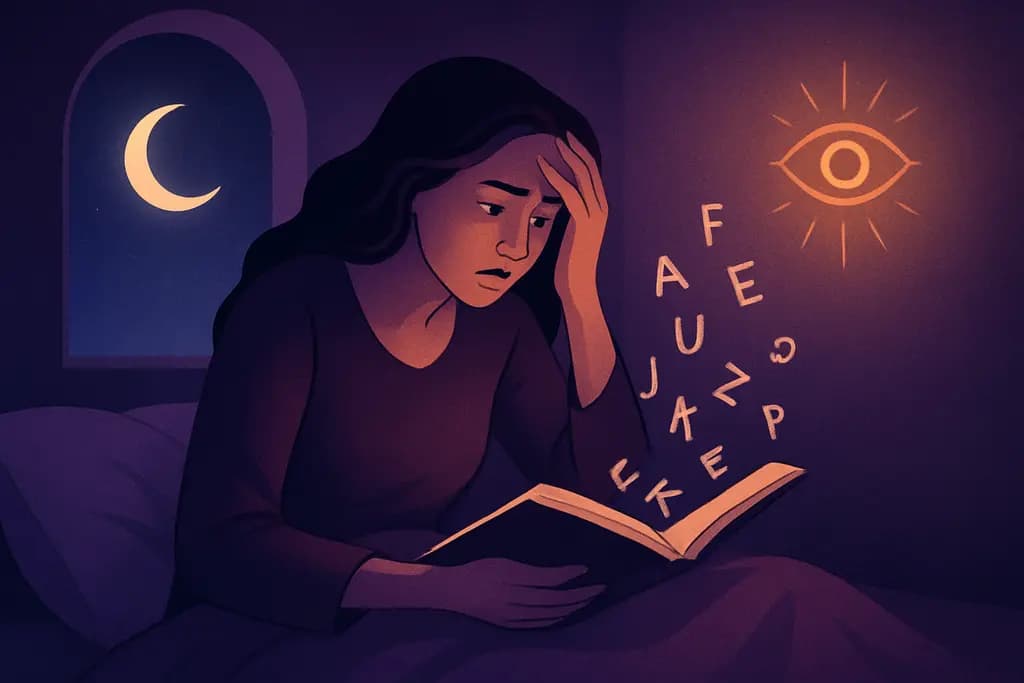
Category: Feelings
What this dream usually means
This dream usually points to a breakdown in meaning: either words, labels or instructions that once helped you navigate life no longer land. It often signals that you're strained by unclear expectations, internal self-doubt, or too much information at once. Rather than predicting something literal, the scrambled letters act as a symbol of stalled understanding—meaning you may need to slow down, ask for clearer feedback, or protect your mental bandwidth so you can reconstruct a stable sense of competence and connection.
What it can reflect emotionally
From a modern, neutral viewpoint, scrambled letters frequently reflect stress on attention and working memory rather than a medical problem. In real life, when deadlines, unfamiliar roles, or social pressure accumulate your brain often stages one clear scene to highlight the issue. The exact emotional color—panic, shame, or quiet frustration—matters: panic may point to fear of public failure; quiet frustration suggests chronic exhaustion. Treat the dream as evidence that your cognitive resources are taxed and that practical organization or emotional processing could help.
What this dream usually does not mean
This dream rarely means you're about to lose your eyesight or become ill in a literal way. It does not usually function as a precise prediction of future reading ability. Instead, the image of unreadable letters is symbolic—a way your mind dramatizes confusion, social anxiety, or cognitive overload, not a forecast of physical decline.
Three common meanings
- Communication breakdown. Letters scattering often maps directly onto feeling unheard, misunderstood, or blocked in conversation. If you recently had a confusing email thread, a tense family talk, or unclear instructions at work, the dream can be the brain's way of showing that messages aren't landing. It can push you to simplify what you say, request clarification, or set firmer boundaries around conversations that leave you exhausted.
- Doubt about competence or identity. When familiar text turns foreign, the dream may reflect imposter syndrome or a sudden wobble in self-confidence—especially after a promotion, returning to study, or starting parenting duties. The scramble symbolizes a fear that skills you relied on are slipping. The practical takeaway is to review which expectations are reasonable and which are internal pressures you can ease.
- Emotional or information overload. Too many tasks, deadlines, or inputs can overwhelm working memory so daily cues blur into noise. The dream captures that cognitive crowding: everything competes for attention and nothing reads clearly. It can mean you need concrete changes—cut commitments, schedule rest, or reorganize how information reaches you so meaning can re-emerge.
Specific details people often mention
People often report specific, strange details: ink that runs like rain, street signs on a foggy morning, a clock ticking loudly, or the sensation of your tongue thickening. Some see headlines on a subway sign turn into puzzle pieces; others notice a child pointing at the page while you panic.
Why recurring versions matter
A single occurrence can be an acute stress signal; recurring versions matter because they show an unresolved pattern—ongoing pressure at work, repeated communication failures with a partner, or a persistent fear about competence. When it repeats alongside daytime fatigue, missed messages, or avoidance of certain tasks, act: keep a brief log of when the dream appears, note triggers, and try concrete changes (delegating, clarifying expectations, or scheduling downtime). If the dream intensifies your waking distress, talking it through with a trusted friend or counselor can break the loop.
How different traditions interpret it
Meanings vary across traditions. In some Western symbolic readings this dream emphasizes lost meaning or stalled self-expression. In several Eastern frameworks it can signal a need to slow down and restore clarity of mind through meditation or ritual. Indigenous and folk interpretations sometimes treat disrupted reading as a call to check relationships and community speech—whose words are being heard or silenced. Avoid assuming a single cultural answer; different communities place emphasis on social harmony, spiritual guidance, or practical remedy.
FAQ
What should I do after this dream?
Write down the dream details while they're fresh, note what felt most upsetting, then check for related stressors (deadlines, talks, tests). Take one practical step: ask for clarification on a confusing message or give yourself a scheduled break.
Why do I feel fear in this dream?
Fear in this dream usually comes from losing control over something you value—your voice, competence, or clarity. The panic recreates that social or performance threat so you can notice and address it.
Why does this dream repeat?
Repeats happen when the underlying issue—chronic stress, an unresolved conversation, or persistent self-doubt—hasn't been addressed. The dream persists until the real-life pattern shifts.
Is this dream a warning?
Not typically. It's rarely a literal warning. Think of it as an internal alert to pay attention to communication, reduce overload, or shore up confidence rather than a supernatural prediction.
Related dreams to explore
Dreams about discovering you suddenly can't read (letters scrambled) are often connected to Being Ignored, black climbing, and black crying. Looking at those nearby themes can help you compare control, fear, pressure, or change across similar dream scenes. You may also want to compare it with black Riding a Bike if the same mood or conflict keeps showing up.