Dream About Deep loneliness in a busy place – Meaning
Category: Feelings
Quick interpretation
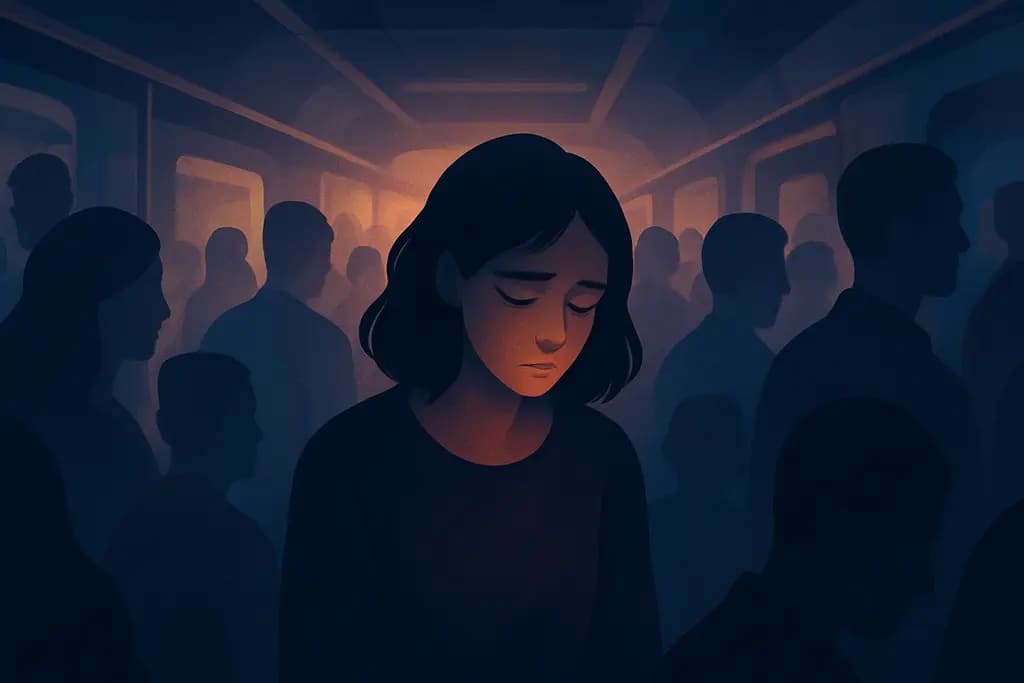
This dream most directly signals emotional disconnection rather than literal solitude: a busy environment (train, market, office event) represents social demands and roles you play, and your intense loneliness points to feeling unseen or unsupported within those roles. It commonly suggests you are carrying responsibilities or people-pleasing behavior that drains you, or that you need clearer boundaries and richer, reciprocal contact. The dream is an invitation to identify where you’re performing for others and to prioritize a small change — a conversation, a pause, or a boundary — that restores feeling seen.
What it can reflect emotionally
From a modern psychological standpoint, the dream often mirrors social overload and attachment-related feelings rather than forecasting events. Specific situations—commuting between jobs, juggling caregiving with work, recent rejection or role change—show up as crowded scenes because crowds equal social expectations. The loneliness in that context may reflect feeling invisible, insecure attachment, or a mismatch between outward activity and inward resources. It can be a cue to test small behavioral changes (a boundary, a request for help) and observe whether your waking relationships respond differently.
Key interpretations
- Social role mismatch. A crowded setting often symbolizes the many hats you wear—employee, parent, friend—and the loneliness signals that one or more of those roles feels inauthentic or unrewarding. You may be complying with expectations (staying late at work, attending events out of obligation) and not getting emotional reciprocity. This interpretation asks you to inventory where you are performing, who benefits from your presence, and where a direct conversation or scaled-back commitment could redistribute emotional labor.
- Emotional exhaustion and need for repair. When the dream emphasizes fatigue or numbness—walking through crowds like a ghost, shoulders heavy—it commonly points to burnout. The busy place is the ongoing demand; the loneliness is depleted reserves. Practical steps include scheduling real downtime, small acts of self-care (a brief walk alone, a no-phone evening), and asking one person for concrete support so your emotional needs get repaired rather than ignored.
What this dream is not literally saying
This dream is rarely a literal prediction that you will be abandoned or that a specific event will occur. It does not usually mean strangers will turn on you or that you must avoid crowds. Instead, it reflects internal dynamics—role strain, unmet emotional needs, or exhaustion—and should not be read as a concrete forecast about particular people or places.
Unusual details people report
People often report a single clear image: an empty chair under a humming neon sign, a lost glove on wet pavement, or the echo of footsteps in a mall that otherwise buzzes with chatter. Others notice tactile details—clammy hands, a racing heartbeat—or sensory contrasts like bright lights and muffled voices.
When to take this dream seriously
Take the dream seriously when it repeats, follows major life changes (move, breakup, job shift), or appears alongside persistent stress or insomnia. If it returns after a period of people-pleasing, caregiving overload, or a promotion that increased responsibilities, it often flags unresolved fear about losing agency or being unseen. A single occasional dream after a hard day is common; recurring versions asking the same question—Why am I alone here?—signal that making a concrete change (boundary, conversation, reduced load) could be important.
How different traditions interpret it
Meanings vary across cultures and traditions. Western, secular approaches tend to read it as inner emotional work—boundaries and burnout—while some Eastern perspectives emphasize imbalance between individual needs and social harmony, suggesting a call to restore proper place within the group. In certain Indigenous or ancestral frameworks, loneliness in a crowd might be interpreted as a sign to reconnect with community practices or elders. Across cultures, interpretations differ; treat each as a lens rather than a fixed verdict.
Common questions
Is it related to stress?
Is it related to stress? Yes. This dream often appears during extended stress or after repeated social demands—commuting, caregiving, tight deadlines—and tends to reflect emotional fatigue and feeling unseen.
Is this about money?
Is this about money? Usually not directly. Financial worry can appear in the dream if specific money symbols show up (bills, empty wallet), but loneliness in a crowd most often points to relational or role stress.
Is this about relationships?
Is this about relationships? Often. It commonly signals unmet needs or boundary issues in relationships—feeling unheard, undervalued, or emotionally isolated even when you’re surrounded by people.
Related dream meanings
People who dream about deep loneliness in a busy place often end up exploring Being Ignored, black climbing, and black crying next, because the same pressure can show up through different symbols. Comparing them usually makes the emotional pattern clearer. You may also want to compare it with black Riding a Bike if the same mood or conflict keeps showing up.