Dream About crying dream meaning – Meaning
Category: Feelings
A typical dream scenario
You stand at a late-night bus stop, coat collar up against drizzle, and suddenly the tears come: hot, surprising, and not tied to a single memory. Your hands shake as you fumble for your phone; a text from months ago sits unanswered. The scene feels ordinary—a familiar streetlight, an empty bench—but the emotion is not. That vivid, private release in a public place is a common setup for crying dreams and usually carries weight from real-life interactions, losses, or unmet needs.
Concrete details that tend to stand out
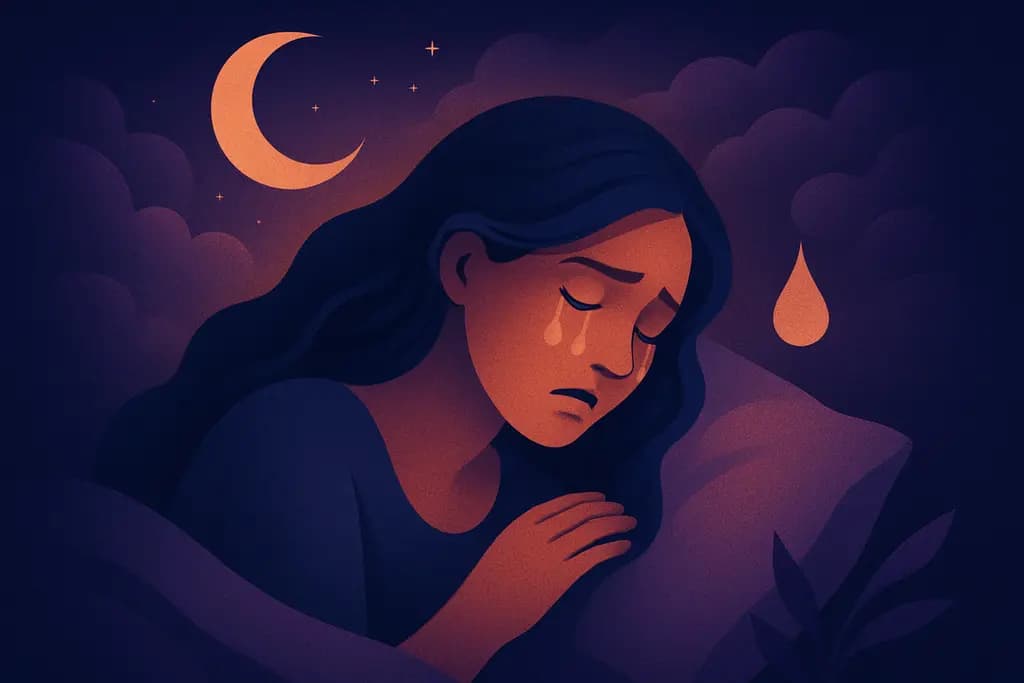
People frequently report specific images: a locked kitchen door that keeps them from a loved one, mascara streaks down a wedding dress, rain falling inside a room, the sound of muffled applause, or the odd sensation of tears stinging but leaving no wetness on the pillow. Physical reactions like a tight throat or a sudden loud sob often stand out.
Three common meanings
- Unprocessed grief or loss. If the dream centers on mourning—saying goodbye, attending a funeral, or holding an empty chair—it can reflect grief that hasn’t been fully acknowledged. The dream gives you a safe setting to experience sadness and start integrating the loss, even when daily life pushes you to stay busy.
- Emotional release and relief. Tears that lead to calm or a sense of lightening often indicate catharsis. After weeks of tension at work or caretaking, the dream lets you safely discharge pressure. Waking with relief is a common after-effect and can signal the beginning of emotional recovery.
- Feeling unheard, unseen, or isolated. Dream crying in crowded places or private rooms with closed doors may point to feeling invisible or dismissed. The scene often mirrors a waking-life situation where your needs or opinions aren’t acknowledged; the tears are an expression of loneliness or the urge to be recognized.
- Change, acceptance, or threshold moments. Tears appearing before or after a transition—moving house, ending a job, becoming a parent—can mean you’re processing the emotional cost of change. The dream may mark a threshold: sadness for what ends and readiness to start again.
Symbolic and spiritual meaning
Symbolically, many traditions regard tears as a form of cleansing or surrender. In dreams, crying may be framed as a release ritual: letting go of old burdens, inviting compassion, or preparing for a renewed sense of purpose. Spiritual readers might see the tears as a call to inner honesty or a sign that stubborn defenses are softening. Interpretations vary widely; approach this angle as metaphorical guidance rather than strict truth.
Psychological perspective
From a modern psychological view, crying dreams are commonly part of emotional regulation and memory processing. The brain rehearses difficult feelings and rehearses adaptive responses while you sleep. In real life, that rehearsal can translate into clearer feelings and improved coping the next day. This perspective treats the dream as information about your emotional state—not a diagnosis—highlighting tasks like recognizing unmet needs or deciding who to talk to about what you felt.
What this dream usually does not mean
This dream rarely functions as a literal prediction of an upcoming catastrophe or a guaranteed sign someone will leave you. Intense feelings in the dream do not equal immediate real-world events. Instead of a prophecy, crying in a dream is more often an internal sign pointing to emotional needs—powerful, meaningful, but not a straightforward forecast.
What to ask yourself
- Who in the dream were you crying for, and what does that person represent in your waking life?
- What physical sensations or images (room, weather, clothing) stayed with you after waking?
- What small action could you take in the next week to address the feeling the dream surfaced?
Frequently asked questions
Why does this dream repeat?
Why does this dream repeat? Repetition often signals an unresolved emotional issue your mind keeps returning to until it’s acknowledged or processed. It’s a nudge to notice patterns—relationship dynamics, an unresolved loss, or repeated stressors—instead of a literal loop with no meaning.
What should I do after this dream?
What should I do after this dream? Take a quiet moment to note what you felt, who appeared, and any images that stood out. Try a brief journal entry, a check-in with a trusted friend, or a calming activity that helps you name the feeling and decide one concrete next step.
Can this dream be positive?
Can this dream be positive? Yes. Tears in a dream can mark relief, healing, reconciliation, or acceptance. If you wake feeling lighter or more resolved, the crying likely served a restorative role rather than indicating harm.
Is this dream a warning?
Is this dream a warning? Not usually. While it can highlight tension or a problem needing attention, it rarely works as a literal warning about immediate danger. Treat it as emotional information that may prompt precautionary or relational changes, not as a direct omen.
Related dream meanings
Dreams about crying dream meaning are often connected to black crying, Crying, and crying chasing me. Looking at those nearby themes can help you compare control, fear, pressure, or change across similar dream scenes. You may also want to compare it with crying in bed if the same mood or conflict keeps showing up.