Dream About Crying – Meaning
Category: Feelings
A common version of this dream
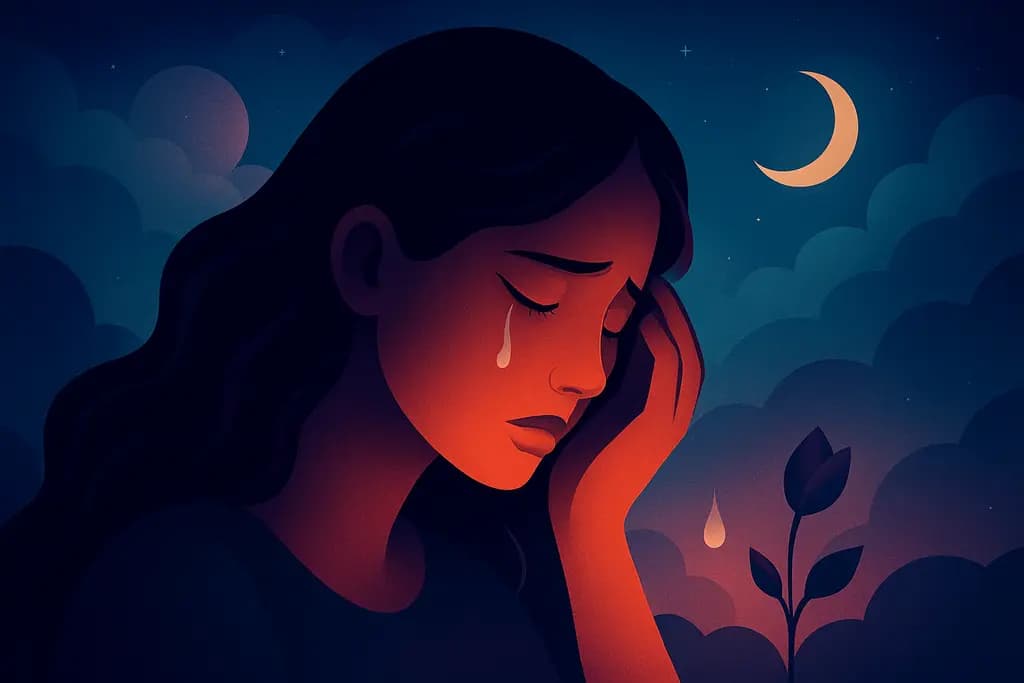
You stand in a familiar kitchen at night with the sink light on, shoulders hunched and breath catching as tears stream down without sound. A spouse or parent is in the next room, the clock reads 2:13 a.m., and you wake with a damp pillow and a heavy ache in your chest. The scene carries the feeling of being caught between exhaustion and a need to be heard—an intimate, private moment of emotional overflow.
Unusual details people report
People often report odd specifics: water pooling around bare feet, a locked front door you can’t open, a crowded subway car where no one notices, or the taste of salt on a child’s hand. Sometimes the sound of rain turns into applause or a phone rings with no caller ID.
Quick interpretation
Direct answer: dreaming of crying commonly reflects emotional release or unresolved feelings that your waking mind hasn’t fully processed. In many cases, the dream is your psyche signaling that grief, relief, or a boundary that needs setting is active beneath the surface. It may point to recent loss, pent-up frustration, or an impending change that feels heavy; at the same time the tears can be restorative, making space for clearer decisions and compassionate self-attention.
Life-context meanings
- Grief or loss processing. Crying in the dream may reflect recent or long-buried grief—after a breakup, a death, or the end of a job. The tears act as an internal rehearsal for acknowledging loss; the setting (bedroom, hospital corridor, empty porch) often mirrors the place where you felt most alone. This interpretation points to needing permission to mourn and to small practical steps: name one thing lost, and allow yourself a private moment to feel it.
- Relief and release after pressure. If the dream feeling is lighter after the crying—almost like exhaling—the dream can mean relief: a release of built-up stress, an ending of a conflict, or the culmination of a long project. Imagery such as doors opening, rain washing a window, or unclipped hair appearing afterward supports this reading. It suggests your system is letting go and making room for recovery and clearer priorities.
- Unexpressed needs and boundary signalling. Tears directed toward someone who ignores you or walks away likely indicate unmet needs and the need to assert boundaries. Scenes with locked doors or people who don’t respond point to frustration about being unheard. This reading encourages checking where you’ve been minimizing yourself and taking concrete steps—small requests, a brief conversation, or adjusting time spent with draining people.
- Emotional integration and creative impulse. Crying that transforms into artful imagery—paint spilling, music starting, or words forming on a page—often signals emotional integration that fuels creativity. This version suggests your interior life is converting feeling into meaning; it’s a prompt to channel emotion into a project, journal entry, or a conversation that clarifies what you value.
What this dream is not literally saying
This dream rarely acts as a literal prediction about future events or a guaranteed sign that something catastrophic will happen. It is not usually a supernatural command or an exact map of waking-life conversations you must have word-for-word. Rather than forecasting, the dream typically marks internal emotional work—so avoid treating it as a literal warning and focus on what feelings the scene brings up now.
What to ask yourself
- What recent event or memory comes up when I think of the dream’s setting and why does it feel connected?
- Who in my life would notice if I expressed the need behind those tears, and what small first step could I take?
- What would change this week if I treated the dream as permission to grieve or to let go of one small obligation?
Symbolic and spiritual meaning
Symbolically, many spiritual traditions view tears as a form of cleansing or transformation: a release that clears emotional blockages and creates readiness for renewal. Rather than dictating belief, this framing treats crying as a rite of passage in inner life—an acknowledgement of what must be surrendered before new meaning arrives. Interpretations vary across practices, so consider what cleansing, surrender, or renewal metaphors resonate with your own spiritual path.
FAQ
Why do I feel fear in this dream?
Fear often appears because crying in dreams exposes vulnerability; the brain simulates threat when social safety feels uncertain. Fear may signal anxiety about being seen, judged, or abandoned if you show emotion.
What should I do after this dream?
After the dream, make one practical step: write a short note about what you felt, tell a trusted person one sentence about it, or schedule a calming activity. Small, concrete actions reduce repetition.
Is this about relationships?
Sometimes. If your dream centers on another person—arguing, leaving, or ignoring—you may be processing relationship dynamics. But crying can also relate to work, identity, or personal change, not only romantic ties.
Is it related to stress?
Yes. Stress commonly surfaces as crying dreams because emotional load lowers the threshold for nighttime processing. Reducing daily pressure, improving sleep, and brief emotional check-ins often decrease these dreams.
Dream meanings connected to this one
Dreams about crying are often connected to black crying, crying chasing me, and crying dream meaning. Looking at those nearby themes can help you compare control, fear, pressure, or change across similar dream scenes. You may also want to compare it with crying in bed if the same mood or conflict keeps showing up.