Dream About Courtroom where jurors refuse to speak – Meaning
Category: Law & Authority
Main interpretation
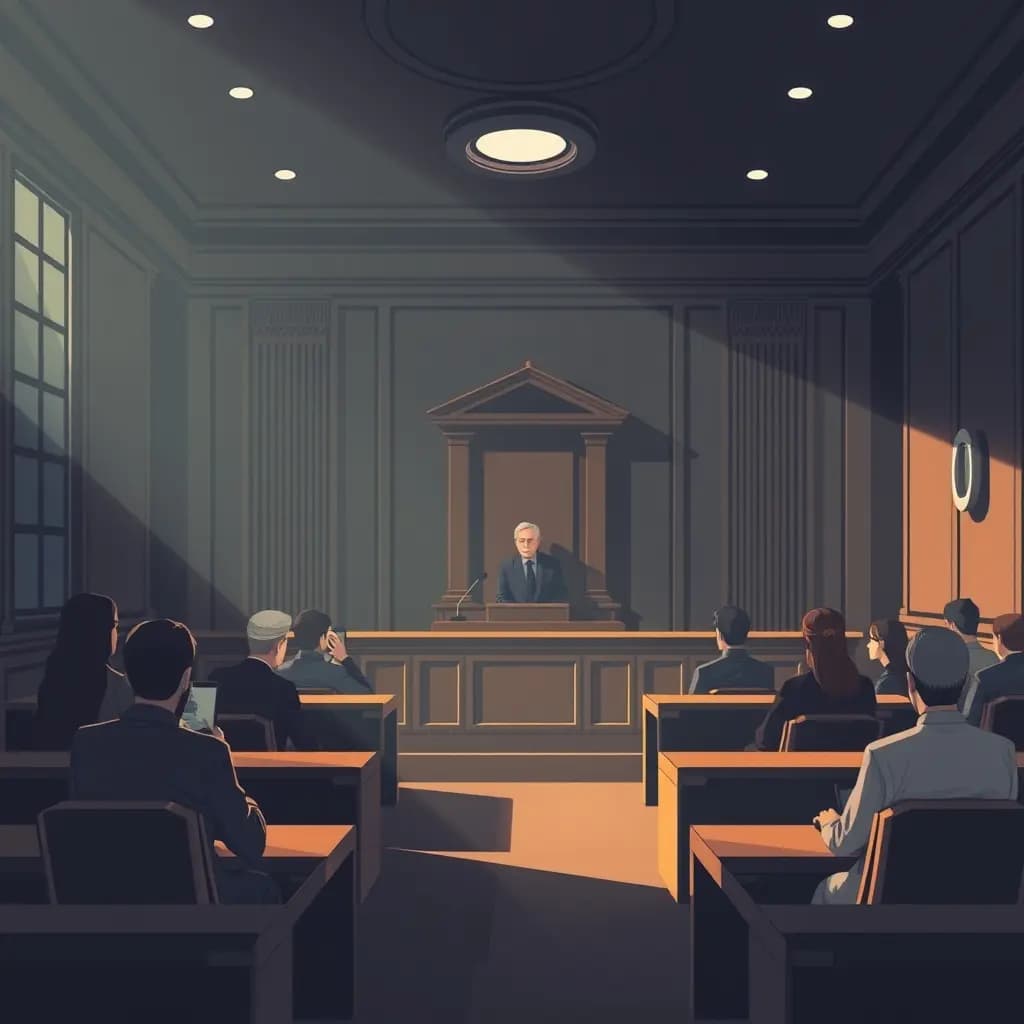
This dream commonly signals feeling silenced or that an important decision in your life has stalled. The jurors’ refusal to speak is a symbol: the group that should deliver a verdict represents voices you need — colleagues, family, or your own inner council — going mute. The gavel and the courtroom setting emphasize authority, accountability and finality; the stalled verdict suggests anxiety about an outcome you can’t force. Practically, the dream points to unexpressed information or withheld opinions that are keeping a choice unresolved.
What your mind may be processing
In many cases, this dream reflects cognitive processing of recent events where authority and testimony mattered: a disciplinary meeting, a heated family conversation, or a workplace review where your point wasn’t heard. The mind stages the courtroom to sort conflicting memories and rehearsed lines while you sleep. The jurors’ silence may be your brain’s way of rehearsing the emotional consequences of speaking — embarrassment, relief, or confrontation — so you can decide whether to act differently when awake.
What this dream usually does not mean
This dream rarely or does not usually work as a literal prediction that a real jury will refuse to speak or that you will face a courtroom trial. It is not a straightforward omen of legal trouble. Instead, it is symbolic — an internal or social stalemate about truth, judgment and the risk of speaking. The emotional sting of humiliation or relief in the dream is meaningful; the scenario itself is not a prophetic event.
Three common meanings
- Blocked voice and suppressed testimony. The silent jurors stand for people or parts of yourself who won’t or can’t testify to what’s true — a partner who won’t admit something, a manager who won’t take responsibility, or your own habit of holding back. The dream points to the cost of silence: unresolved matters, grudges, or missed opportunities. Consider places where you’ve stayed quiet to avoid conflict and whether a carefully chosen truth could move the process forward.
- Decision paralysis and stalled judgment. A jury that refuses to give a verdict mirrors real-life delays: promotions postponed, applications unanswered, or an important choice you can’t finalize. The courtroom emphasizes the official nature of the decision and the pressure you feel. The dream may be urging you to identify what additional evidence, conversation, or boundary you need to break the deadlock and complete the decision-making process.
- Fear of public scrutiny or accountability. Standing before an unseen tribunal, you may fear how others will judge you. The silent jurors amplify the dread that, if you speak, you will be exposed or condemned. This interpretation points to social anxiety about reputation, performance or confession. Working on small, low-stakes disclosures can reduce the charge and help you rebuild trust in your voice.
Specific details people often mention
People often report small, specific images: jurors in dark coats with pinned name tags, a single buzzing fluorescent light, the smell of old leather, rain streaking the courthouse windows, and the sound of a page turning that never finishes.
When to take this dream seriously
Take this dream seriously when it repeats, arrives during a high-stakes transition, or leaves you waking with visceral anxiety. Recurrence suggests an unresolved social or internal issue demanding attention; intensity (sweating, nausea, racing thoughts) shows it’s affecting daytime functioning. If the theme aligns with a stalled legal, career or relationship decision, prioritize clarifying facts, seeking a conversation, or setting a deadline — practical moves break the stalemate the dream dramatizes.
Symbolic meaning across traditions
Meanings vary across traditions. In Western symbolism, courtrooms often represent civic judgment, fairness and rule-bound authority; silence can indicate injustice. Some Eastern perspectives treat silence as moral restraint or shame, reading the dream as a call to reclaim dignity through measured speech. Indigenous or localized traditions might see a silent council as testing or a rite of passage. Acknowledge these differences: the same image can be a warning in one culture and a prompt for inner listening in another.
Frequently asked questions
Why does this dream repeat?
Why does this dream repeat? Repetition often means your brain hasn’t resolved a social or internal contradiction — a recurring silence, an unresolved choice, or a fear you keep avoiding. It prompts further attention until the situation changes or you take action.
Can this dream be positive?
Can this dream be positive? Yes. It can motivate you to reclaim your voice, prepare a clear statement, or recognize that you need different evidence before deciding. The silence can also encourage careful listening, which is constructive.
Is it related to stress?
Is it related to stress? Often, yes. Stress about evaluation, accountability, or conflict raises the dream’s intensity. Nighttime replays of daytime tension are common when a verdict or outcome feels uncertain.
What should I do after this dream?
What should I do after this dream? Identify the stalled issue, list factual questions you need answered, and plan one concrete conversation or action within a week. Practice a short script to express a key point calmly.
Related dreams to explore
If this dream keeps returning, pages about Being Asked to Testify About Events You Don't Remember, Walking Into a Courtroom That Looks Familiar, and Permit Denied can reveal the related patterns underneath it. They often overlap around insecurity, transition, or stress in everyday life. You may also want to compare it with Security Check That Fails if the same mood or conflict keeps showing up.