Dream About Walking Into a Courtroom That Looks Familiar – Meaning
Category: Law & Authority
A typical dream scenario
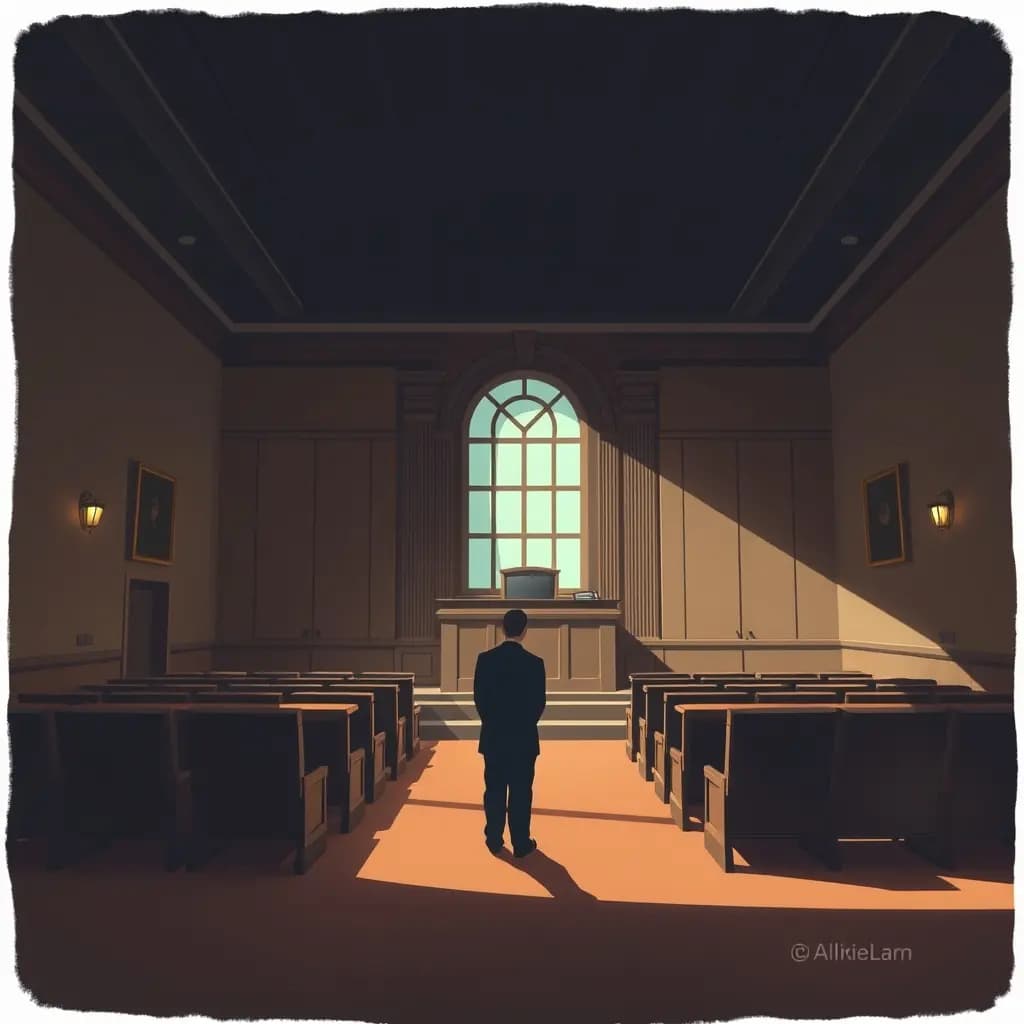
You walk down a long aisle of worn wooden benches, the smell of polish and paper in the air, and recognize the judge’s bench as if you’d been there before. Your hands clutch a thin file; your pulse is quick, and a particular face in the gallery looks like someone from your past. The room has the hush of a verdict about to be read—equal parts dread and expectation—while you stand at the rail, unsure whether you are the accused or the one who must answer.
Concrete details that tend to stand out
Dreamers often notice a stopped clock over the jury box, a gavel that glints like a small sunbeam, whispering voices that sound like household names, or rain tapping against high windows. People report the scrape of a robe, a metal railing cold under their palms, or the odd detail of everyone wearing the same color—grey suits, red scarves—or the echo of a single footstep.
What this dream usually means
Directly: this dream most commonly points to feelings of judgment, accountability, or a looming evaluation—by others or by your own conscience. It can reflect upcoming or recent situations like job reviews, family confrontations, or having to justify past choices. The familiar courtroom becomes a mental stage where unresolved disputes, standards you feel measured against, or moral dilemmas are being replayed; it can feel accusatory yet also like an opportunity to be heard.
Key interpretations
- 1. Accountability and performance review. The courtroom stands for evaluation: a boss, committee, or family that measures your work, character, or decisions. If you enter feeling exposed or giving testimony, the dream may reflect anxiety about an upcoming review, a project presentation, or fear of failing expectations. Notice who’s on the bench—if it’s someone from your job, your waking stress likely centers on performance.
- 2. Unresolved conflict or past dispute resurfacing. A familiar courtroom can be a stage for unfinished arguments: old complaints, family grievances, or legal entanglements that never felt settled. Recognizing faces or files suggests specific relationships or incidents are being mentally re-tried. This interpretation points to memories demanding closure rather than a new external judgment.
- 3. Moral reckoning and self-judgment. Sometimes the judge is the dreamer’s own conscience. Walking into a known courtroom may indicate internal standards and guilt—feelings about choices you made or values you fear betraying. The scene invites a personal audit: what would you defend, what would you admit, and what would you change if you could answer honestly?
What your mind may be processing
In real life, familiar courtroom dreams often emerge when your brain rehearses social evaluation or moral decision-making. Cognitive processes are scanning recent interactions—feedback from colleagues, critical comments from family, or your own self-critique—and staging them with courtroom structure because courts are culturally coded places of verdicts and rules. This is a neutral, adaptive way for the mind to process anticipatory anxiety, regret, or the need to prepare responses. Pay attention to recurring people and emotions; they are cues to real-life relationships influencing your stress levels.
What this dream is not literally saying
This dream is rarely a literal prediction that you will face actual legal proceedings. It does not usually foretell court dates or real criminal danger. Instead, it commonly uses courtroom imagery to dramatize inner judgment or social evaluation; the scene is symbolic, not a straightforward forecast of events.
When this dream deserves attention
This dream deserves attention when it repeats, leaves you waking anxious, or mirrors a concrete stressor—an impending hearing, job evaluation, a family meeting, or unresolved accusations. It becomes important if it changes your behavior: avoidance of people, sleeplessness, or compulsive rehearsing of what you’ll say. In those cases, document the recurring details, identify the relationships involved, and consider proactive steps such as preparing for conversations, seeking mediation, or talking with a trusted confidant.
Frequently asked questions
Is it related to stress?
Yes. Many people experience this dream during periods of stress because the courtroom imagery channels evaluation anxiety—work reviews, conflict with family, or fear of public criticism.
Is this about money?
Not usually. While courtrooms can relate to legal matters, the dream more often symbolizes value judgments, responsibilities, or conflicts than direct financial concerns.
Is this dream a warning?
Generally no. It is rarely a literal warning about future legal action. The dream usually dramatizes internal judgment or social pressure rather than predicting real-world court cases.
Can this dream be positive?
Yes. It can be constructive: a prompt to prepare, reconcile, or set boundaries. If it motivates honest conversation or practical steps, the dream can lead to positive change.
Related dreams to explore
People who dream about walking into a courtroom that looks familiar often end up exploring Permit Denied, Security Check That Fails, and Order to Evacuate next, because the same pressure can show up through different symbols. Comparing them usually makes the emotional pattern clearer. You may also want to compare it with Passport Control Refusal if the same mood or conflict keeps showing up.