Dream of Blood — Meaning & Interpretation
People frequently report this dream when they are dealing with fear of betrayal or rejection, fear of losing something important, or family pressure. This dream is commonly associated with fear of loss, trust issues, or family pressure.
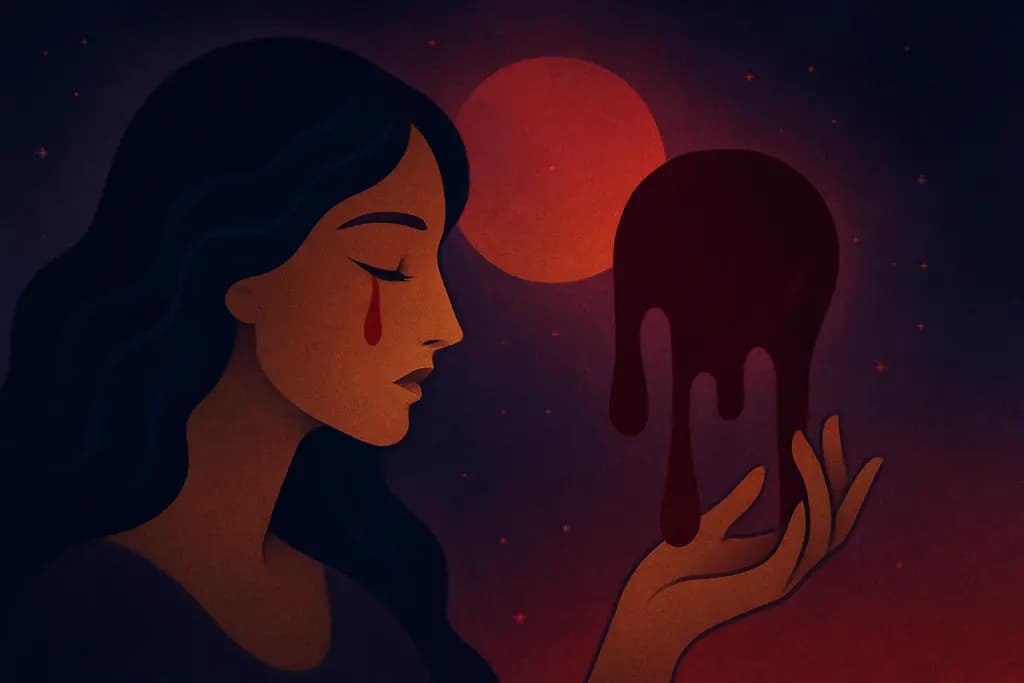
Category: Fears & Nightmares
A typical dream scenario
You stand in a familiar room — a cluttered kitchen or a small hospital cubicle — and notice a bright red stain spreading across a countertop or a loved one’s shirt. Your hands tremble; you fumble for a towel, or you hear the metallic scrape of a knife. The scene is ordinary but the emotion is raw: a cold spike of panic, helplessness, the urge to stop the flow but no clear way to do it. Details feel sharp and immediate.
Specific details people often mention
People report specifics like a child’s sleeve darkening, a car door splashed with rain-mixed blood, the click of hospital machines, a bathroom mirror fogged by breath, or the sudden silence of a crowded room. Some notice a metallic taste, cold hands, or the sound of a dripping faucet.
What this dream usually means
In many cases, blood in a dream is a symbol of vulnerability or loss rather than a literal physical injury. It often marks emotional bleeding — grief, betrayal, or a sense that something important (trust, safety, identity) has been damaged. This image can point to a relationship, family role, or personal boundary that feels compromised and requires either repair or acceptance. There’s often an urgency: the dream signals that attention and practical action may be needed to protect what still matters.
How this dream can be interpreted
- Personal vulnerability and physical anxiety. If the dream centers on your own bleeding body or a wound, it can reflect worries about health, bodily change, or feeling exposed in daily life. You may be dealing with recent illness, sleep deprivation, or the physical toll of stress. The scene often highlights bodily limits: soreness after overwork, a lingering injury, or anxiety about medical testing. Practical steps—doctor visit, rest, clearer boundaries—can reduce the bodily fear the dream dramatizes.
- Emotional loss, grief, or unresolved endings. Blood showing on clothing or furniture often represents grief or an ending that still feels raw. This could be the loss of a relationship, a job, a neutralized role within family life, or the end of a long habit. The image expresses what still bleeds emotionally: rituals, apologies, or goodbyes that haven’t happened. Naming the specific loss and allowing a small ritual—writing, talking, or a symbolic closure—can ease the recurrent sting.
- Boundary breach and betrayal in relationships. When the dream features someone else’s blood or a spreading stain, it commonly signals a boundary violation or breach of trust. It may point to infidelity, broken promises, or parenting strains where loyalty feels compromised. The intensity of the dream mirrors how violated you feel; the scene often urges clearer limits, honest conversations, or recalibrating expectations with the person involved.
- Transition, endings, and the cost of change. Blood can mark the cost of major transitions—moving, divorce, retirement, or a shift in family roles. The dream visualizes what must be shed for something new to begin: security, identity, or certainty. It may feel violent or peaceful depending on the surrounding imagery. This interpretation invites you to map what you’re losing, what you hope to gain, and the small practical steps needed to navigate the passage.
Psychological perspective
From a modern, neutral viewpoint, blood works as a powerful bodily metaphor. It often surfaces when the mind is processing threat, attachment ruptures, or resource drain — emotional energy, time, or social support. The dreambrain uses visceral imagery because it communicates urgency; people notice it most during sleep-deprived periods, high anxiety, or after relational conflict. It’s not a clinical diagnosis but a signal: examine who you rely on, where limits have been crossed, and what actions could protect your emotional well-being.
What this dream usually does not mean
This dream is rarely a literal prediction of physical harm. It does not usually mean someone will be injured or die. Instead, it points to emotional or social damage — a broken promise, a lost role, or a drained resource. Treat the image as a metaphor for current vulnerability rather than a foretelling of physical events.
Why recurring versions matter
Recurring blood dreams often indicate unresolved fear, ongoing stress, or a life transition that hasn’t been fully processed. When the image repeats — the same room, the same person bleeding — it points to a pattern: repeated boundary violations, prolonged caregiving strain, or a grief that’s been postponed. Take notice if the dream increases with deadlines, arguments, or medical worries. Recurrence is a prompt to journal specifics, name the wound, and take at least one concrete step (talk, set a limit, seek support) toward repair.
Common questions
Why do I feel fear in this dream?
Fear often appears because blood is a primal cue of danger and loss. In dreams it amplifies threat signals tied to attachment, shame, or helplessness—so the emotion is a reaction to perceived emotional injury rather than always a literal danger.
Is this about relationships?
Yes, often. Blood commonly points to relationship wounds—betrayal, broken trust, or caregiving strain. If the scene features a partner, parent, or child, examine what trust or boundaries are stressed in that relationship.
Is this about money?
Usually not. Blood in a dream seldom signals financial collapse directly. However, it can reflect the emotional cost of money problems: shame, loss of status, or the strain of stretched resources.
Is it related to stress?
Yes. It often relates to stress. High anxiety, sleep loss, and ongoing pressure make vivid, bodily images more likely. When you’re stressed, the dream highlights where your energy is draining.
Related dream meanings
If this dream keeps returning, pages about Darkness, Cages, and Home can reveal the related patterns underneath it. They often overlap around insecurity, transition, or stress in everyday life. You may also want to compare it with seeing Old Friends if the same mood or conflict keeps showing up.