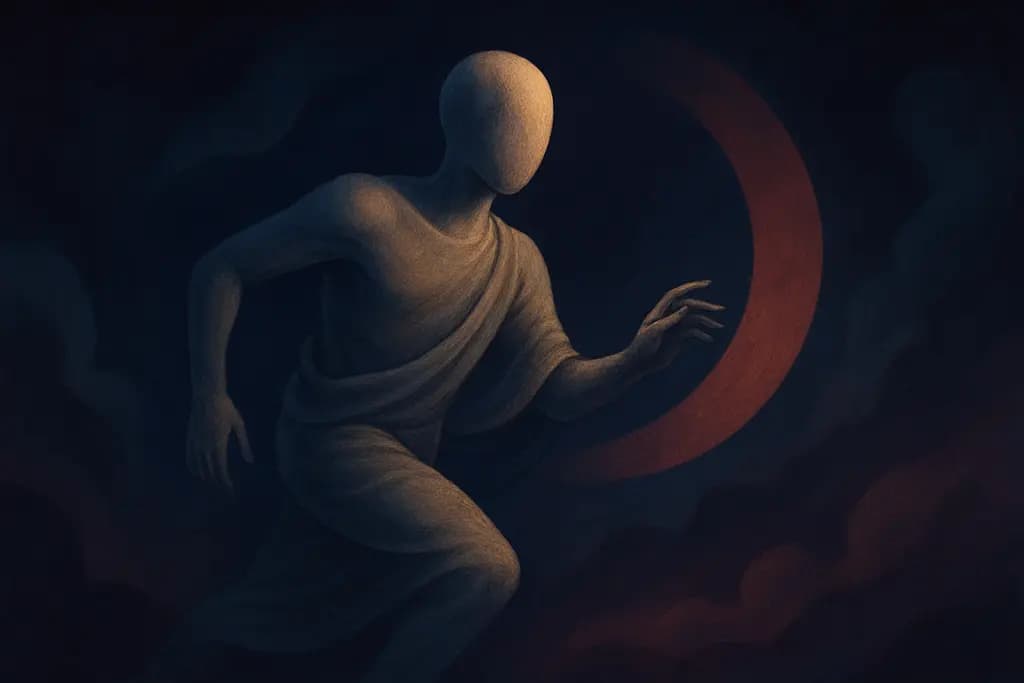
Dream About A faceless statue that moves – Meaning
Category: Fears & Nightmares
Dreaming of a faceless statue that moves can feel deeply unsettling — it blends the frozen finality of a statue with the uncanny motion of something alive. This image often surfaces during times of uncertainty, when identity, control or hidden feelings are being questioned. The precise meaning depends a great deal on how the statue made you feel and the surrounding dream context.
General meaning of dreaming about A faceless statue that moves
A faceless statue that moves combines two strong symbols: the statue (stability, ideals, public image, memorial) and the facelessness (anonymity, loss of identity, hidden aspects). When that statue moves it breaks the expectation of permanence, suggesting a buried or sidelined aspect of life is becoming active — often in a way you find disturbing.
Typical interpretations center on loss of self, the emergence of suppressed material, and the feeling that something formerly rigid is now unpredictable. In the context of fears and nightmares, the moving aspect amplifies anxiety: what was once inert and controlled is now animated and unknown.
- Loss or questioning of identity: facelessness can point to anonymity or not knowing who you are.
- Repressed feelings surfacing: motion suggests suppressed emotions or memories are coming back.
- Threat or warning: the uncanny nature can reflect perceived danger, manipulation, or power shifting.
- Social pressure and roles: statues represent roles or expectations — faceless ones imply you are playing a role without recognition.
Spiritual meaning of A faceless statue that moves in dreams
Spiritually, a moving faceless statue may symbolize an awakening of hidden spiritual forces or lessons. In many traditions statues stand for ancestors, deities or ideals — a faceless figure removes personal identity and can point to universal themes, shadow work, or ancestral patterns moving through your life.
From a universal perspective, the dream can be read as an invitation to integrate parts of the psyche that have felt numb or anonymous. In Jungian terms it may represent an archetypal figure losing its fixed role and signalling a call to inner transformation. In other cultural frames the movement might signify a message from the past demanding attention.
Psychological interpretation
Fear, stress or anxiety
Psychologically, this dream often arises from heightened stress or anxiety. The facelessness can mirror uncertainty about your future or anxiety about not being seen for who you are. Movement turns a passive worry into an active threat — your mind is dramatizing internal tension as something that approaches and cannot be easily ignored.
Relationships and emotional bonds
In relationships, a moving faceless statue may reflect feelings of being with someone who lacks emotional presence or individuality. It can suggest that a partner or friend feels anonymous, emotionally distant, or constrained by roles. Alternatively, it can represent the fear that a relationship is changing in ways that make the other person unrecognizable.
Control, power or vulnerability
The statue’s motion often signals a loss of control: structures you relied on (rules, roles, support systems) are shifting. Facelessness increases vulnerability — you may feel exposed to forces you cannot identify or resist. The dream can also reflect inner conflicts about power: do you feel controlled by anonymous norms or are you the one becoming impersonal and rigid?
Positive meaning
- Awakening to hidden parts of yourself that can be integrated and healed.
- Release from rigid roles or expectations — the movement can start positive change.
- A prompt to rediscover identity and agency; recognizing the facelessness is the first step to reclaiming your face.
- Creative transformation: the uncanny image can spark artistic or psychological breakthroughs.
- Opportunity to confront and transform fear into constructive action.
Negative meaning and warnings
- May suggest unresolved trauma or suppressed memories are resurfacing and need attention.
- Can indicate a creeping loss of identity or feeling dehumanized by social roles.
- May point to manipulation or being influenced by anonymous forces (public opinion, institutions).
- Can indicate rising anxiety, avoidance, or the need to address difficult relationships.
- Might suggest procrastinated decisions will become urgent as hidden issues animate.
Common variations of dreams about A faceless statue that moves
- A faceless statue that follows you: Often reflects a persistent worry or unresolved issue that feels inescapable; something from your past may be pursuing you mentally.
- A faceless statue that breaks apart while moving: Suggests a collapse of previously held identities or structures — painful but potentially freeing as old forms fall away.
- A faceless statue that speaks or emits a sound: Indicates a neglected part of yourself trying to communicate; pay attention to the message rather than the fear.
- A faceless statue in a crowded square that moves: May point to social pressure or public expectations changing and making you feel erased or exposed.
- A small, childlike faceless statue that moves: Can signal vulnerability, childhood wounds, or unmet needs coming back into awareness.
- A metallic faceless statue that moves slowly: Often ties to feelings of cold, mechanical control — institutions or rigid systems asserting themselves.
- A faceless statue that turns to look at you (but has no face): Intensifies feelings of being judged or watched by impersonal standards; may push you to examine how much you value external validation.
What to do after such a dream
- Reflect on your feelings: note whether you felt fear, curiosity, numbness or anger and where those emotions appear in your waking life.
- Journal details: location, movement, size and any actions — these often map to specific relationships or situations.
- Review current stresses and roles: consider where you feel unrecognized, controlled, or emotionally distant.
- Talk it through with a trusted friend or mentor: sharing the image can help you find practical meanings and next steps.
- Take small grounding actions: set boundaries, make one decision you’ve been avoiding, or express a hidden feeling through art or writing.
- Use the dream as a prompt for inner work: identify one area (identity, relationship, work) where you can make a conscious change.
Dreams with a faceless statue that moves are unsettling but also rich with information once you attend to the feelings and story they present. Let the image guide you toward the parts of life asking for attention rather than letting it remain an anonymous threat.