Dream About Wolf encounter – Meaning
Category: Animals
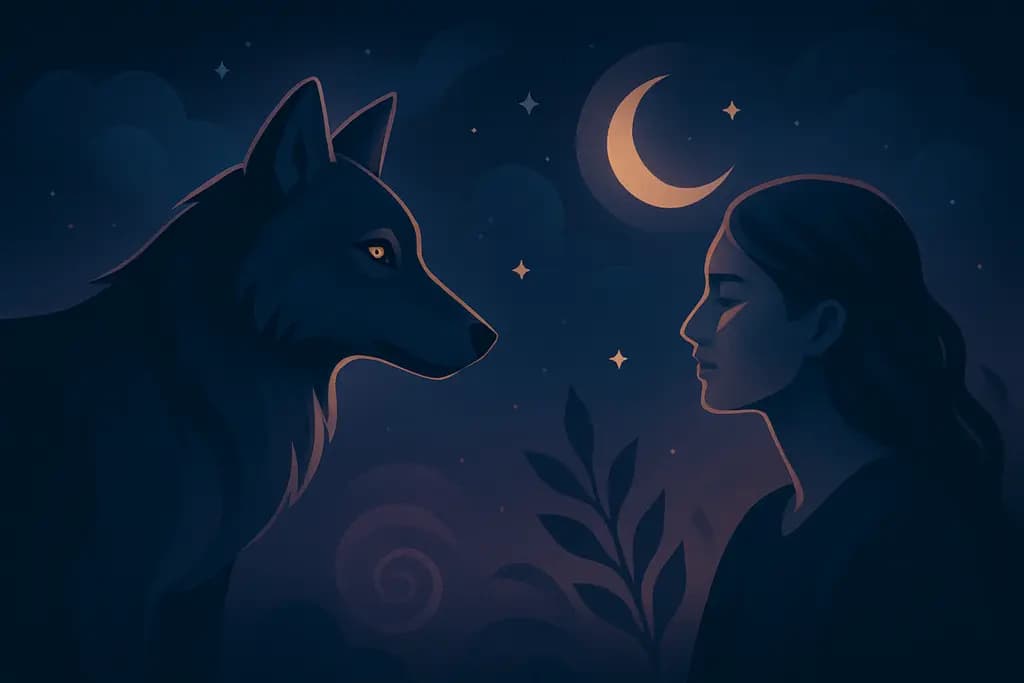
Dreaming of a wolf encounter often brings powerful emotions and vivid imagery. Such dreams can point to instinctual forces, social dynamics, or a call to personal strength — but the exact meaning depends heavily on how you felt and what was happening during the encounter. Context and your response to the wolf are key to interpreting this symbol.
General meaning of dreaming about Wolf encounter
Wolves in dreams commonly symbolize instinct, intuition, social bonds, and aspects of the shadow self. An encounter suggests a meeting with something wild or primal inside you — a part that can be protective and loyal, or unpredictable and threatening depending on circumstances.
This symbol often appears when you're negotiating boundaries, power, or belonging. The wolf can represent a guide toward self-reliance or a warning about hidden dangers in relationships or situations.
- Instinct and intuition: listening to inner guidance
- Social dynamics: pack behavior, loyalty, betrayal
- Power and survival: strength, aggression, protection
- Shadow traits: repressed anger, fear, or primal urges
Spiritual meaning of Wolf encounter in dreams
Spiritually, wolves are frequently seen as teachers of loyalty, communication, and wild wisdom. Many traditions view the wolf as a guide that helps you reconnect with natural instincts and inner courage.
In shamanic and indigenous frameworks the wolf can be a spirit ally that offers protection and clarity. In Jungian terms, a wolf encounter might signal the emergence of unconscious material that wants to be integrated. Universally, the wolf calls attention to a balance between independence and community.
Psychological interpretation
Fear, stress or anxiety
If the wolf in your dream provokes fear, the encounter may mirror real-life stressors or anxieties. The animal can stand for perceived threats — either external (a person or situation) or internal (racing thoughts, panic). How you react to the wolf (freeze, flee, fight) often maps to how you cope with pressure in waking life.
Relationships and emotional bonds
When wolves appear in social contexts (a pack or lone wolf near others), the dream can reflect your place within groups and your concerns about loyalty, trust, or exclusion. A friendly wolf may signal strong support systems; a hostile one may point to betrayal or loneliness.
Control, power or vulnerability
Encounters where a wolf asserts dominance or you feel overpowered can reveal feelings of vulnerability, control struggles, or suppressed anger. Conversely, confronting or calming a wolf can indicate growing confidence and the reclaiming of personal power.
Positive meaning
- Reconnecting with intuition and inner wisdom
- Increased personal strength and resilience
- Healing through acknowledging shadow aspects
- Improved leadership or protective instincts in relationships
- New opportunities that require courage and independence
Negative meaning and warnings
- May suggest unresolved fears or anxiety that deserve attention
- Can indicate potential betrayal or tension within social circles
- Might point to impulsive behavior or aggressive tendencies to watch
- May warn about overreliance on independence at the cost of supportive relationships
Common variations of dreams about Wolf encounter
- Wolf pack surrounding you — Often reflects social dynamics: feeling supported by a group or overwhelmed by peer pressure, depending on your emotions.
- Lone wolf approaching — Can symbolize independence, a call to self-reliance, or feeling isolated from others.
- Wolf attack or aggressive wolf — May indicate perceived threats, anger, or interpersonal conflict that needs addressing.
- Wolf howling at night — Frequently ties to communication, a call to pay attention to messages from your intuition or community.
- Tame or friendly wolf — Suggests a reconciled aspect of self, trust in intuitive guidance, or a supportive ally in waking life.
- Wolf cubs or young wolves — Can represent new responsibilities, nurturing instincts, or developments in relationships that require care.
- Dream of being led by a wolf — Often read as spiritual guidance or following instinctual wisdom during a transition.
What to do after such a dream
- Reflect on your emotions: note how you felt during and after the dream (fear, awe, calm).
- Journal the details: location, the wolf's behavior, whether it was alone or in a pack — small details help interpretation.
- Examine current life areas: relationships, work, decisions where trust, boundaries or power are relevant.
- Consider relationships and fears: are there people or situations that mirror the wolf's behavior?
- Take practical steps: practice boundary-setting, strengthen supportive connections, or allow time for quiet reflection and intuition-building.
- Use creative or grounding practices: draw the dream, walk in nature, or do mindfulness to integrate insights.
Remember that dream symbols are personal: use the dream as a prompt to explore inner signals rather than a fixed prediction.