Dream About white wedding dream meaning – Meaning
Category: Relationships
What this dream usually means
A white wedding in a dream most commonly signals a transition in identity or status: a move toward commitment, a public role you’re about to step into, or anxiety about meeting others’ expectations. It often reflects questions about “who you’ll be” after a change—married person, parent, manager, or community leader—rather than predicting an actual wedding. In real life, this image can function as an emotional rehearsal: you’re processing hopes and doubts about taking on new obligations. There can be tenderness and tension at once.
Psychological perspective
From a psychological angle this dream functions like an emotional run-through. The wedding script lets the mind rehearse decision-making, social judgment, and identity shifts; stress, attachment history, and recent conversations tend to shape the details. If you’ve been talking about marriage, job change, or public responsibilities, those memories will populate the scene. The tone—peaceful, anxious, embarrassed—reveals how you currently feel about stepping into a new role rather than diagnosing a problem.
What this dream usually does not mean
This dream is rarely, if ever, a literal prediction that you will marry the next day. It does not usually foretell concrete events. Instead of reading it as prophecy, treat it as symbolic: it points toward feelings about commitment, identity, public scrutiny, or an impending life change, not an inevitable future ceremony.
How this dream can be interpreted
- Transition and commitment. The white wedding may represent an approaching life change—moving in with a partner, accepting a promotion, or becoming a parent. The ceremony format shows how public or structured that change feels. If you felt nervous in the dream, that often marks ambivalence: part of you wants the security of the new role, part worries about what you’ll have to give up.
- Identity, image, and societal expectation. Wearing white and standing on display can point to pressure to present a clean, acceptable self. This dream may surface worries about performing someone else’s ideal—being ‘perfect’ for family, culture, or a community role. The gown is a costume of expectation; the dream asks which parts of that outfit feel authentic versus imposed.
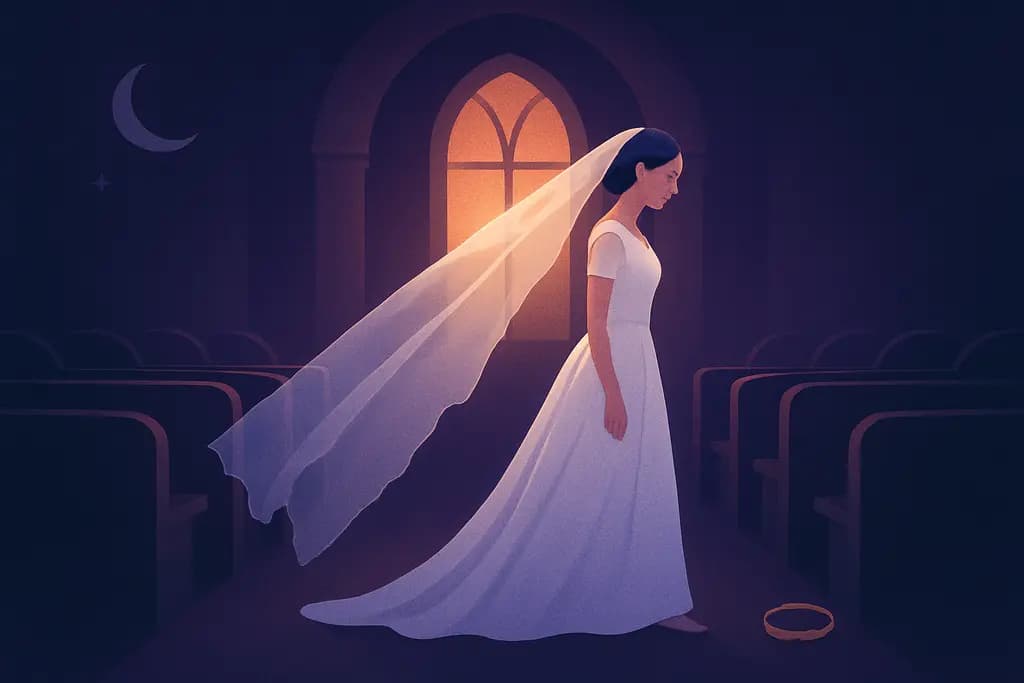
- Promises, obligations, and fears of failure. Scenes of forgetting vows, losing the ring, or a chaotic reception often symbolize fear of not keeping promises—financial, emotional, or practical. The disrupted ceremony mirrors anxieties about failing others or yourself in upcoming obligations: deadlines, caregiving, or legal/contractual commitments.
Unusual details people report
Dreamers often report small, specific images: a locked church door, rain blotting the hem, a missing ring on a pillow, a bridesmaid whispering, someone cutting the cake alone, or music that echoes oddly. Sensory details like the smell of lilies or the scrape of chairs make the scene feel immediate.
When to take this dream seriously
Pay attention when the white-wedding dream repeats, leaves you unsettled during the day, or appears around concrete decisions—engagement talks, moving, job offers, or family pressure. Recurrence or lingering anxiety suggests unresolved questions about identity or obligations that affect daily life. If the dream is vivid and prompts avoidance or impaired sleep, treat it as a signal to journal, talk with a trusted person, or map the decisions you’re facing.
Symbolic meaning across traditions
Meanings vary widely across cultures. In many Western contexts white dress imagery links to purity and formal commitment; in South Asian traditions red or bright colors signal marriage, so a white wedding image might carry different connotations. In some East Asian cultures white is linked to mourning, which can recast the dream as about endings rather than beginnings. Religious communities may read ritual details differently, so interpret symbols in light of your cultural background rather than assuming one universal meaning.
FAQ
Why do I feel fear in this dream?
Fear in this dream commonly comes from uncertainty about change, worry about public judgment, or anxiety about losing autonomy. Physical reactions (racing heart, sweating) often mirror how your body responds to real-life stress about an upcoming choice.
Is this about relationships?
Sometimes. It can relate directly to romantic relationships, but it frequently points to broader commitments—taking on a caregiving role, a public position, or a marriage of circumstances—so check who appears and what they do in the dream.
Is this about money?
Usually not. The dream rarely predicts financial events unless money appears as a clear symbol—bills, a lavish or ruined venue, or conversations about cost. If financial stress preoccupies you, it can shape the wedding imagery.
What should I do after this dream?
Write down the details, note which emotions stayed with you, and talk it through with someone you trust. Use the dream to clarify decisions: list options, values, and practical steps. Seek support if the dream recurs or causes ongoing distress.
Related dreams to explore
People who dream about white wedding dream meaning often end up exploring Friends, Sex, and Strangers next, because the same pressure can show up through different symbols. Comparing them usually makes the emotional pattern clearer. You may also want to compare it with Old People if the same mood or conflict keeps showing up.