Dream About Whales – Meaning
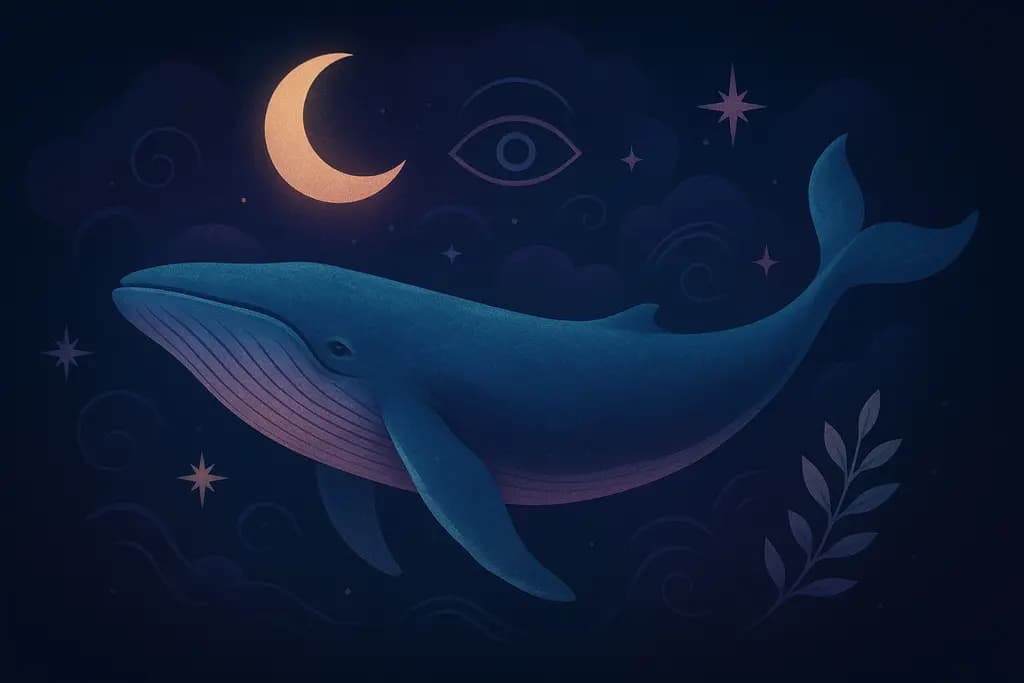
Category: Animals
A typical dream scenario
You stand ankle-deep on a rocky shore at dusk, salt wind on your face, as a massive gray whale surfaces a few feet away. Its eye looks directly at you; your chest tightens with a mix of awe and something like a memory you can’t name. Nearby a child’s red raincoat flaps on the rocks, and a low, resonant exhale from the whale vibrates through your ribs. You want to touch it but hesitate, feeling both small and strangely responsible.
Unusual details people report
People report odd specifics: a whale in a living room, the creature pushing open a painted door, a whale’s breath fogging up car windows, the sound of distant chimes timed with each exhale, or wetsuit-clad relatives watching quietly from a pier.
What this dream usually means
A whale dream commonly signals encounters with deep emotions, significant inner resources, or a major life shift that feels larger than everyday concerns. It may reflect intuition, long-buried memories, or an emerging responsibility—especially in relationships or creative work. In many cases, the whale’s size and the dreamer’s physical reaction (awe, fear, protective urge) point to how ready you feel to face whatever is surfacing.
Key interpretations
- Emotional Depth and Release. A whale can represent submerged feelings finally rising: grief, compassion, or creative impulse. If the whale breaches or sings, this may suggest a need to express something you’ve kept quiet—perhaps admitting a long-held feeling, ending a stifling habit, or allowing vulnerability in a close relationship. Physical reactions in the dream (sobbing, trembling) show the release is real and potentially healing.
- Intuition, Guidance, and Responsibility. A calm, wise whale often symbolizes inner guidance or a newly felt duty—caring for others, stewarding a project, or honoring personal values. If you felt compelled to protect or lead the whale in the dream, it can indicate readiness to take on a larger role. Conversely, a wounded or frantic whale may point to neglected parts of yourself or relationships needing urgent attention.
What it can reflect emotionally
From a modern, neutral standpoint, whale dreams can reflect how you process big emotional information: awareness, avoidance, or integration. They are commonly associated with the unconscious presenting material too large to ignore—memories, attachments, or moral choices. The dream’s atmosphere (stormy sea versus calm bay) offers clues about current stress levels and coping capacity. Pay attention to physical sensations in the dream; they often mirror bodily stress responses when confronting emotional magnitude.
What this dream usually does not mean
This dream is rarely a literal prediction—seeing a whale does not mean a physical encounter or immediate external catastrophe is imminent. It does not usually function as a step-by-step warning. Instead, it speaks symbolically: size and presence communicate emotional scale rather than factual events. Resist interpreting it as a direct forecast or an instruction to take immediate physical action.
Why recurring versions matter
Recurring whale dreams or ones tied to intense life transitions deserve attention. If the dream repeats during career change, grief, pregnancy, or caregiving shifts, it may be a persistent signal that a psychological integration is incomplete. Recurrence often means the mind is rehearsing different responses until one feels settled. Take recurring versions as invitations to reflect, journal, or talk with someone who can help you translate the symbolic message into practical next steps.
Frequently asked questions
Is it related to stress?
Yes. In many cases, whale dreams surface when stress has accumulated; they magnify feelings your everyday thinking has set aside and can point to emotional overload or the need for release.
What should I do after this dream?
Write down vivid details immediately, note emotions and bodily reactions, and reflect on one small action you can take—call a person, set a boundary, or schedule time to process the issue.
Why do I feel fear in this dream?
Fear often comes from confronting something vast and important in yourself—responsibility, grief, or change. The fear is about scale and uncertainty, not necessarily danger.
Is this dream a warning?
Usually not. A whale dream is symbolic and rarely a literal warning; it signals internal shifts and priorities rather than predicting specific external events.
Related dreams to explore
People who dream about whales often end up exploring Alligators, Animals, and Ants next, because the same pressure can show up through different symbols. Comparing them usually makes the emotional pattern clearer. You may also want to compare it with Bats if the same mood or conflict keeps showing up.