Dream About Walking through a familiar town from childhood – Meaning
Category: Places
Main interpretation
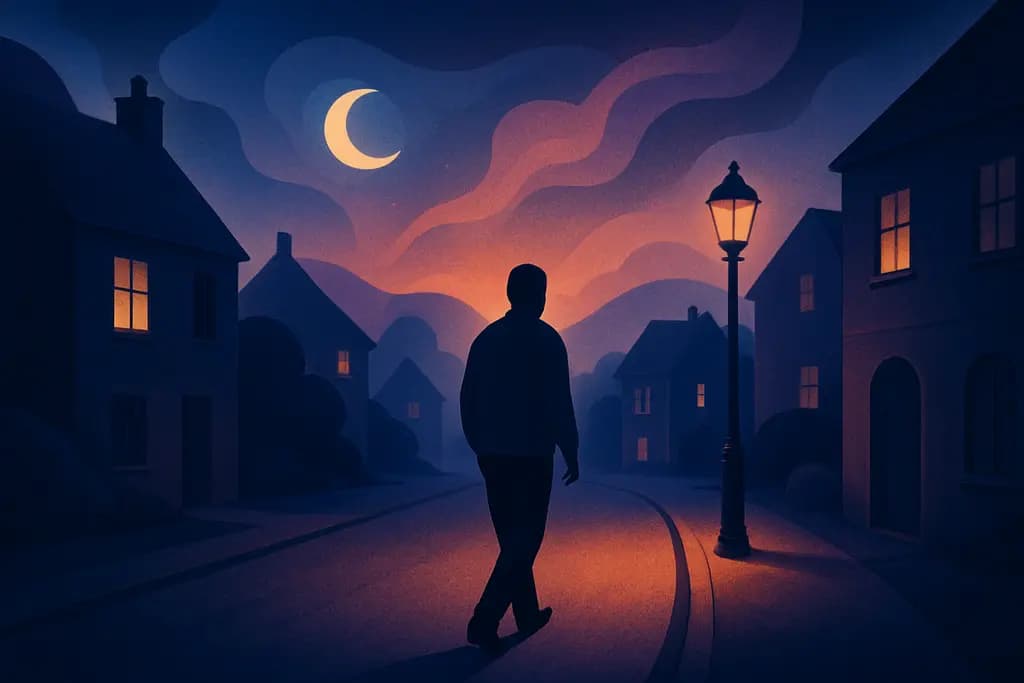
Walking through a childhood town usually maps your internal map of who you were and who you are now. The buildings, smells and routes often act like emotional signposts: comfort and nostalgia where things are intact, unresolved tension where a place feels closed or abandoned. This dream commonly points to identity, old roles you rehearse, and choices that shaped your beliefs, rather than predicting future events.
What this dream often looks like
You’re moving down a cracked sidewalk past the old corner bakery where the bell still rings, the window smeared with your handwriting as a child. The playground’s red swing lifts by itself; a phone booth you used to stand in is oddly modern. You feel a mix of warmth and a gentle ache — as if you’re both visitor and younger resident, noticing how familiar streets have shifted.
Unusual details people report
Dreamers report odd specifics: a school hallway painted the wrong color, a train passing without tracks, neighborhood dogs that speak with remembered voices, or the sudden presence of a parent who looks years younger. Sensations — like a sudden taste of lemon or a throat-tightening ache — are frequent and vivid.
Emotional and symbolic meanings
- Memory and identity mapping. This angle treats the town as a collage of formative memories. Walking familiar streets suggests you’re tracing the habits, family roles, or social routines that shaped your self-concept. Noticing particular houses or your childhood room can indicate which memories are most active and influencing current choices.
- Processing unresolved relationships. If specific people or a closed house stand out, the dream may be probing unfinished emotional business. A boarded-up door or locked classroom commonly points to conversations not had, forgiveness withheld, or boundaries you need to reconsider with family or childhood friends.
- Transition and growth signals. When streets look different — wider, repaved, or overgrown — the dream may be signaling life transitions. Smooth roads can suggest confidence in change; overgrown paths often mean hesitation. This view highlights readiness to leave old patterns or the fear of losing a stable identity.
- Nostalgia as resource or trap. Strong longing for the past in the dream can be protective or limiting. Feeling comforted by the bakery’s warmth might indicate emotional resources you can draw on; getting stuck at the corner without moving suggests nostalgia preventing needed change or exploration.
What this dream is not literally saying
This dream is rarely a literal prediction of returning to your hometown or finding exact events waiting for you. It does not usually foretell concrete future outcomes. Instead, it translates feelings about the past into symbolic scenery; reading it as a calendar-style prophecy is misleading. One emotional nuance: it can feel like a promise and a warning at once.
Cultural and symbolic views
Meanings vary widely across cultures. In Western therapeutic contexts the emphasis is on personal history and attachment; in some Indigenous and Eastern perspectives the town might represent ancestral memory, collective roots, or karmic patterns. Other cultures emphasize symbols like communal spaces or rites of passage within the town. These frameworks offer different questions to ask rather than one fixed answer.
Questions to reflect on
- Which specific building, street, or object in the dream drew the most attention, and what memory does it trigger in your waking life?
- What emotion did you carry while walking (comfort, guilt, curiosity, fear), and where in your current life does that feeling appear?
- If you could return to one scene from the town and change the outcome, what would you do and why?
FAQ
Is this about relationships?
Is this about relationships? It can be. If people from your past appear or certain homes dominate the dream, it often reflects unresolved bonds or the roles you played in relationships, but it also ties to how those connections shaped your identity.
Why does this dream repeat?
Why does this dream repeat? Repetition usually means the mind is rehearsing an unresolved concern—an emotion, decision, or memory that hasn’t been integrated. The dream repeats until you address the underlying feeling or gain a new perspective.
Can this dream be positive?
Can this dream be positive? Yes. When the town feels warm, open, or reclaimed, the dream often signals healing, reconnection with inner strengths, or successful integration of past lessons into present life.
What should I do after this dream?
What should I do after this dream? Note the strongest image and any emotions, journal the memory it triggered, and consider talking it through with a friend or therapist. Small rituals—revisiting a place, writing a letter you don’t send, or creating a symbolic farewell—can help.
Related dreams to explore
Dreams about walking through a familiar town from childhood are often connected to Bad Weather, Ballrooms, and black waterfalls. Looking at those nearby themes can help you compare control, fear, pressure, or change across similar dream scenes. You may also want to compare it with Cave if the same mood or conflict keeps showing up.