Dream About Virtual reality replaces city – Meaning
Category: AI & Future Technology
What this dream often looks like
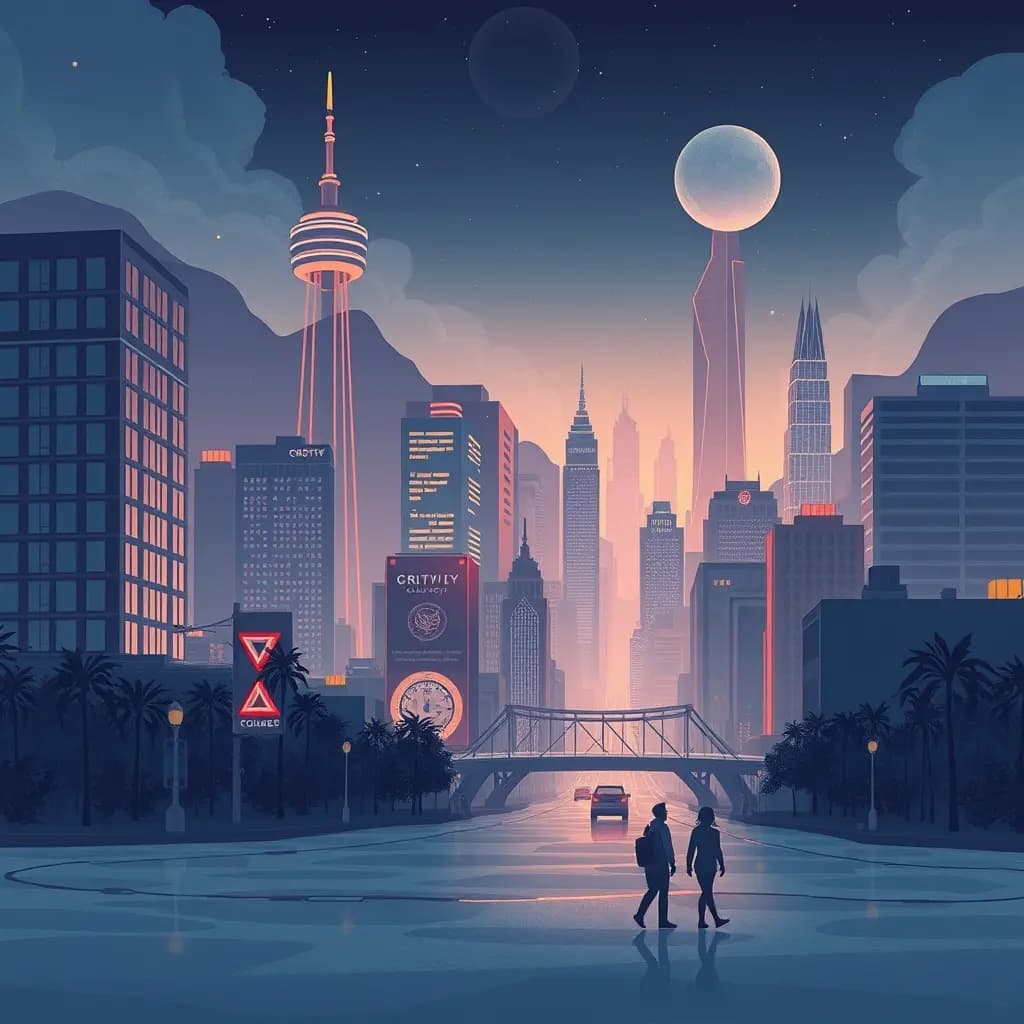
You wake with a tightness in your chest, already late for something important, only to find the familiar corner shop replaced by a sleek holographic mall. The streetlights glow like LEDs, an empty tram shows a looping advertisement and pedestrians wear thin visors as they pass without looking up. You feel both mournful and oddly relieved — like watching a neighborhood you knew dissolve as you walk, hands empty, searching for a door that no longer opens.
Unusual details people report
People report very concrete oddities: a subway platform that loops the same train, a café whose menu is only camera icons, mannequins in vintage coats that turn their heads, the smell of ozone after rain, a distant hum like server fans, and a physical sensation of weightlessness or pins in the fingertips.
Quick interpretation
This dream commonly points to feelings of displacement: rapid change in your environment feels beyond your control and your inner life is responding by imagining the city itself being overwritten. It can be about technological overwhelm, a sense that real relationships or memories are being substituted with curated, artificial experiences, or a fear that your roles—worker, neighbor, friend—are becoming obsolete. At its heart the dream asks whether you are losing touch with what grounds you.
Three common meanings
Displacement and community loss. When the city is replaced in a dream it often mirrors worries about neighborhood change, gentrification, or drifting from people who used to anchor you. The familiar shop fronts and faces disappearing suggest grief for routine and local ties. If you recently moved, lost friendships, or watched your town change, the dream is processing that sense of cultural or emotional homelessness.
Anxiety about automation and control. A virtual-city takeover can represent fear that systems—workflows, algorithms, or managerial decisions—are erasing personal agency. The glossy interfaces and silent crowds point to being managed by unseen processes. This interpretation fits when you’re facing job automation, intrusive monitoring, or decisions made by others that limit your options.
Desire for escape or reinvention. Sometimes the replacement city is attractive: seamless, clean, customizable. That suggests a wish to leave messy reality behind and design a new self or life. If you feel stuck or resent routine, the dream may be inviting exploration of new identities or a planned life reboot, while also warning that escape can come at the cost of authenticity.
Psychological perspective
In many cases, this dream is a metaphor for boundary erosion between your inner world and external systems. Contemporary life loads attention with screens, schedules and curated experiences; the dream stages that load as an urban takeover. Psychologically, it may reflect identity stress — you’re negotiating which parts of yourself are chosen freely versus those shaped by algorithms, social expectation, or economic pressures. There’s often a mixed emotion: relief at the possibility of order and sorrow for what must be given up.
What this dream usually does not mean
This dream is rarely a literal prediction that virtual reality will physically replace your city. It does not usually mean you will move or that a specific tech company will take over your block. Instead, the imagery is symbolic—about perception, control, and belonging—not a forecast of exact events. Saying otherwise encourages fearful literalism rather than useful reflection.
When to take this dream seriously
Take this dream seriously if it recurs, spikes during transitions, or appears alongside strong waking anxiety about work, relationships, or where you live. It’s especially urgent when the dream provokes avoidance (you stop visiting places), insomnia, or impulsive decisions to cut ties. During job changes, moves, serious grief, or sustained technological surveillance at work, the dream often signals unresolved fears that benefit from practical action: setting boundaries with devices, reconnecting with community, or planning gradual change.
FAQ
Is this about money?
Is this about money? Not directly. Financial stress can be a trigger—loss of livelihood or market-driven neighborhood change shows up as disappearance—but the dream usually talks about belonging and control more than specific finances.
Is this dream a warning?
Is this dream a warning? It can function as a warning about becoming disconnected from real relationships or ceding too much control to technology, but it’s symbolic rather than a literal alarm about future events.
Can this dream be positive?
Can this dream be positive? Yes. If the simulated city felt orderly or freeing, the dream may indicate readiness to reinvent, streamline your life, or embrace beneficial tech while consciously preserving what matters.
Is it related to stress?
Is it related to stress? Often, yes. High stress, especially from rapid change or overload, commonly produces these night images. The dream surfaces anxiety and points to areas where stress-reduction could help.
Related dream meanings
If this dream keeps returning, pages about Self-driving car ignores you, AI transcribes your thoughts, and Robot offers silent advice can reveal the related patterns underneath it. They often overlap around insecurity, transition, or stress in everyday life. You may also want to compare it with Deepfake speaks your words if the same mood or conflict keeps showing up.