Dream About Time – Meaning
Category: Objects
A typical dream scenario
You stand beneath a huge station clock whose hands spin too fast. A bell rings and commuters blur past in raincoats; you clutch a ticket for a train that might have already left. Your chest tightens, breath quickens, and you shove through a crowd searching for a platform while a muffled voice calls a name you almost recognize.
Quick interpretation
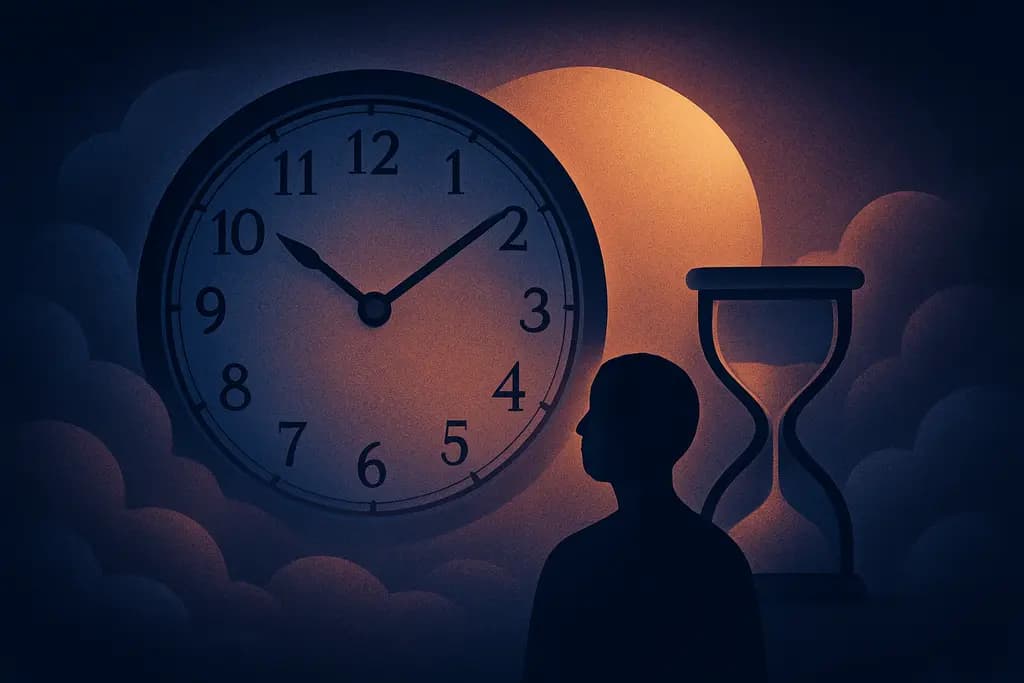
A dream about time commonly signals how you feel about change, deadlines, and the way you use your hours. A racing clock or missed train often reflects pressure from work, a relationship decision, or a sense that a window of opportunity is closing. A stopped or slow clock tends to point to feeling stuck, delayed, or held back by past mistakes. Pay attention to the scene: being late speaks to urgency; being frozen in place speaks to avoidance or grief.
Key interpretations
- Urgency, Deadlines, and Decision Pressure. If the dream features racing clocks, shouted announcements, or missed departures, it commonly reflects external pressure—work deadlines, a looming exam, or a relationship ultimatum. The dream's intensity maps to how close you feel to a decision point. Use that energy as a cue: identify the one choice you’ve been avoiding and break it into the next three actions.
- Stagnation, Regret, and Holding On. A stopped clock, a stalled elevator, or repeated scenes that never advance tend to point to feeling stuck—grief, an unresolved breakup, or a career rut. Those images are less about running out of time than about unresolved past moments you keep replaying. That lingering regret often asks for closure, a ritual, or a practical change to move forward.
- Transition, Renewal, and Reframing Priorities. Dreams where clocks reset, seasons change quickly, or you step into a different era often mark life transitions: a move, retirement, becoming a parent, or leaving a long habit. These dreams can be invitations to reassess priorities—what you invest time in—and to experiment with new routines that reflect who you’re becoming.
What this dream usually does not mean
This kind of dream is rarely a literal prediction of dates or exact events. It does not usually tell you the precise time a thing will happen. Instead, the symbol of time most often works as an emotional report—an emphasis on urgency, loss, or transition—rather than a timetable for the future.
Specific details people often mention
People often report a cracked grandfather clock in a dim parlor, a plastic digital display blinking '12:00', sand spilling from a torn hourglass onto a wooden floor, or the cold prick of sweat when numbers jump forward. Other common touches include echoing footsteps, soaked coats, fluttering tickets, and distant church bells.
What your mind may be processing
From a modern, non-medical angle, time imagery in dreams often emerges from how your memory, attention, and planning systems have been taxed. Sleep recombines recent events, worries about deadlines, and feelings about past losses into symbolic scenes. A racing clock may reflect cortisol-driven urgency; a stopped watch can mirror rumination. Consider the dream as feedback from cognitive processes about where your focus and stress are concentrated.
Why recurring versions matter
Recurring time dreams become important when they coincide with high-stakes transitions—a job change, divorce, retirement, pregnancy, or a health scare. They also matter if the dream provokes strong emotion on waking or starts affecting daytime functioning. Repetition suggests an unresolved decision or chronic stress; it’s a prompt to address whatever practical or emotional action you’ve been delaying.
Frequently asked questions
Is this about money?
Is this about money? Not usually directly. If money-specific symbols appear—unpaid bills, counting coins, wallets—the dream may reflect financial anxiety or resource worries; otherwise, the focus is more about time, priorities, and opportunity than cash itself.
Why does this dream repeat?
Why does this dream repeat? Repetition often signals an unresolved decision, ongoing stress, or a life transition you haven’t integrated. The dream keeps returning until you take a specific action, gain closure, or reduce the underlying pressure.
What should I do after this dream?
What should I do after this dream? Note the dominant image and one related real-life pressure, then pick a concrete next step: set a deadline, talk to a person involved, or schedule a small ritual to mark closure. Track changes for a week and reassess.
Related dreams to explore
Dreams about time are often connected to Balloons, Bicycles, and Bikes. Looking at those nearby themes can help you compare control, fear, pressure, or change across similar dream scenes. You may also want to compare it with black lost objects if the same mood or conflict keeps showing up.