Dream About Tarot cards – Meaning
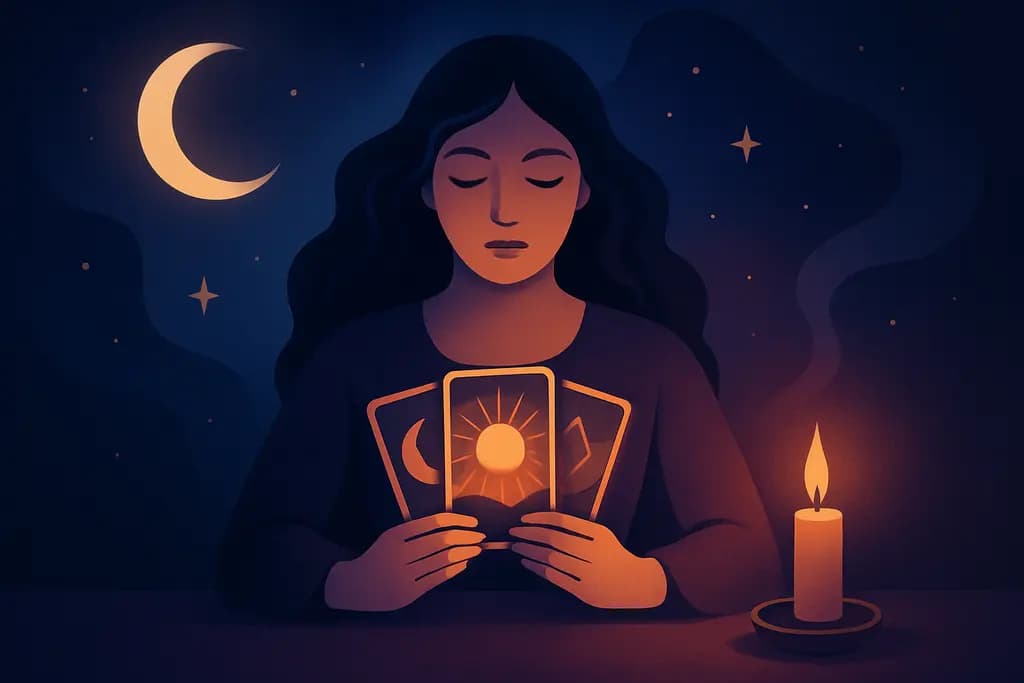
Category: Spiritual & Symbolic
Dreaming of tarot cards often signals that your unconscious is working with symbols of fate, choice and inner guidance. Such dreams can feel mysterious or reassuring depending on the scene and your emotions. The precise meaning shifts with context — how you interact with the cards, who is reading them, and the feelings you wake with.
General meaning of dreaming about Tarot cards
Tarot cards in dreams commonly represent a desire for insight or a sense that meaning is unfolding in your life. They are symbolic tools for narrative and prediction, so dreaming of them often points to questions about direction, timing and the roles you play. The cards act as a mirror for possibilities rather than a fixed destiny.
Typical interpretations center on information, transition and choice. A deck appearing in a dream may suggest you are consulting your intuition or seeking external guidance. If a specific card stands out, its archetypal image — for example, the Fool, the Tower or the Lovers — often colors the dream’s message.
- Seeking guidance or clarity
- Anticipation of change or transition
- Feeling confronted with choices or consequences
- Awareness of archetypal patterns in your life
- A need to integrate intuition with rational decisions
Spiritual meaning of Tarot cards in dreams
Spiritually, tarot cards can symbolize a bridge between conscious awareness and deeper guidance. Many traditions treat cards as a way to access archetypal energy, personal myth and symbolic language that helps interpret life events. Whether you view them as divinatory tools, psychological prompts or energetic connectors, the cards often point to a call to pay attention to subtle signals.
Different cultures relate to divination in varied ways — from shamanic omen reading to ceremonial card work — but the universal thread is that the cards focus attention on possibilities and inner wisdom. In dreams they can indicate a period of spiritual learning, initiation or the need to align with a larger cycle.
Psychological interpretation
Fear, stress or anxiety
When tarot cards appear during anxious or fearful dreaming, they can reflect uncertainty about the future or worry about making the right choice. The cards may dramatize internal tension: you want clarity but feel powerless to obtain it. This dream invites you to examine which possibilities feel threatening and why.
Relationships and emotional bonds
A reading-focused dream may point to questions about partnership, commitment or emotional roles. Specific cards or spreads that emphasize union, separation or balance can mirror relationship dynamics and unresolved feelings. The dream encourages honest reflection on needs, boundaries and expectations.
Control, power or vulnerability
Tarot imagery in dreams can also highlight issues of control — either feeling in control of your fate or feeling that events are being decided by others. If the dream shows someone else shuffling or reading the cards, it may express vulnerability about surrendering choices or giving someone else authority over your path.
Positive meaning
- Invitation to personal growth and transformation
- Heightened intuition and inner guidance becoming clearer
- New opportunities or a turning point that leads to constructive change
- Healing through narrative: making sense of past events
- Empowerment from integrating archetypal lessons into choices
Negative meaning and warnings
- May suggest avoidance of responsibility by expecting fate to decide for you
- Can indicate anxiety about future outcomes or indecision that stalls progress
- May signal manipulation if another person in the dream controls the reading
- Could point to overreliance on external validation rather than inner values
Common variations of dreams about Tarot cards
- Seeing a full deck on a table: Often suggests possibilities are open; you may have many options and need to prioritize. It can feel overwhelming or promising depending on emotion in the dream.
- Having your cards read by someone: May indicate seeking advice or feeling dependent on another's judgment; consider whether you trust that influence.
- Drawing a specific card (for example Death or Fool): Highlights the archetypal message of that card — an ending and rebirth, or a new beginning — and asks you to relate its theme to current life events.
- Shuffling cards frantically or losing cards: Can reflect confusion, scattered energy, or fear of losing control over outcomes.
- Torn, damaged or missing cards: May suggest broken expectations, a sense that guidance is incomplete, or unresolved issues blocking clarity.
- Reading reversed cards or nonsensical spreads: Could point to internal contradictions, mixed messages, or resistance to accepting an honest perspective.
- Performing a spread yourself: Often shows active engagement with your situation and a willingness to explore possibilities rather than waiting for answers.
- Being warned by a card in the dream: May be your subconscious signaling caution about a choice or relationship; the tone is more about awareness than fate.
What to do after such a dream
- Reflect on how the dream made you feel and which images or cards stood out. Emotions are key to decoding the message.
- Look at your current life situation: choices, transitions, relationships and deadlines that might connect to the dream imagery.
- Consider whether you are seeking outside guidance or needing to trust your own intuition. Ask which action would align with your values.
- Journal the dream, especially any cards or phrases that appeared, and revisit them over several days to see what insights emerge.
- Use the dream as a prompt for gentle decision-making: gather information, consult trusted people, and allow time for inner clarity to develop.